







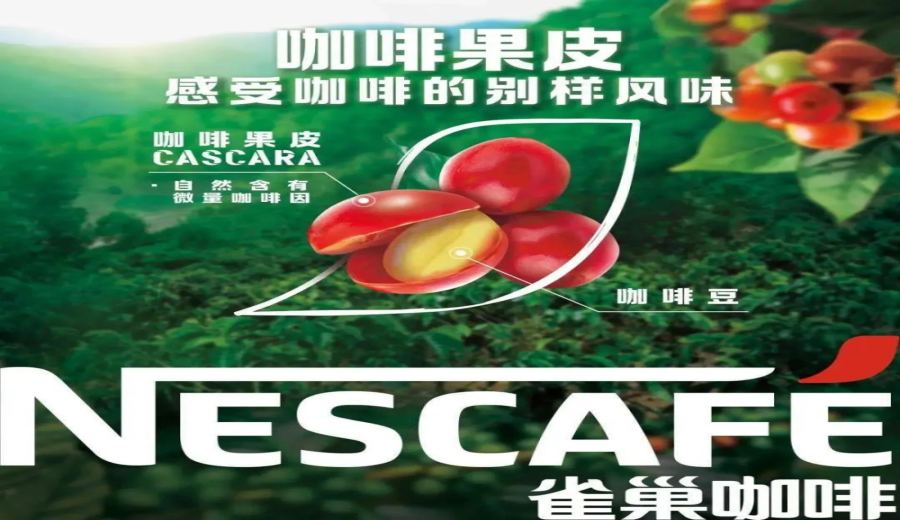
Introduction:Did you know that coffee fruit peel can also be transformed into a unique beverage? In July this year, Nestlé unveiled its new product 'Cascara (coffee cherry tea)' at a coffee flavor event in Shanghai, utilizing what was once considered waste — the coffee fruit peel — by drying and brewing it into a distinctive beverage with flavors reminiscent of tea. This article takes you on an in-depth exploration of the origins of this novel drink, its flavor profile, as well as the challenges and strategies Nestlé faced during its commercialization, supplemented with practical background information to help readers gain a more comprehensive understanding of this innovative endeavor.
Coffee beans are a familiar source of our energy-boosting beverage, but did you know that the fruit peel surrounding the coffee bean was also once regarded as useless waste? In July this year, during the 'Yunnan Coffee Flavor Map' event held by Nestlé in Shanghai, the company introduced to the Chinese market an innovative beverage called 'Cascara (coffee cherry tea)'. This product is made from the outer peel of the coffee fruit, which undergoes proper processing and drying before being transformed through brewing into a uniquely flavored beverage resembling tea.
This innovative attempt not only expands the range of raw material applications in the coffee industry but also allows consumers to see how resources that might have been discarded can be turned into specialty beverages with economic potential. However, Nestlé also admitted that the biggest challenge for this new product is not production technology, but rather how to help the market and consumers understand and accept this new type of coffee-related beverage.
The so-called 'cascara' is actually the result of processing the peel that is removed from the coffee fruit during production. Typically, after harvesting, coffee beans go through steps such as the removal of pulp and peel, followed by roasting, before becoming the coffee beans we are familiar with. The removed peel was previously often treated as waste, but with proper drying and preservation, these peels can be transformed into a refreshing beverage with subtle fruity and floral notes.
Interestingly, the modern concept of coffee cherry tea was first promoted by Salvadoran coffee farmer Aida Batlle. It is said that during a cupping session, she had the idea to brew the peels that were originally meant to be discarded, and was pleasantly surprised by their flavor. She subsequently named the beverage 'Cascara', which in Spanish means 'peel' or 'husk'.
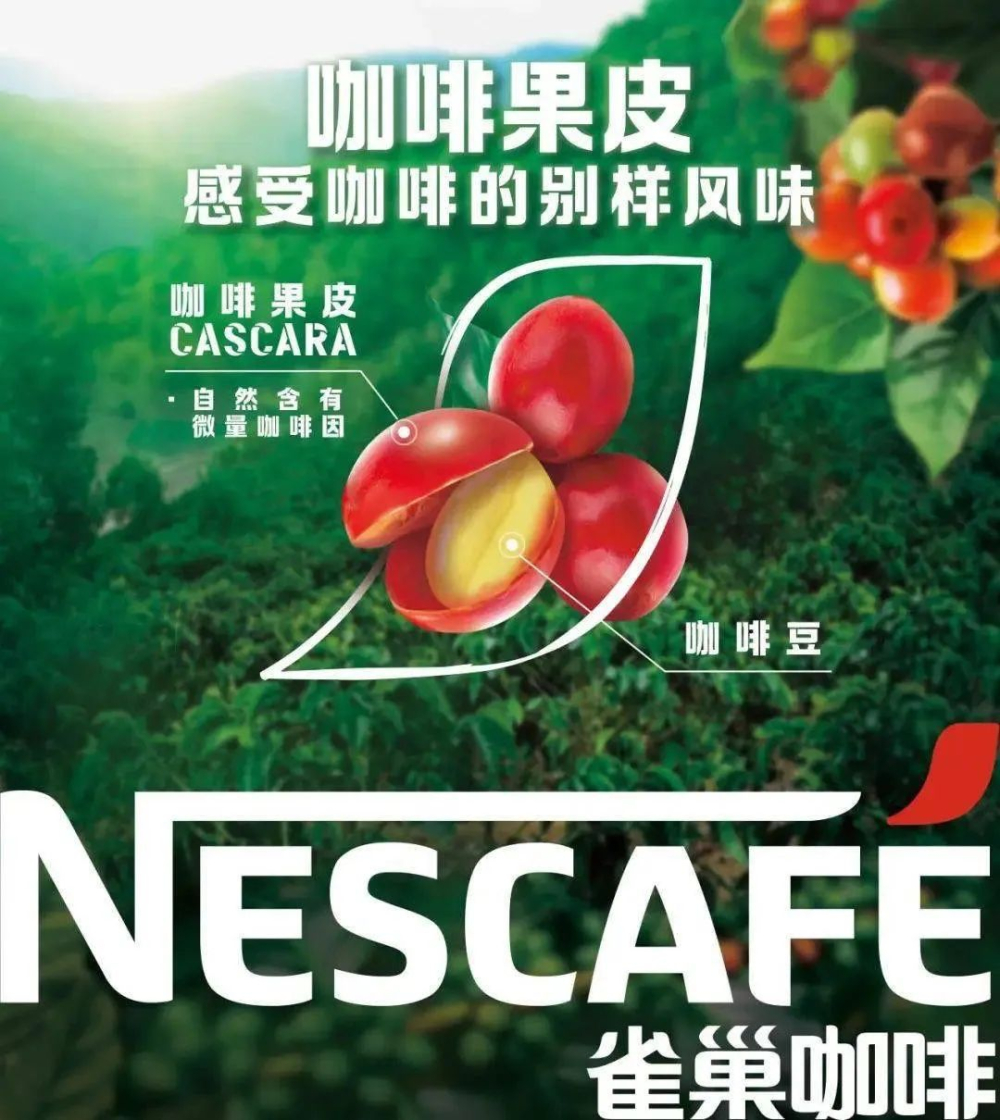
In fact, the tradition of drinking coffee fruit peel has existed in certain regions for hundreds of years. For example, in Yemen and Ethiopia, local coffee farmers have long had the habit of drying and brewing coffee peels, sometimes even flavoring the beverage with spices such as ginger, nutmeg, or cinnamon. In Ethiopia, this beverage is called Hashara; in Yemen, it is called Qisher, demonstrating that this innovation actually has deep cultural roots.
At the event, Nestlé also showcased a series of specialty drinks based on its coffee cherry tea, launching four flavor variants named 'Plum Tango', 'Osmanthus Rain in the Valley', 'Mountain Haze', and 'Coffee & Fruit Whispers'. These blended beverages used a puree and syrup made from coffee cherry peel, combined with concentrated tea liquid, showcasing diverse and creative applications.
However, this product line is still in the development and testing phase, including the final form of the product (such as ready-to-drink packs, instant formulations, or sales through foodservice channels) and launch timing, which have yet to be finalized. This shows that Nestlé still has many details to adjust and optimize in bringing this innovative beverage to market.
Alfonso Troisi, Senior Vice President of Nestlé’s Greater China Coffee Business Unit, has publicly stated: 'The real challenge is not the product technology, but how to build consumer awareness of cascara.' This statement highlights the core difficulty in the commercialization process — even if the product itself is innovative and has market potential, figuring out how to help consumers understand this seemingly unfamiliar yet coffee-related beverage will be a crucial issue for Nestlé to address.
Overall, Nestlé’s launch of coffee cherry tea is not only an innovative practice in raw material reuse but also provides the coffee industry with a new direction for thought. Whether it will successfully capture the market in the future is worth continued observation, and it also reminds us that in the pursuit of coffee flavor, there are still many 'by-products' that have not been fully explored and are waiting to be rediscovered.
The above content is compiled by CoffeeHunters, a coffee news website.


