








Introduction:Brazilian bird poop coffee is priced at over 1,600 yuan per kilogram, making it one of the most expensive coffees in the world. These coffee beans, excreted after being digested by the capuchinbird, are renowned for their unique production process. But is it worth trying, given its high price and novelty factor? This article delves into its origins, flavor characteristics, pricing reasons, and compares it with other exotic coffees to help coffee enthusiasts make a rational judgment on whether it’s worth a try.
With the rise of specialty coffee culture, more and more coffees with special processing methods have entered the market. Among them, Brazilian “bird poop coffee” has garnered significant attention due to its high price and unusual production process. The beans for this coffee are produced by wild birds called capuchinbirds, which eat coffee cherries and then naturally excrete the beans through their digestive system—making it a rarer method compared to traditional harvesting.
The capuchinbird inhabits the deep tropical rainforests of Brazil and has a natural tendency to select only the ripest coffee cherries. After these fruits are digested through the bird’s intestinal tract, the outer layer of pulp and some tannins on the coffee beans are broken down before being excreted in feces. Harvesters must search in the wild for coffee beans that haven’t been fully digested—a process that is both tedious and difficult, resulting in extremely low yields.

Since the entire process relies entirely on wild birds and cannot be mass-produced through artificial farming, the cost remains very high. According to local market information, the price of these coffee beans in Brazil is about 1,118 Brazilian reais per kilogram, which is roughly equivalent to around 1,650 New Taiwan Dollars or Chinese Yuan. If exported to other markets, the retail price may rise even further. The high price not only reflects its rarity but also includes the labor and time costs involved in collection and processing.
In terms of flavor profile, bird poop coffee typically exhibits prominent nutty notes, a notable sweetness, and a smooth aftertaste. Some reviews also mention subtle floral aromas and a rich body. However, these flavor characteristics are also commonly found in high-quality natural or honey-processed Arabica coffees, so whether there is a truly unique difference due to “being digested by birds” remains a matter of personal opinion.
For many consumers, apart from price and flavor, psychological acceptance is also an important consideration. Many netizens express reluctance, stating that “just hearing the name kills my desire to drink it,” or that they wouldn’t try it even if it were free. These exotic coffees often spark polarized reviews due to their unique names and production processes.
In fact, Brazilian bird poop coffee is not the only special coffee produced via animal digestion. Many years ago, Indonesia’s “civet coffee” (also known as kopi luwak) was once a global sensation. This coffee is also made from beans excreted by animals after digesting coffee cherries. However, in the past, reports emerged of merchants raising civets in inhumane conditions and force-feeding them to produce large quantities, sparking animal welfare concerns and leading to a decline in market acceptance.
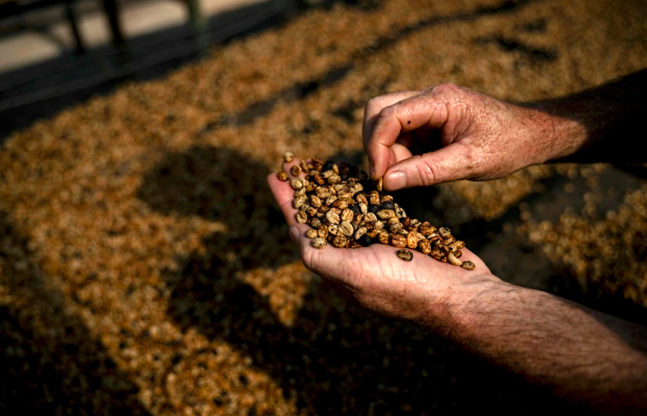
Besides bird poop and civet coffee, there are also other niche types such as monkey coffee, Vietnamese squirrel coffee, and even raccoon poop coffee. These all fall under the category of ultra-niche coffees that undergo “natural processing” via animal digestion systems. Such coffees often promote concepts like “natural fermentation” and “animal selection of premium beans,” but in reality, their flavor performance may not have any significant advantage compared to regular specialty coffees processed using high-quality methods.
In summary, Brazilian bird poop coffee stands out in the coffee market as an extreme case due to its rarity and high price. While its flavor may be of a certain standard, whether it’s worth the cost ultimately depends on consumers’ acceptance of the “novelty,” “natural processing,” and the story behind its high price. For most coffee enthusiasts, exploring classic processing methods such as washed, natural, and honey-processed specialty coffees can also provide a rich and diverse flavor experience.
The above content is compiled by CoffeeHunters, a coffee news website.


