








Introduction:The World Coffee Research organization has collaborated with a Swedish laboratory to establish an SNP genetic fingerprint database covering 23 common Arabica varieties, which is made freely available to the industry. Through simple leaf sampling and genetic testing, producers can effectively verify the genetic purity of coffee trees and avoid losses caused by variety misidentification. This article explains the principles behind SNP technology, its application value, and how to use this valuable resource to ensure varietal consistency.
The World Coffee Research (WCR) recently partnered with Sweden’s Intertek Agritech laboratory. Over the course of two years, they collected samples of the major Arabica coffee varieties cultivated in Latin America and Africa, successfully creating a genetic fingerprint reference database based on Single Nucleotide Polymorphism (SNP) technology. This groundbreaking achievement currently includes 23 commonly marketed varieties and is freely accessible to global industry players, primarily aiming to address the long-standing issue of genetic varietal misclassification in the industry.
The creation of this genetic database stems from systematic sample collection by the WCR research team during 2021–2023, as they gathered specimens of standard Arabica varieties across producing regions. These samples were then sent to a specialized laboratory for precise genotyping analysis. By comparing the unique SNP variations of each variety, researchers mapped out the DNA “fingerprint profiles” of each one, ultimately constructing this highly identifiable reference database.
The term SNP (Single Nucleotide Polymorphism) refers to differences in a single base within the DNA sequence. These tiny genetic variations act like special markers scattered throughout the genome, capable of accurately reflecting genetic differences between varieties. By analyzing the distribution patterns of these markers, scientists can establish the unique genetic characteristics of each variety, providing a solid scientific foundation for varietal identification.
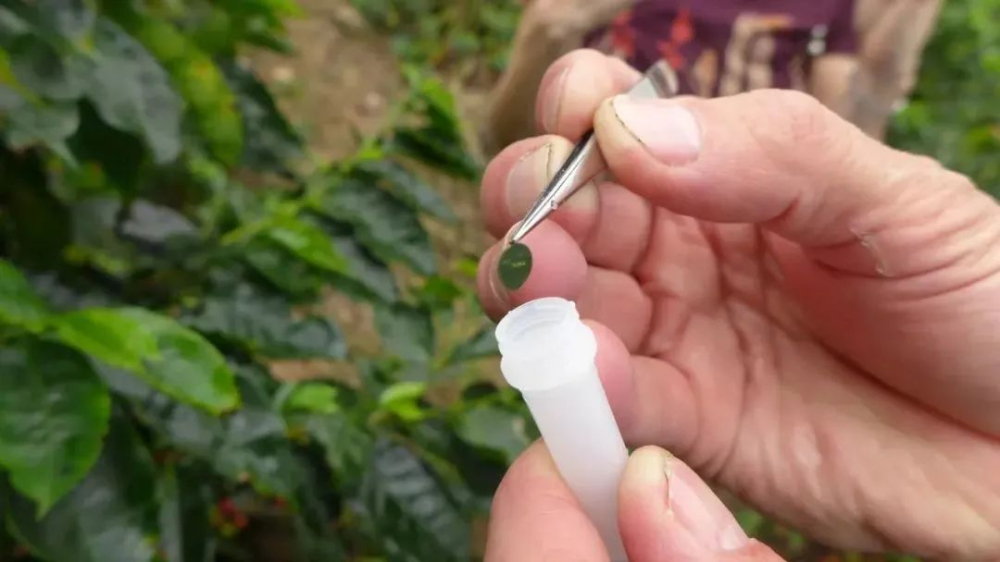
For coffee producers, verifying the genetic purity of coffee trees is crucial. To confirm whether the planted variety matches its label, one simply needs to collect a healthy leaf from the plant in question and send it to a laboratory capable of SNP testing. Technicians will extract DNA from the leaf, use specialized equipment to read its SNP profile, and then compare it with the known fingerprints of the corresponding variety in the database. Once a match is confirmed, the plant’s varietal identity is verified — a process that is relatively straightforward and cost-effective.
WCR specifically points out that in the past, traditional plant genetic testing was often too expensive for most participants in the coffee supply chain, resulting in a long-standing lack of varietal verification. According to relevant studies, genetic analysis of 88 samples suspected to be Geisha revealed that 39% of the plants did not match the standard genetic characteristics of Geisha at the genetic level. This kind of "genetic inconsistency" can lead to serious consequences — for instance, farmers may believe they are planting a high-quality, disease-resistant variety, but due to genetic mismatches, the crops may actually be susceptible to diseases, leading to economic losses.
To address this, the development of low-cost, high-efficiency genotyping tools has become an urgent need in the industry. One of the core applications of the SNP genetic fingerprint database launched by WCR is to promote low-barrier varietal certification services. Currently, the database fully includes 23 mainstream Arabica varieties and has no usage restrictions, allowing all industry players to freely access and consult it. The research team also revealed that they will continue to expand the database in the future, gradually incorporating SNP fingerprint information for more varieties.
This genetic fingerprint database holds significant importance for the entire coffee industry chain. Coffee suppliers and research institutions can use it to perform high-precision genetic testing, applying it to new variety breeding and seed quality control. Seed suppliers and nurseries can ensure that the seedlings they provide possess genetic purity, helping coffee farmers grow truly high-quality varieties that are well-suited to local environments and offer improved traits, thereby increasing yield and income. In addition, through accurate varietal identification, all parts of the supply chain can better protect coffee genetic resources with regional characteristics and maintain fairness and transparency in the market.
The above content is compiled by CoffeeHunters, a coffee news website.


