







Introduction:Pour over coffee, known for its flexible operation and pure flavors, has become the top choice for many coffee enthusiasts just starting out. However, while there are numerous tutorials online, they often lack a systematic approach, leading many to unknowingly fall into common pitfalls in practice. From parameter settings, blooming timing, to pouring direction, every step can influence the final flavor outcome. This article compiles six common self-learning mistakes, analyzes them in depth with practical experience, and helps you avoid traps while steadily improving your pour over skills.
Thanks to its pure flavor profile, low barrier to entry, and flexible brewing methods, pour over coffee has attracted many enthusiasts to try it at home through self-study. Although there is an abundance of instructional content online, it tends to be scattered and lacks systematic guidance, causing many to easily go astray during actual brewing. Whether it’s controlling parameters, managing bloom time, or the way water is poured and when to cut off flow, each small detail can significantly impact the final cup’s flavor. This article will delve into six common self-taught pour over mistakes, explaining them one by one with real brewing experience to help you avoid detours and more accurately grasp the keys to extraction.
The rise of specialty coffee culture has made pour over brewing a standard offering in many cafés. It not only showcases the layered flavors of the coffee itself but also features relatively low equipment costs and moderate difficulty, making it a preferred method for many starting their coffee learning journey.
In the internet era, resources for learning pour over coffee have never been more abundant — from extraction theory to equipment use and step-by-step details, nearly all can be found online. Yet, while this knowledge is readily accessible, it often lacks a clear structure, leading many self-learners to easily take wrong turns during practice.
Misconception 1: “Close enough” on Parameter Settings
Many beginners plan out their pouring strategy before brewing, yet fail to strictly follow the set parameters during the actual process. For example, thinking “it doesn’t matter if the coffee dose is off by a few tenths of a gram,” “the water temperature is about right,” or “just adjust the water volume by feel.” These seemingly minor deviations can accumulate and noticeably affect the final flavor.
For beginners, after establishing a brewing framework, it’s crucial to strictly adhere to the predetermined parameters. Only then, when reviewing the brewing process, can you more easily rule out unstable factors and accurately pinpoint why the flavor isn’t up to par.
Misconception 2: Starting the Timer Only After Blooming Ends
Many tutorials mention a 30-second bloom time, but there are different interpretations of when to start the timer. Some begin timing after the water has finished pouring, while others start the moment pouring begins — a difference of roughly 7 to 9 seconds.
In reality, the so-called extraction time refers to the entire process from when hot water first contacts the coffee grounds until the dripping ends. Therefore, the very first drop of hot water hitting the coffee bed marks the start of the bloom, and the timer should begin immediately. If you wait until after pouring to count 30 seconds, the actual bloom time may have extended to 37–39 seconds, and the overall extraction time will exceed expectations.
Misconception 3: No “Burger” Means the Beans Aren’t Fresh
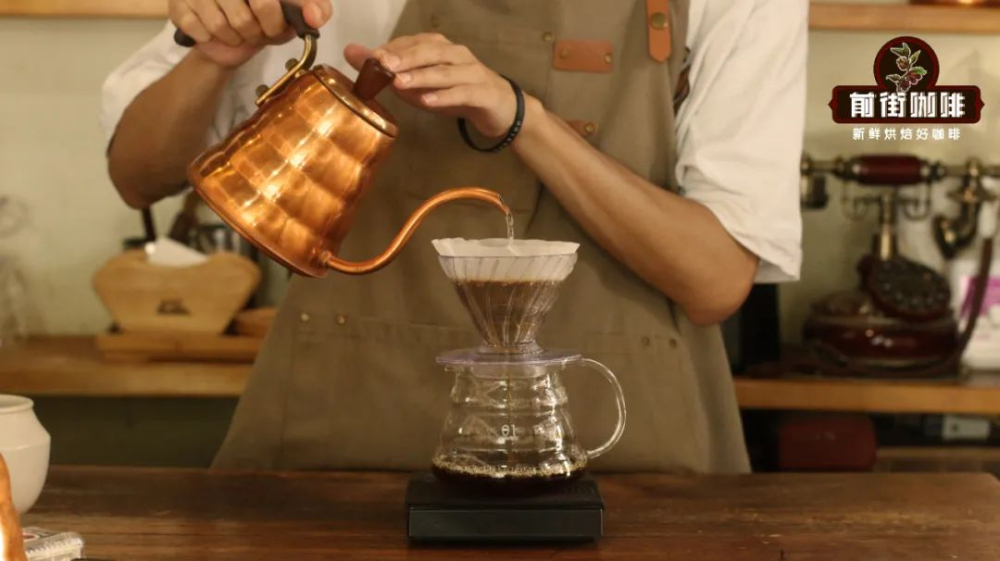
In many teaching videos or advertisements, after hot water is poured onto the coffee grounds, the bed gradually rises, forming a puffed shape resembling a “burger.” This visual effect is often regarded as a sign of fresh beans. Over time, some beginners come to believe that if no obvious puff appears during the bloom, the beans must not be fresh enough.
In fact, light-roasted coffee beans, due to their prominent fruity notes and inherently dense, hard structure, release gas more slowly upon contact with water, so they may not expand significantly. Additionally, if the grind size is too coarse, with larger coffee particles, it takes longer for them to become saturated with water and the exhaust effect is relatively weaker, resulting in an inconspicuous “burger.”
Misconception 4: Pouring Must Be Clockwise
Pouring in circles is a common brewing technique that involves evenly drawing circles from the inside out to help fully extract soluble flavor compounds. However, after mastering the pouring technique, many beginners fall into another misconception — becoming overly fixated on the direction of the circle.
Experiments have shown that changing the direction of pouring — clockwise versus counterclockwise — does not significantly affect coffee flavor. The true factors influencing flavor include the size of the pour circle, the height and thickness of the water stream, the speed and stability of pouring, etc. Therefore, whether you choose clockwise or counterclockwise pouring can be entirely based on personal habit; the key is to maintain a consistent direction to ensure even pouring.
Misconception 5: Cutting Off Early Affects Flavor Completeness
Some brewers rely on cutting off the flow early, believing that the last 10–20 mL of drips contain bitterness and astringency, so they choose to remove the filter cup ahead of time. Others, worried about exceeding a two-minute brew time, rush to interrupt the dripping process.
Regardless of the reason, cutting off prematurely causes the actual coffee-to-water ratio to deviate from what was intended, resulting in a smaller final yield than planned. Experiments show that with a 1:15 coffee-to-water ratio, the tail end coffee obtained via cutoff does not exhibit significant bitterness or astringency. Blindly cutting off can actually lead to loss of flavor compounds and negatively affect the coffee’s aftertaste. If the tail liquid indeed tastes unpleasant, it’s better to look for optimization in brewing parameters rather than simply relying on cutoff.
Misconception 6: Over-reliance on the Golden Cup Theory While Ignoring Sensory Experience
Some beginners, after learning concepts such as extraction yield and concentration, tend to overly focus on numerical standards, worrying before tasting whether the coffee is over- or under-extracted, yet neglecting the essential charm of pour over coffee — its flavor expression.
For those new to pour over, it’s recommended to first judge the coffee’s performance through sensory evaluation, then make adjustments based on actual needs using reasonable brewing parameters. If you’re not yet familiar with extraction logic and your water control skills are unstable, blindly pursuing so-called “professional” standards may instead lead to bottlenecks in your progress.
The above content is compiled by CoffeeHunters, a coffee news website.


