







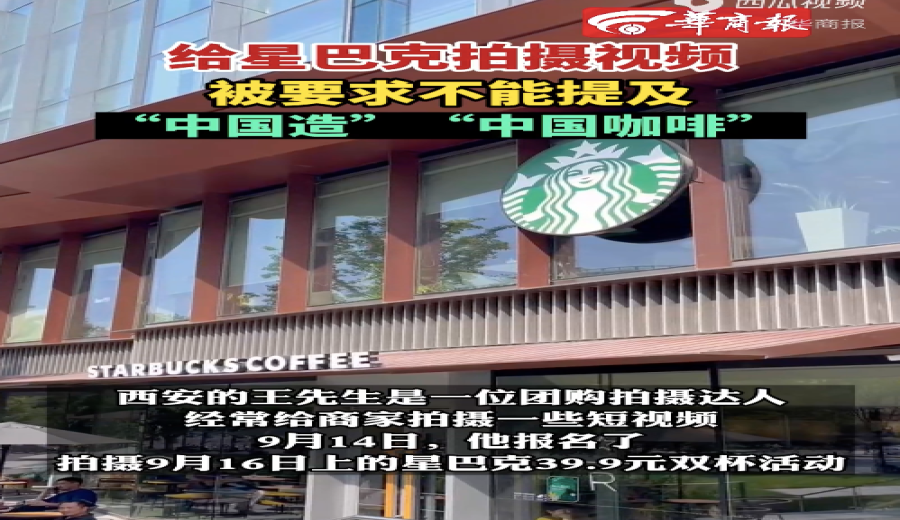
Introduction:A group-buying photography creator in Xi’an revealed that while invited to film a promotional campaign for Starbucks’ 39.9 RMB two-drink deal, they were asked by the organizers not to use phrases such as “Made in China” or “Chinese coffee,” sparking protests and withdrawals from multiple creators. The incident has triggered widespread discussion on social media platforms — is this a brand strategy or a communication misunderstanding? This article delves into the full story and the industry phenomena behind it.
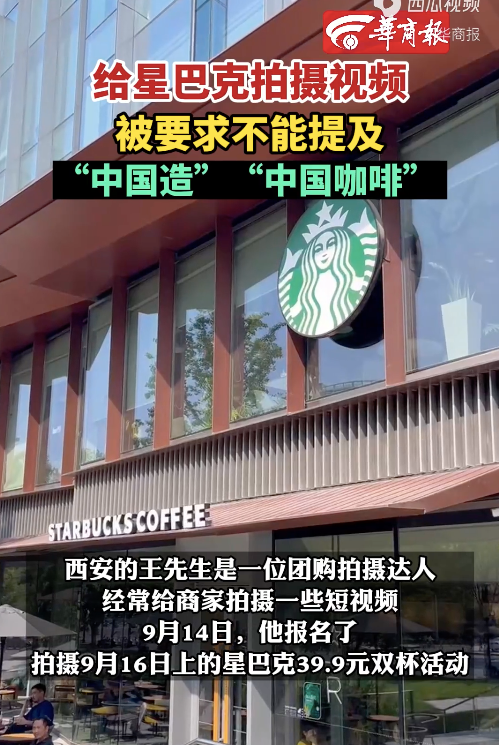
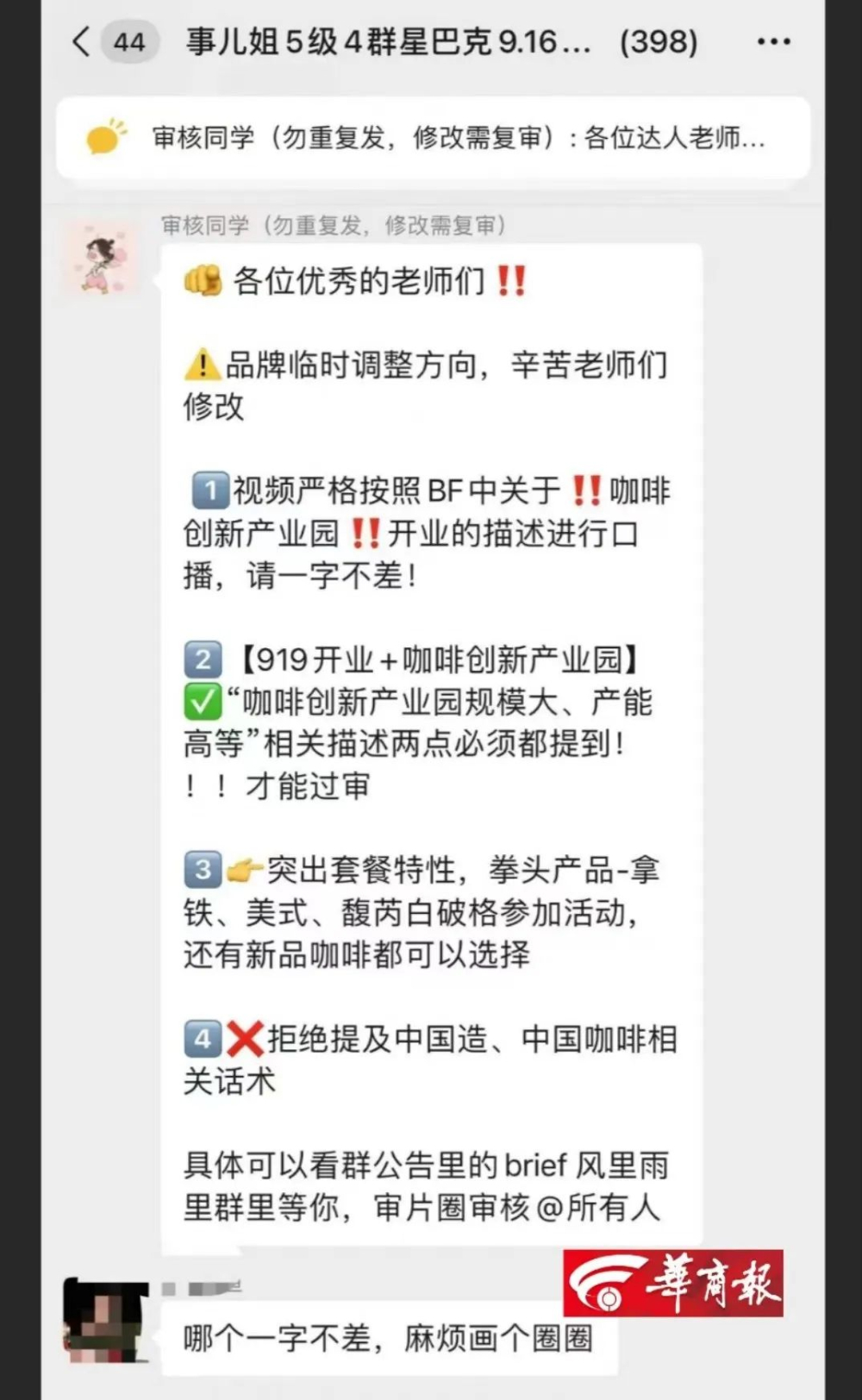
Recently, a local group-buying photography creator in Xi’an disclosed that after being selected for Starbucks’ national influencer filming program, they were initially set to participate in shooting a video for a 39.9 RMB two-drink promotion launching on September 16. However, after joining a WeChat group responsible for discussing shooting details, they discovered that the group’s internal announcement clearly listed filming guidelines, with the fourth rule stating:“Prohibited from mentioning phrases related to ‘Made in China’ or ‘Chinese coffee’”, leaving many participants puzzled and even dissatisfied.
It is understood that the group was named “Shijie Jie Level 5 Group 4 – Starbucks Sept 16 Execution,” and the staff member responsible for reviewing the video content announced this special requirement within the group. This rule was not limited to just one group; according to the creator, multiple participating groups received the same instruction. Many photographers expressed strong dissatisfaction upon seeing these guidelines, with some even opting to withdraw from the filming program altogether.
During the group discussion, one photography creator publicly questioned: “Sorry, but this is something I just can’t understand. In my own country, I’m not allowed to mention my own country — I can’t accept that.” In response to the criticism, the official reviewer stated that the reason for this requirement was to keep the focus solely on the coffee product itself, rather than on the manufacturing location or nationality. They further explained, “We just want the spotlight to be on the coffee. Mentioning ‘Made in China’ would definitely generate more buzz, as people have emotional connections [to the term], but we want to keep the emphasis on the coffee itself.”
However, this response did not quell the controversy. Many creators felt that this explanation failed to justify why common and reasonable terms like “Made in China” had to be excluded. Some also pointed out that the filming activity itself did not feature such wording in-store or on the product packaging, yet the organizers had additionally mandated its avoidance, which felt unnecessary and off-putting. As a result, most photography creators ultimately chose to withdraw from the shoot to express their stance.
Even after withdrawing, many creators remained confused about the incident. One participant noted that this was originally a routine filming task, and during the actual on-site shooting, they never saw any signs indicating “Made in China” or “Chinese coffee.” The organizers’ arbitrary addition of such restrictions was difficult to comprehend. This decision not only made participants feel disrespected but also raised questions about the brand’s communication strategy among outsiders.
The incident quickly sparked heated discussions on social media platforms such as Weibo, with numerous netizens sharing their views. Many questioned the necessity of such a special requirement, pointing out that Starbucks products have little direct connection to the phrase “Made in China,” which is also rarely mentioned in general promotions. One netizen commented: “There was really no need to mention it in the first place, so why specifically prohibit it? That just makes people more curious.” Others speculated that the move might stem from considerations of global brand consistency, but that its execution lacked flexibility and clear communication.
Regarding this incident, media reporters contacted Starbucks China’s Membership and Store Service Department on the afternoon of September 16. The relevant staff indicated that an internal review was underway and that the situation would be forwarded to the responsible department. A spokesperson was expected to make a public response later, but as of press time, Starbucks has not yet issued an official statement or reply regarding the matter.
The controversy arising from this Starbucks filming campaign not only highlights the challenges brands face in localized communication but also sparks discussion on cross-cultural brand marketing strategies. For content creators involved, how to maintain creative freedom while understanding and adapting to a brand’s global consistency and localization needs becomes a thought-provoking issue.
The above content is compiled by CoffeeHunters, a coffee news website.


