







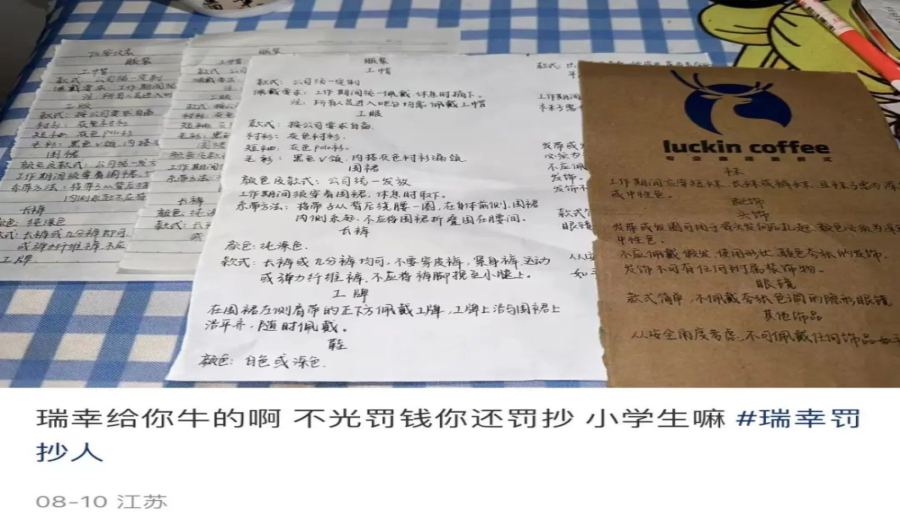
Introduction:Luckin Coffee has once again sparked discussion over its store management practices, following revelations by an employee of a franchised outlet who claimed to have been fined around NT$1,000 and made to rewrite regulations five times for not meeting grooming standards. This has prompted reflection on both disciplinary mechanisms and the ordering process. This article delves into the incident, employee feedback, and the differing treatment between franchised and company-operated stores, exploring how system optimization can reduce human error and provide a more comprehensive perspective for both coffee industry players and consumers.
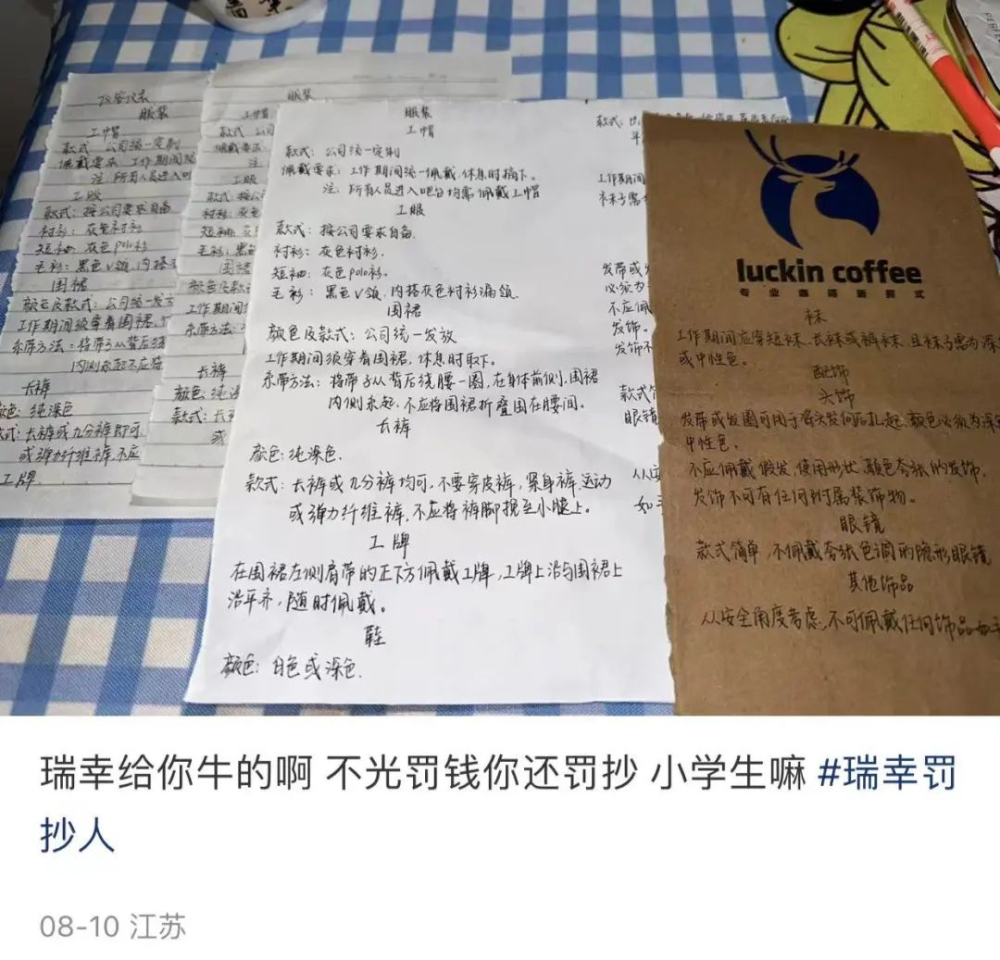
The management approach of Luckin Coffee stores has once again become a hot topic. Recently, a netizen claiming to be an employee at a Luckin franchised store shared on social media that during a routine inspection by a regional manager, they were found not to meet grooming standards. As a result, they were not only fined approximately NT$1,000 but also required to repeatedly copy the relevant rules five times. The employee revealed that their monthly salary is only around NT$3,000, and such penalties have placed significant financial and psychological pressure on them.
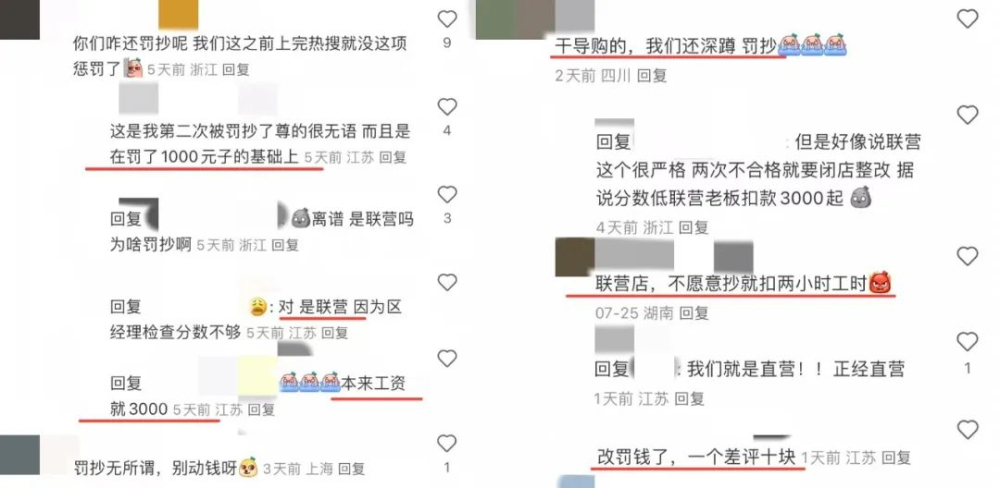
It is understood that the store in question operates under a franchise model. If a regional manager finds two instances of non-compliance during routine inspections, the entire store may face suspension and corrective action, and the franchise owner will also be subject to penalties. Some comments noted that at certain franchised outlets, if an employee refuses to write out the rules, they may instead be penalized by having two hours of working hours deducted. In contrast, some netizens from company-operated stores responded that fines are now more common, such as a NT$10 penalty for each negative review, though some stores have abolished the handwriting penalty under public pressure.
This incident is not the first of its kind. As early as July 21, Luckin faced online backlash after a part-time employee was reportedly made to copy multiple pages of content for failing to place a straw. At the time, Luckin’s official response stated that the handwriting penalty was an individual store practice and not an officially mandated company policy, and promised to further standardize store management practices. However, similar cases of punishment continue to be exposed by employees, indicating that the issue has not been fundamentally resolved.
Some frontline employees explained that the original intention behind certain disciplinary measures was to help reinforce memory through repeated writing, thereby reducing customer complaints caused by employee negligence—such as not preparing drinks according to customer notes. However, this method, described as “elementary school-style punishment,” is generally not accepted by adult employees, who experience significant emotional stress and find it hard to accept. Nevertheless, some employees admitted that compared to direct fines, they would rather choose to copy, as financial losses have a more direct impact on their lives.
In fact, many of the issues may stem from the design and processes of the ordering system. For example, in complaints related to “ice,” it is common for unclear system options or inappropriate default settings to lead to discrepancies between what is served and what customers expect. Industry insiders suggest that rather than overly relying on human memory and punitive systems, optimizing the ordering interface—enabling customers to more precisely select details such as sweetness level, temperature, and ice amount—can help reduce the likelihood of errors.
Looking at the differences between franchised and company-operated stores, franchised outlets often face greater operational pressures due to differing partnership models, and regional manager inspections are relatively stricter. Company-operated stores, while benefiting from unified management, have also gradually adjusted their disciplinary methods when dealing with customer complaints and employee management, moving toward a more humane approach. Whether it’s fines or handwriting penalties, the key lies in whether they effectively improve service quality, rather than being purely punitive.
Overall, as a coffee brand expanding rapidly both domestically and internationally, Luckin faces the ongoing challenge of maintaining consistency in store management and ensuring employee well-being while pursuing aggressive growth. For consumers, understanding the details of the ordering system and the factors that may affect drink preparation can also help reduce misunderstandings and enhance the overall drinking experience.
The above content is compiled by CoffeeHunters, a coffee news website.


