







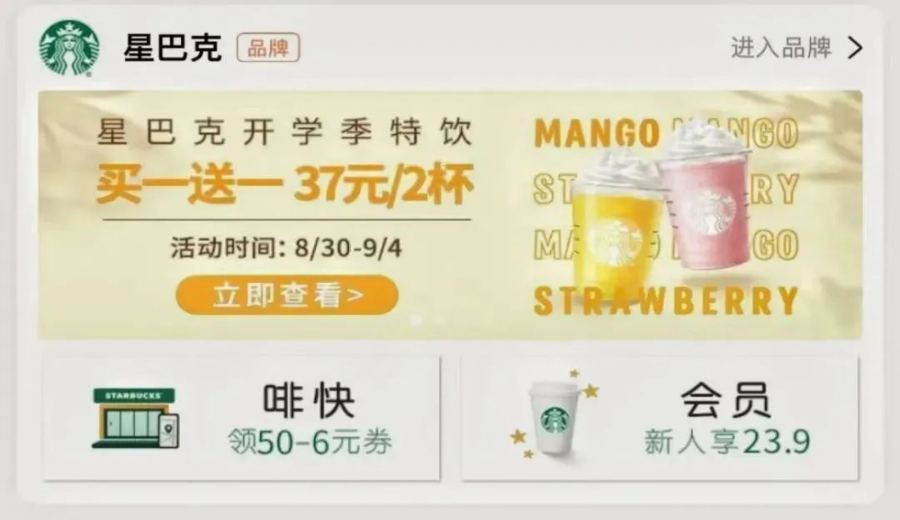
Introduction:Starbucks recently launched two seasonal limited-time drinks—the Mango Duo Frappuccino and the Raspberry Strawberry Frappuccino—both based on a coconut-flavored syrup base and made with five pre-prepared fruit drink ingredients, resulting in a relatively complex preparation process. Paired with a "buy one get one free" promotion via the啡快 (Faster) mini-program, the drinks attracted a large number of customers eager to try them, but also placed high-intensity production pressure on in-store baristas. This article takes an in-depth look at the ingredient composition, preparation steps, and practical challenges of these two new drinks, while also sharing firsthand feedback from staff.
The Frappuccino series has long been one of Starbucks' key product lines for attracting customers. In addition to classic flavors, the brand also introduces limited-edition seasonal offerings each quarter. This summer, Starbucks added two new Frappuccinos—the Mango Duo Frappuccino and the Raspberry Strawberry Frappuccino—which quickly became hot topics in the market.
Both new drinks are based on a coconut-flavored syrup and are blended with different pre-prepared juice syrups. The Mango Duo Frappuccino uses a mango and pitaya beverage syrup along with a mango and passion fruit juice beverage syrup, while the Raspberry Strawberry Frappuccino contains a strawberry fruit beverage syrup and a raspberry and blackcurrant-flavored juice beverage. In total, preparing these two drinks requires five different types of pre-prepared drink ingredients, leading Starbucks employees to jokingly refer to them as the "Five Brothers."
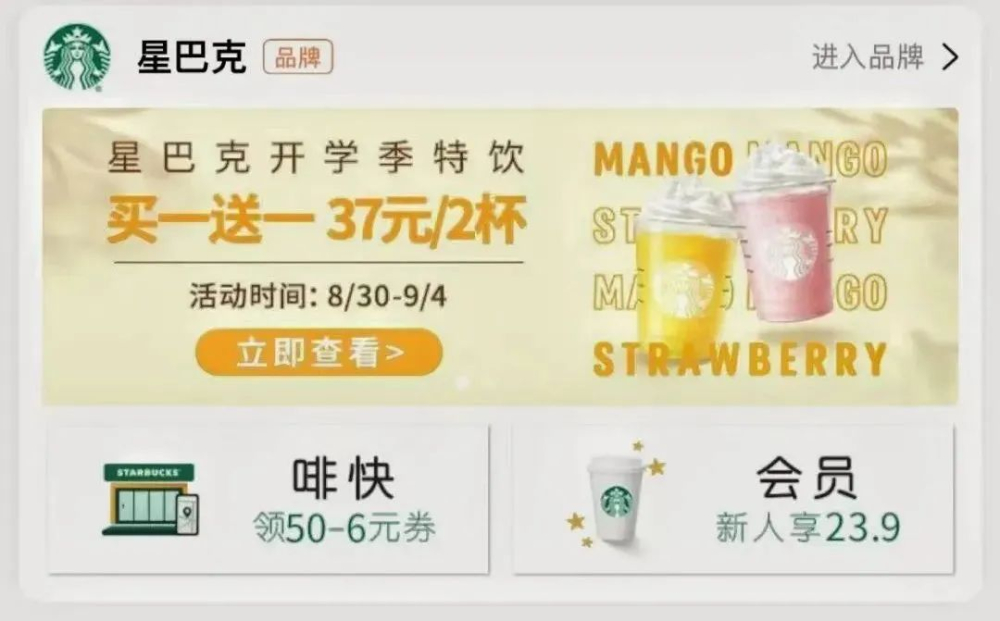
Because all five pre-prepared drinks must be retrieved and precisely measured at the same time, the entire preparation process is not only cumbersome but also a major test of the baristas’ operational rhythm.Especially after the啡快 mini-program launched its "buy one get one free" promotion, these two new drinks are often sold in pairs, forcing counter staff to handle multiple orders simultaneously, significantly increasing their workload.
On social media platforms, many Starbucks employees have shared their frustration when making these two new drinks. Some described seeing the five boxes of pre-prepared drinks as akin to a "Starbucks horror moment," while others said, "Making two drinks requires opening five juice cans—it’s insane." Due to limited workspace, the counter often gets crowded with various juice packages, which not only reduces efficiency but also increases the risk of errors.
Beyond the complicated ingredients, these two Frappuccinos also require strict control over the proportions of various ingredients during preparation, further raising the difficulty level. One employee joked that making Frappuccinos now feels like "prescribing medicine," where they have to check each recipe item by item and carefully measure everything, earning them the humorous title of "Starbucks alchemists."
Actually, this is not the first time Starbucks has sparked discussion due to the complexity of new product preparation processes. This year, the brand has successively launched a variety of innovative drinks, including the Fruit Fizz Cold Brew series, the Raw Coffee series made by directly extracting green beans, even a uniquely flavored Tomato and Rosemary Iced Espresso, as well as the "Chrono Series" designed for delivery needs. Each new product has attracted many customers to try, but also brought varying degrees of challenge to in-store preparation processes and staff operations.
In summary, although the newly launched Mango Duo and Raspberry Strawberry Frappuccinos have received positive feedback in the market, their complex preparation processes and high demand have also put considerable pressure on frontline baristas. For Starbucks, finding a balance between innovation and practical operations will be an important challenge in future product development.
The above content is compiled by CoffeeHunters, a coffee news website.


