







Introduction:Jamaican Blue Mountain coffee is world-renowned for its unique flavor profile and strict quality control, but the various labels on its wooden barrels are key to identifying authentic beans. This article delves into the CIB certification label, grade number, estate information, weight markings, and ICO number found on Blue Mountain coffee barrels, helping you determine whether it’s genuine Blue Mountain No. 1 just by looking at the packaging. It also introduces the design origin and usage regulations of the wooden barrel packaging, offering deeper insight into the story behind this premium coffee.
The reason Jamaican Blue Mountain coffee has become the pinnacle of choice for coffee enthusiasts worldwide is inseparable from the establishment and rigorous management of the Jamaica Coffee Industry Board (CIB). Since the official founding of the CIB in 1952, Jamaica has become the first country in the world to establish a dedicated coffee regulatory authority. By defining production regions, setting quality grades, and monitoring cultivation and processing procedures, it has successfully elevated Blue Mountain coffee to the top tier of specialty coffee.
The wooden barrel packaging of Blue Mountain coffee not only protects the beans’ quality during transportation but also serves as an important element for verifying authenticity. These barrels are mostly made from Aspen wood, resembling small wine casks, with common specifications including 70 kg, 30 kg, and 15 kg. The green coffee beans are first packed into professional moisture-proof bags before being placed inside the barrels, which helps stabilize the moisture content, prevent aroma loss, and positively influence the stability of subsequent roasting.
It’s worth noting that not all Blue Mountain coffee is transported in wooden barrels. According to CIB regulations, only the four grades of Blue Mountain No. 1, Blue Mountain No. 2, Blue Mountain No. 3, and Blue Mountain Peaberry (PB) are eligible for wooden barrel packaging. Other grades of Blue Mountain coffee or the Jamaican High Mountain and Prime series are usually exported only in burlap sacks.
A recent shipment of Blue Mountain No. 1 green beans has arrived, along with the latest-designed Blue Mountain barrels. Below, we will break down the meaning of each important marking on the barrel step by step, helping you better understand how to identify genuine Blue Mountain coffee.
First, the lid of every authentic Blue Mountain wooden barrel is affixed with a label specially designed by the CIB between 1984 and 1985. Such labels are only permitted for use on barrels containing 100% pure Jamaican Blue Mountain coffee. The barrel lid typically features the number “1” engraved, clearly indicating that it is Blue Mountain No. 1 grade—the highest quality among Blue Mountain coffees.
The upper part of the barrel usually displays the name of the estate where the coffee was produced, such as the commonly seen “Clifton Estate.” In the middle section of the barrel, you’ll find weight information indicated by letters—for example, “G” stands for gross weight (e.g., 34.5 kg), “T” for the barrel’s own weight (e.g., 4.5 kg), and “N” for the net weight of the coffee beans (e.g., 30 kg).
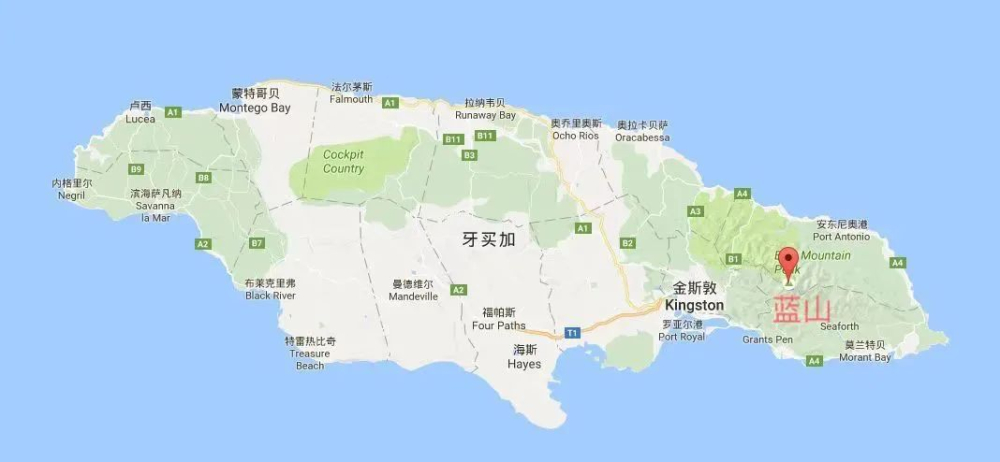
The lower edge of the barrel often bears markings indicating “Produced in Jamaica,” and each exported batch of Blue Mountain coffee is assigned a unique ICO number. This is a quality inspection number issued by the International Coffee Organization (ICO) and serves as an important reference for tracing the product’s origin.
On older Blue Mountain barrels, a green tree frog emblem was commonly seen—this is the certification mark of the Rainforest Alliance. However, according to the latest batches, such symbols may no longer appear. Additionally, some estates add their own custom logos to the barrels; for instance, Clifton Estate uses a lion head design that blends Jamaican reggae culture with dreadlock imagery, showcasing local character.
The above content is compiled by CoffeeHunters, a coffee news website.


