








Introduction:To brew a pour over coffee with balanced flavors, understanding the extraction status is key. This article explores three extraction states—under-extraction, over-extraction, and ideal extraction—and teaches you how to quickly identify issues through flavor profiles, coffee bed appearance, and brew time. It also provides practical parameter adjustment tips for common problems such as light roast, dark roast, and excessive fine particles, helping you optimize every pour over effortlessly.
In the world of specialty pour over coffee, a cup’s flavor profile often hinges on its extraction state. Some enthusiasts prefer bright floral and fruity acidity, while others are drawn to rich dark chocolate and nutty notes. However, when coffee exhibits negative flavors like dryness, sharp acidity, or excessive burnt bitterness, most people immediately notice—it’s clear the coffee hasn’t been brewed well. In reality, these issues are usually related to one of three extraction states: under-extraction, over-extraction, or ideal extraction.
To judge a coffee’s extraction state, you can’t rely solely on intuition. Instead, you need to analyze clues such as flavor presentation, brew time, and coffee bed morphology. This article will guide you through the sequence of flavor compound release, helping you deeply understand the causes and manifestations of under- and over-extraction, and offering adjustment strategies for different roast levels and common issues to help you master more precise pour over techniques.

When it comes to evaluating whether a coffee tastes good, everyone’s taste standards vary. Some are drawn to fresh floral and fruity aromas, while others enjoy the richness of dark chocolate and nutty undertones. But for those unpleasant flavors—such as sharp acidity, overly pronounced burnt bitterness, or woody notes with impurities—most people react the same way: they tend to avoid that cup of coffee.
In the process of making pour over coffee, extraction results can generally be categorized into three types: under-extraction, over-extraction, and ideal extraction. When a coffee has moderate strength, rich flavors, and a long aftertaste, even without professional equipment to test it, we can determine that its extraction rate falls within a reasonable range (though not necessarily perfectly aligned with the Golden Cup standard). Conversely, if a coffee displays significant negative flavors and is unpleasant to drink, the extraction process likely had issues—such cases are typically described as “over-extracted” or “under-extracted.”
There are many key factors that influence the flavor of coffee extraction, including grind size, water temperature, pouring technique, coffee-to-water ratio, and brew time. Any adjustment that increases extraction efficiency may lead to over-extraction, while changes that reduce extraction rate can easily cause under-extraction. Therefore, the first step in formulating an appropriate brewing recipe is to accurately identify the current extraction state.
During coffee extraction, the release of flavor compounds follows a certain order: acidity dissolves first, followed by sweetness, and finally bitterness and other large molecular substances. When most coffee particles are not fully extracted, only a small number of soluble compounds enter the water. In this case, acidity tends to stand out the most, but lacks the support of sweetness and body, resulting in a thin, sharp overall flavor with a light mouthfeel and short aftertaste.
Conversely, if some coffee particles are over-extracted, it means too many large molecular substances have dissolved into the water, which are usually bitter and off-flavored. Over-extracted coffee often carries unpleasant burnt bitterness and woody notes, and sometimes you may even feel astringency on the tongue surface, known as “dryness.”
Common causes of under-extraction include: too coarse a grind, too low water temperature, too high coffee-to-water ratio, insufficient pouring pressure, or too short contact time between coffee and water. Factors that lead to over-extraction are usually: too high water temperature, too fine a grind, too much water poured, too long brew time, or overly vigorous stirring during pouring.
In fact, in daily pour over practice, purely under- or over-extracted cups are not very common. More often, you encounter uneven extraction—where some coffee grounds are over-extracted while others are under-extracted—resulting in flavors that simultaneously exhibit sharp acidity and bitterness, making it hard to pinpoint the root issue.
When judging extraction status, it’s recommended not to rely solely on taste, but to combine the coffee’s flavor profile and the overall brewing framework for comprehensive analysis. For example, when brewing a light roast fruit-acid-forward coffee, if the brew time is less than 2 minutes and the coffee tastes bland and overly acidic, that’s usually a sign of under-extraction. In this case, you can try using a finer grind or slightly slowing down the pouring pace to see if the flavor improves.
Additionally, if the brew time is well-controlled but the coffee tastes hollow and bland—lacking both noticeable acidity and bitterness—and the coffee bed is heavily piled at the bottom, it might be because some large molecular body-enhancing substances were also excessively released, masking the intended floral and fruity aromas. In this situation, adjust your pouring technique—for instance, try to pour from a higher position after the bloom to allow better release space for acidic and sweet compounds.
When brewing dark roast coffee, if the dripping isn’t complete even after 2 minutes and 20 seconds, and the coffee entering the cup has unusual bitterness—possibly mixed with straw or woody notes—and the aftertaste lingers on the back of the tongue for a long time, it’s very likely over-extracted. In this case, adjustments are recommended in terms of grind size, water flow intensity, and filter choice—for example, switching to a coarser grind, increasing water flow speed, or using a faster-flowing filter.
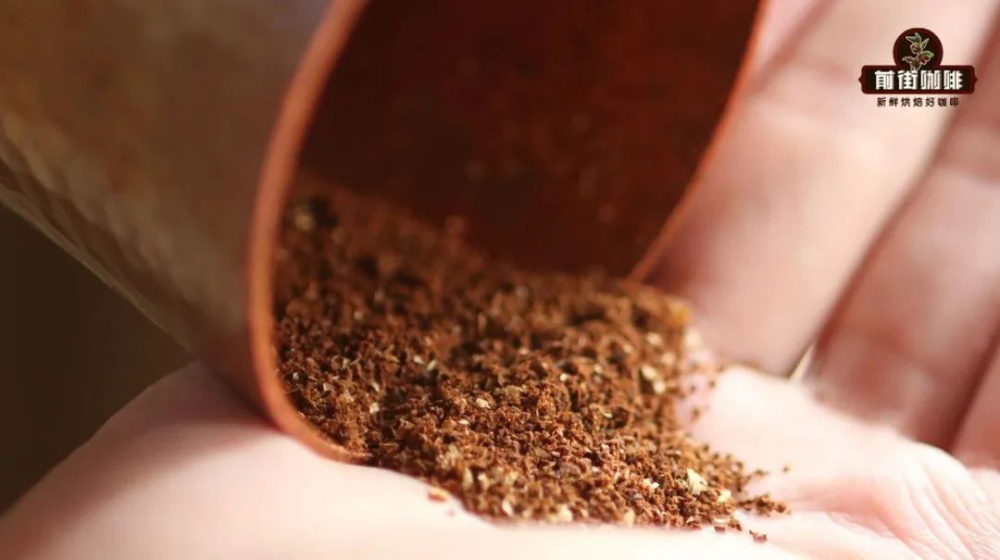
Another common scenario is when, regardless of whether you’re brewing light or dark roast beans, the coffee consistently has strong acidity or bitterness, a dry and astringent finish, a sticky and muddy coffee bed surface, and excessively long drip time. This is likely caused by too many extremely fine particles. Extremely fine particles can create channeling effects, causing some coffee grounds to be overly saturated and leading to over-extraction. It’s recommended to sift out some fine particles after grinding to prevent prolonged soaking of coffee grounds and flavor imbalance.
The above content is compiled by CoffeeHunters, a coffee news website.


