








Introduction:On a hot summer day, you want to brew a refreshing glass of iced pour-over coffee at home, but can never quite get the ice-to-coffee ratio right? This article dives deep into the two key roles of ice in iced pour-over—cooling and dilution—analyzing the golden ratio between coffee grounds, water, and ice. Through a hands-on comparison experiment using old ice vs. fresh ice, we’ll explore how different types of ice affect coffee concentration and flavor. Master these details, and you’ll be able to brew iced pour-over with just the right strength and excellent chill effect.
Every summer, many coffee enthusiasts find that the biggest challenge in making iced pour-over isn’t selecting beans, but figuring out how much ice to use. Too little ice, and the coffee won’t cool down enough, tasting lukewarm; too much, and it becomes overly diluted, losing its flavor entirely. The key lies in understanding the dual role of ice in iced pour-over and precisely balancing the ratio among coffee grounds, water, and ice.
Ice in iced pour-over mainly serves two purposes: rapidly lowering the temperature of hot brewed coffee and diluting the concentrated coffee liquid. Therefore, when calculating the total water volume, don’t forget to factor in the volume of the ice. Simply put, there shouldn’t be too little ice, causing inadequate cooling, nor too much, turning your coffee watery—the first step to success is finding the balance.
Generally speaking, the recommended coffee-to-water ratio falls within 1:10 to 1:12 . This range best balances flavor extraction and final concentration. Using more water and less ice may result in an overly strong coffee base, with the ice’s dilution capacity insufficient, leading to uneven flavors. On the other hand, using less water and more ice might deliver good chill but risk under-extraction, resulting in weak flavors. This ratio range, tested multiple times, works well for most medium to light roasted specialty coffee beans and serves as a reliable benchmark for both beginners and advanced brewers.

When it comes to ice, many assume more is always better—but actually, the type and state of the ice greatly affect the final cup. Practical testing revealed significant differences between aged (old) ice, which has been frozen for a long time, and freshly made (young) ice, in hardness, melting speed, and impact on coffee flavor. To verify this, a comparison experiment between old ice and young ice was conducted.
The experiment used 15 grams of Emerald Estate Green Label Geisha, brewed with a Hario V60 filter. Both freshly made young ice and aged old ice were used, with the total ice amount controlled at around 120 grams. Young ice was produced by a standard ice maker—irregular in shape and small in size. Old ice was self-made in advance, with each cube weighing about 30 grams, for a total of four cubes. Though the total weight was similar, the structure of the old ice was much denser.

The results showed that due to being kept at low temperatures for extended periods, old ice had tighter crystal structures, was significantly harder than young ice, and melted at a much slower rate. This allowed the brewed coffee to maintain a cool temperature for longer and avoided rapid dilution that would diminish its flavors. In contrast, young ice cooled the coffee quickly at first, but because of its small size and loose structure, it melted too fast, often causing the coffee to become diluted prematurely, affecting overall flavor expression.
Therefore, if you’re making iced pour-over at home, it’s recommended to prepare a batch of large, solid old ice in advance—especially when using small or household ice molds, pay extra attention to the size and density of the ice cubes. Large, dense old ice not only extends the chilling effect but also helps control the dilution rate, preserving a more complete flavor profile as the coffee cools.
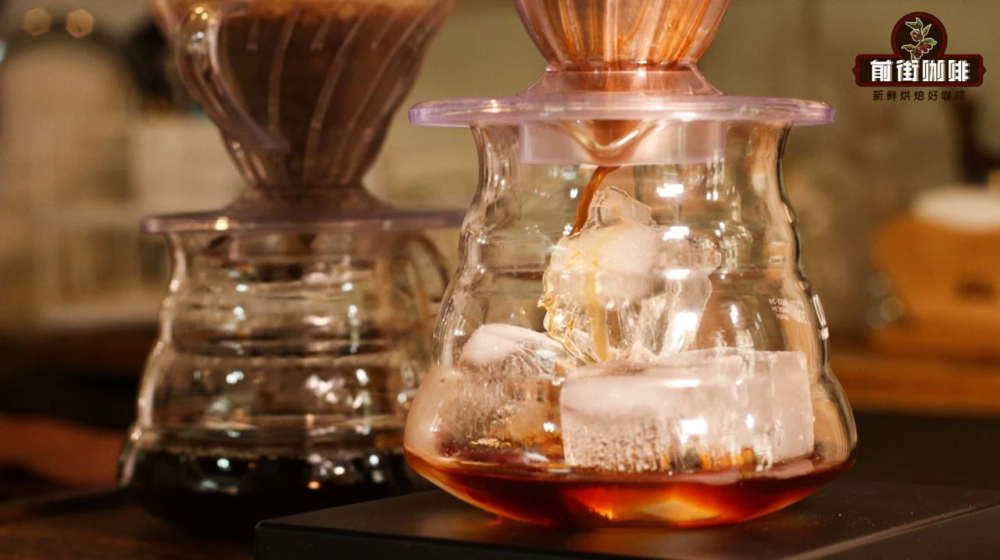
In summary, to consistently brew a well-balanced, cool, and smooth iced pour-over, the key lies in three things: first, maintaining a coffee-to-water ratio between 1:10 and 1:12, second, accurately factoring in the volume of ice when calculating the total water volume, and third, using suitable old ice to manage melting speed and dilution levels. These details may seem simple, but they are crucial to the final taste. Master these techniques, and whether it's a summer afternoon or a gathering with friends, you’ll be able to serve up a professional-grade iced pour-over with ease.
The above content is compiled by CoffeeHunters, a coffee news website.


