








Introduction:When a single cup of coffee requires four rounds of preparation to get right, customers not only question the operational process but also worry about beverage hygiene. This article details the full incident at a Luckin Coffee outlet, analyzing common service risks in chain coffee shops—from mislabeling hot and cold drinks, improper cleaning of containers, to staff training gaps—and offers practical advice for consumers on identifying standard operating procedures.
Recently, a customer shared on social media that it took the staff at Luckin Coffee four attempts to successfully serve their order. From initially confusing the type of drink (hot vs. cold), to using tap water that didn’t meet hygiene standards to clean the takeaway cup, the entire service process sparked widespread discussion and drew public attention to the employee training and food safety controls of chain coffee brands.
According to the customer’s account, the first attempt resulted in the staff incorrectly preparing a hot drink instead of the requested iced coffee. On the second try, although the correct temperature was used, the hot drink was poured into a transparent plastic cup originally intended for iced beverages, and the staff attempted to simply add ice cubes to turn it into a cold drink—which the customer immediately refused. Even more surprising was the third attempt, where after discarding the hot drink, the staff rinsed the same cup directly with tap water in preparation to remake it (according to the customer’s later account, a colleague had stopped the staff from continuing to add ice and milk at that point). It wasn’t until the fourth attempt that a new cup was finally used, and the correct iced coffee was prepared according to standard procedure.
Many netizens commented that while they initially thought the customer was being overly demanding, they came to see the overall handling as truly unreasonable after understanding the steps involved. Industry insiders pointed out that once a mistake is found in drink temperature or recipe, staff should immediately apologize and remake the drink following the correct procedure, and when cleaning containers, they must use drinking-quality water—not tap water.
Regarding the controversy over using tap water to wash cups, some netizens felt the customer’s demands for the first two remakes were reasonable, but argued that simply rinsing with clean water has limited actual impact on hygiene, and that replacing the cup each time may not be necessary. Others observed that many brewing tools in Luckin stores—such as milk pitchers—are routinely cleaned with tap water, raising the question of whether there are similar hygiene concerns when these tools come into contact with ingredients.
The original poster replied that while using tap water to clean utensils might be understandable, directly pouring incompletely drained tap water into a cup that is about to be served does indeed raise hygiene concerns.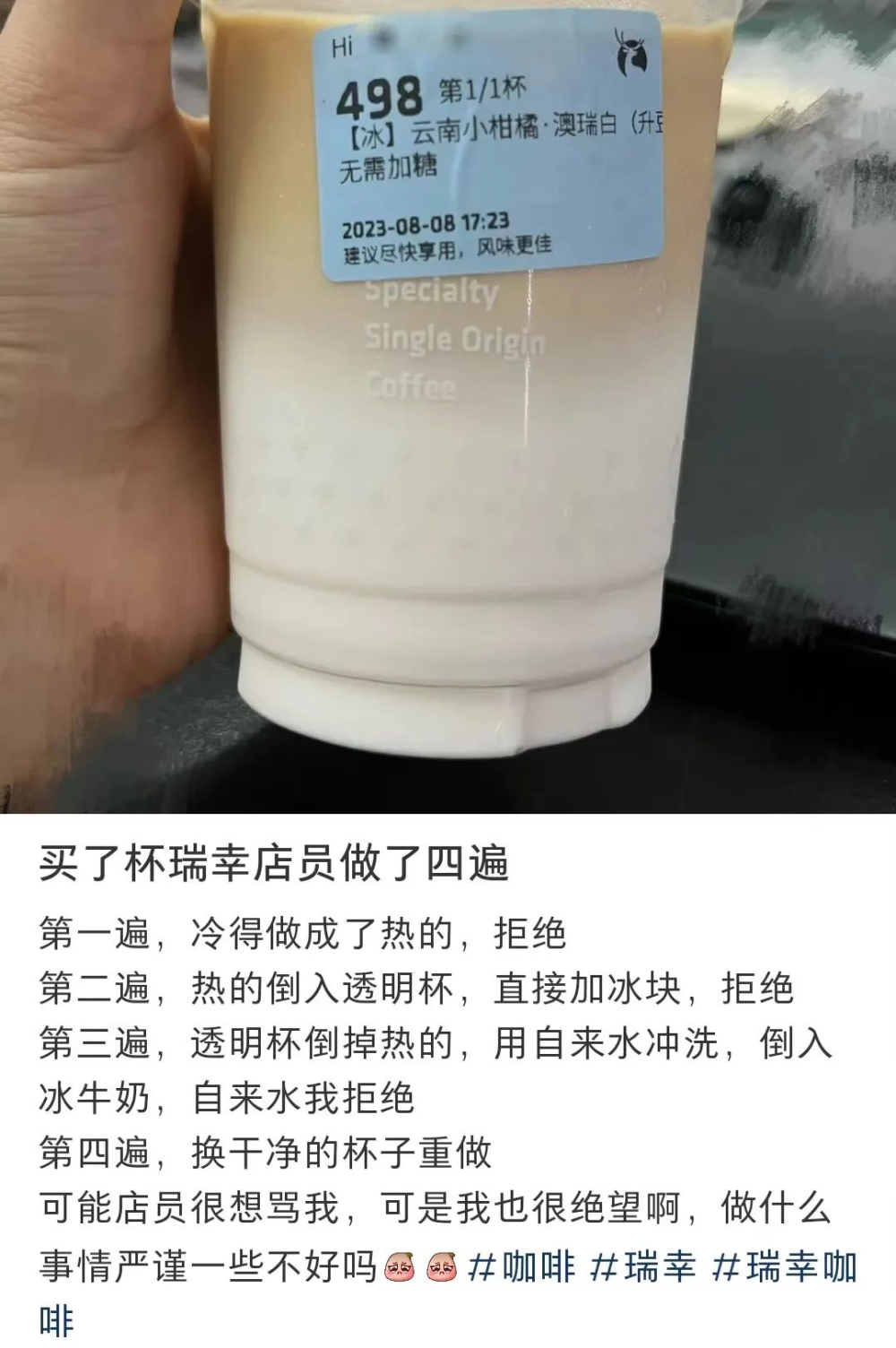
Some netizens believed that if the staff had been willing to remake the iced coffee as per the customer’s request from the beginning, rather than insisting on adjusting the hot drink, the whole process wouldn’t have been so complicated. Others noted that this situation was likely due to inexperienced new employees or summer part-timers lacking proper training, but regardless of role, facing mistakes should prioritize ensuring drink quality and procedural standards—not just saving on material costs.
Although the customer ultimately received the drink they expected, the entire incident highlights the challenges chain coffee shops face in balancing efficiency, quality, and hygiene management under high customer traffic and seasonal part-time staffing. The original poster also called on brands, as they expand, to strengthen training for new staff, ensure every cup of coffee follows standardized procedures, and uphold food safety controls.
As Luckin achieves its “10,000 stores” milestone, the demand for manpower continues to rise, especially during the summer peak season when the proportion of short-term part-time staff increases. How to maintain serving speed while ensuring precision and service consistency has become a key issue for the brand in safeguarding its reputation.
The above content is compiled by CoffeeHunters, a coffee news website.


