








Introduction:Have you ever mistakenly thought that honey processing involves adding honey? In fact, honey processing is a coffee bean processing method that falls between natural (sun-dried) and washed processing, capable of bringing out unique sweetness and fruity flavors. Additionally, there is a more complex and refined variation called raisin honey processing. This article will delve into the origins of honey processing, the characteristics of its four honey color grades, and the core differences between Brazil’s and Costa Rica’s raisin processing methods, helping you gain a more comprehensive understanding of the secrets behind these popular processing methods.
At first hearing the term “honey processing,” many people might associate it with honey or even mistakenly think that honey is added to the coffee beans during fermentation. However, that is not the case. Honey processing is actually an intermediate coffee bean processing method that combines characteristics of both natural and washed processing. It achieves unique flavors by retaining varying degrees of mucilage. In recent years, a more distinctive variation known as “raisin honey processing” has also emerged, attracting the curiosity of many coffee enthusiasts.

Before diving deeper into honey processing, many consumers have also misunderstood its production process, thinking that it actually uses honey to ferment the coffee. In reality, honey processing refers to a method where, after removing the coffee fruit's pulp, some of the mucilage is retained, and the beans are then sun-dried. The sticky texture of the mucilage resembles honey, which is how the name came about. This technique has since evolved into various types, from white honey to black honey, each with its own merits, while Brazil’s “raisin processing method” also has its unique qualities, worthy of close comparison.

Currently, most honey-processed coffees on the market come from Costa Rica, which is also the birthplace of this processing method. The rise of honey processing in Costa Rica was initially not driven by the goal of flavor innovation but rather by the aftermath of a major earthquake in 2008, which caused widespread power outages and water shortages. Traditional washed processing, which requires rinsing and hulling steps, could no longer be carried out, so processing facilities turned to the water-efficient alternative: honey processing. Over time, due to its flavor potential and processing flexibility, this method has gradually drawn global attention and has developed into various variations.
Traditional natural (sun-dried) processing involves placing the entire cleaned coffee cherry directly on raised beds or the ground for prolonged sun exposure, with both the pulp and mucilage fully retained. During fermentation, a rich array of flavors are released. Washed processing, on the other hand, first uses floatation to remove defective beans, then removes the pulp, followed by fermenting in water tanks to break down the remaining mucilage, and finally drying the beans. Honey processing lies somewhere in between: after floatation to remove unripe cherries, most of the pulp is removed, but some mucilage is deliberately left on. Without washing, the beans with their sticky mucilage are placed on drying beds. Because the mucilage has a honey-like thick consistency, this technique came to be known as “honey processing.”
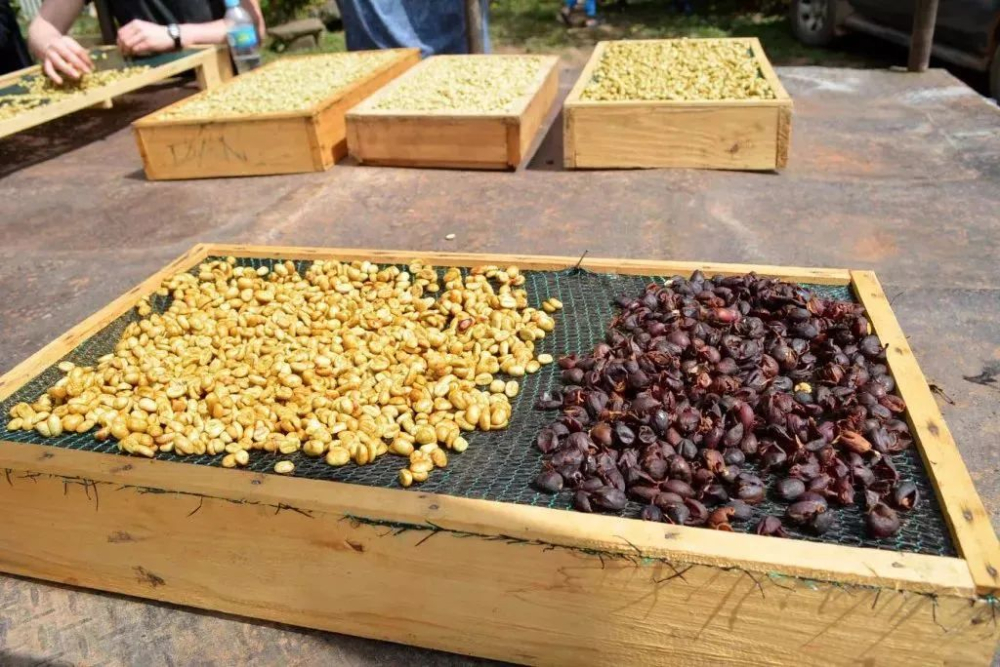
Costa Rican coffee farmers found in practice that the more mucilage retained, the longer the fermentation time, and the slower the drying speed, the darker the color of the parchment coffee becomes, and the more complex the flavor profile. With the introduction of precision pulping equipment, farmers gained more accurate control over the amount of mucilage removed, leading to the creation of white honey, yellow honey, red honey, and black honey grades. It’s important to note that factors influencing the color of the parchment coffee include not only the amount of mucilage retained but also the sugar content of the fresh coffee cherries themselves, as well as environmental conditions such as drying temperature, humidity, and frequency of turning.
White Honey: Almost all mucilage is removed, resulting in the fastest drying speed. The parchment coffee has an appearance close to the off-white of washed beans, with a cleaner flavor and lighter fermentation character.
Yellow Honey: Slightly more mucilage is retained, and drying takes a bit longer. The parchment coffee has a light yellow hue, with a more pronounced flavor complexity than white honey.
Red Honey: A thicker layer of mucilage is retained, and drying takes even longer. The parchment coffee turns reddish-brown, offering richer flavors with a noticeable sweetness.
Black Honey: Almost no mucilage is removed, and the drying process takes the longest. The parchment coffee is dark brown, with the highest level of fermentation, resulting in the boldest flavors. When well-controlled, it can showcase extreme sweetness and complexity. Its flavor profile is similar to that of natural processing but richer and more full-bodied.
In addition to the four main grades of honey processing, another noteworthy method has emerged in recent years—“raisin honey processing.” Its inspiration came from the 2017 Brazil Cup of Excellence, where Gabriel Alves Nunes used a “raisin processing method” with Yellow Bourbon coffee beans. This technique gained fame after achieving a remarkable score of 92.33 and setting a record auction price of $124.5 per pound.
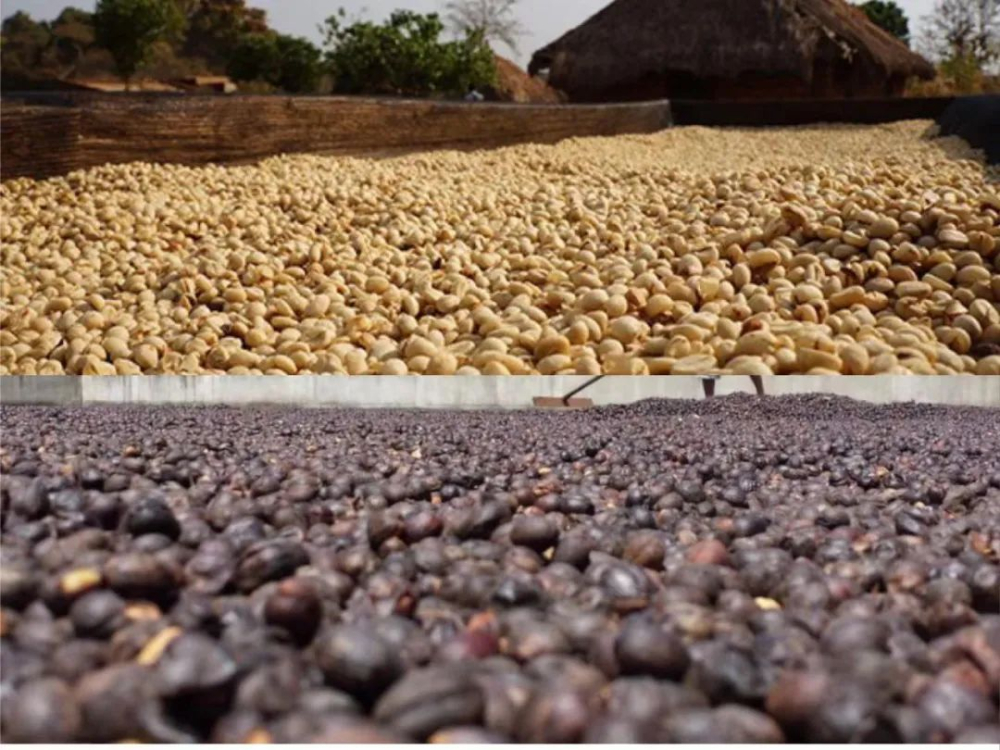
Brazil’s “raisin processing method” (Raisin process) is characterized by allowing the coffee cherries to naturally ripen on the tree until the skin shrinks and the color turns dark purple, resembling raisins, before harvesting. These ultra-ripe fruits are extremely high in sugar and packed with intense flavors. After processing, they often exhibit strong sweet aromas and complex layers.
Costa Rica’s “raisin honey processing” (raisin honey), on the other hand, takes a different approach: farmers first manually harvest fully red ripe cherries, which are then sorted by quality via floatation. The cherries are then spread out on raised beds to dry for approximately 2–3 days until the skins wrinkle like raisins. Afterwards, the outer skin and pulp are removed, leaving behind semi-dry mucilage for subsequent sun drying. In other words, this method combines the pre-fermentation of the whole fruit (similar to the state of raisins) with the mucilage fermentation of honey processing. The overall process is more complicated and demands high technical skill and precise environmental control.
Although the names of the raisin processing methods in both regions are similar, their actual practices differ significantly: the Brazilian version focuses on allowing the fruit to naturally ripen to a raisin-like state on the tree before processing, emphasizing the natural richness brought by extreme ripeness; the Costa Rican version involves artificial ripening and double fermentation after harvest, highlighting the refinement of craftsmanship and control. Nevertheless, both utilize the concept of “raisinization” to allow the coffee beans to exhibit rich sweetness and unique flavor profiles, making them standout processing techniques in the specialty coffee market.
The above content is compiled by CoffeeHunters, a coffee news website.


