








Introduction:When a barista can pour delicate latte art patterns with their eyes closed, it’s not just a viral challenge — it’s an extreme test of professional skill. This article delves into the origins of the blind pour-over latte art challenge, the key factors behind expert stability, common reasons for mistakes, and how muscle memory influences latte art. You’ll also gain insight into the techniques mastered by professional baristas.
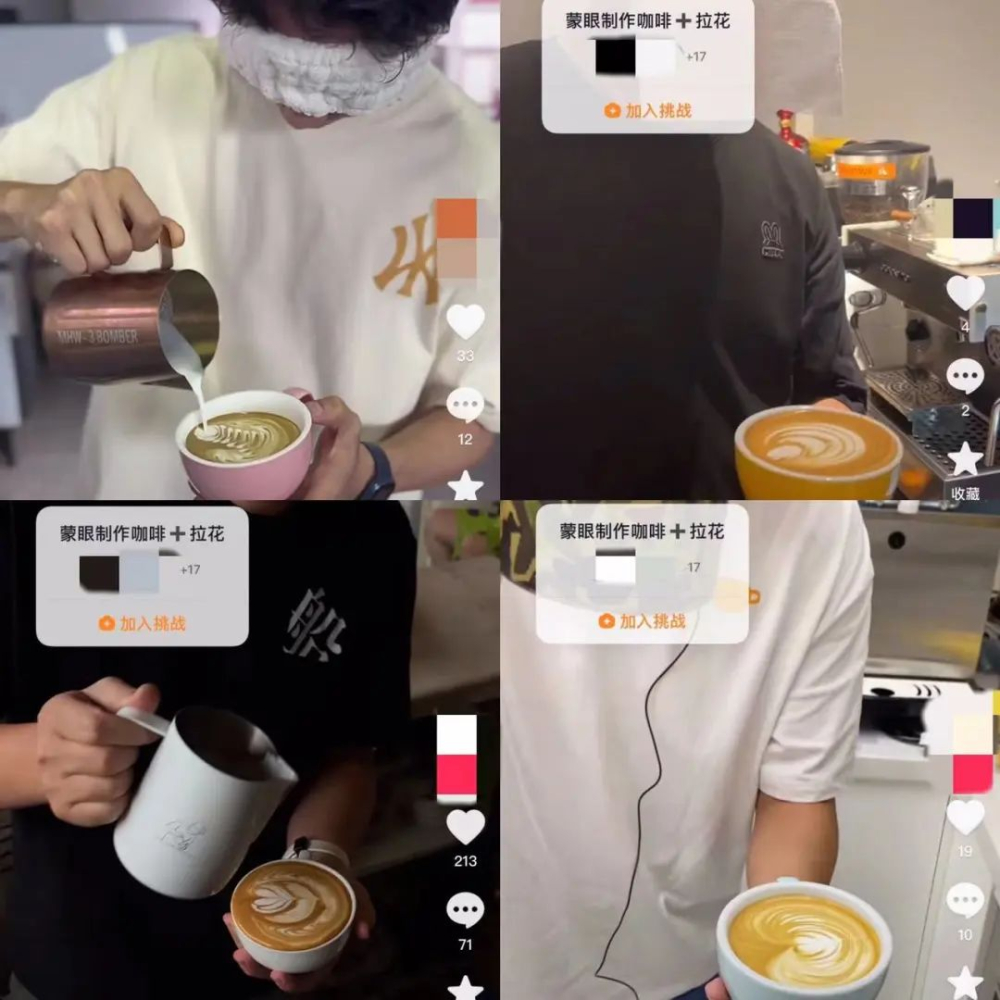
In recent years, a trend of “blind latte art” challenges has taken social media by storm. Invited baristas must complete the entire process — coffee extraction, milk frothing, and latte art — entirely with their eyes closed, then upload the footage and nominate fellow professionals to take part. What seems like a fun activity is actually a rigorous test of a barista’s foundational skills.
Many experienced baristas, relying on muscle memory built through long-term training, can still pour stable patterns with their eyes shut, leaving netizens amazed that “it’s even better than doing it with eyes open.” Their movements are smooth and natural, as if vision isn’t necessary at all, showcasing a deep foundation of professional training.In fact, muscle memory is the key to a barista’s ability to operate stably without visual input..

However, there are also countless examples of failed challenges. Some baristas, despite considering themselves highly skilled, produce underwhelming results when pouring blind. Common issues include skewed latte art patterns, uneven milk integration, or even coffee spills. Some have accidentally sprayed milk while steaming due to inserting the steam wand too deeply, or even used their fingers to gauge milk temperature — all of which increase the risk of mistakes.
Netizen reactions to this challenge are mixed. Some question the purpose of “blind latte art,” while others admire those who complete it, seeing it as the pinnacle of professional skill. Some even joke, “I’ve just learned how to make a push-pop, and you’re already doing blind latte art?”
Looking back to May this year, a latte art showdown between two post-2000s baristas livestreamed on Taobao took the challenge to new heights. The competition included blind latte art, using watermelons as cups, milk cartons as pitchers, and even crafting “coffee” with seasonings — showcasing the creativity and technical daring of the younger generation of baristas.
For professional baristas, although these challenges are entertaining in nature, they are essentially an extension of technical skill assessment. Pouring blindly not only tests a barista’s fundamentals but also highlights the importance of muscle memory in coffee preparation. Through these challenges, we gain a deeper understanding of the technical barriers and training essentials behind latte art.
The above content is compiled by CoffeeHunters, a coffee news website.


