







Introduction:Grind size is the first step to a successful pour over, but there is no unified standard on the market. Common analogies like “granulated sugar,” grinder settings, or sieve filtration rates each have their pros and cons. This article delves into three methods—reference to grinder settings, visual analogy, and sieve calibration—to explore their principles, limitations, and applicable scenarios. It also provides a detailed walkthrough of using a No. 20 standard sieve, helping you fine-tune grind size with minimal coffee and identify the optimal extraction parameters.
In the process of pour over brewing, grind size has a significant impact on coffee flavor and extraction efficiency, yet there is still no globally unified standard for describing or judging it. Some baristas use analogies like “granulated sugar,” others directly quote grinder scale numbers, and some professional shops even quantify it precisely through filtration rates. Although these methods all have certain limitations, their core purpose is to help brewers find the most suitable grind range for a particular coffee bean. This article will analyze the characteristics and challenges of each method from three perspectives: reference to grinder settings, visual analogy, and sieve calibration, and provide a complete introduction to using a No. 20 standard sieve, enabling you to adjust grind size more scientifically.
First, it’s important to understand that there is still no universally accepted way to describe coffee ground fineness. As a result, when people talk about grind size, a wide variety of terms are often used. Some compare it to everyday sugar granules, others refer directly to a specific number on a grinder, and some, like certain specialty shops, quantify it by calculating the filtration rate. While these methods are not entirely interchangeable, they all aim to help users more intuitively grasp the particle size of coffee grounds and thereby optimize brewing results.
I. Grinder Setting Reference Method: Based on Grinder Scale Numbers
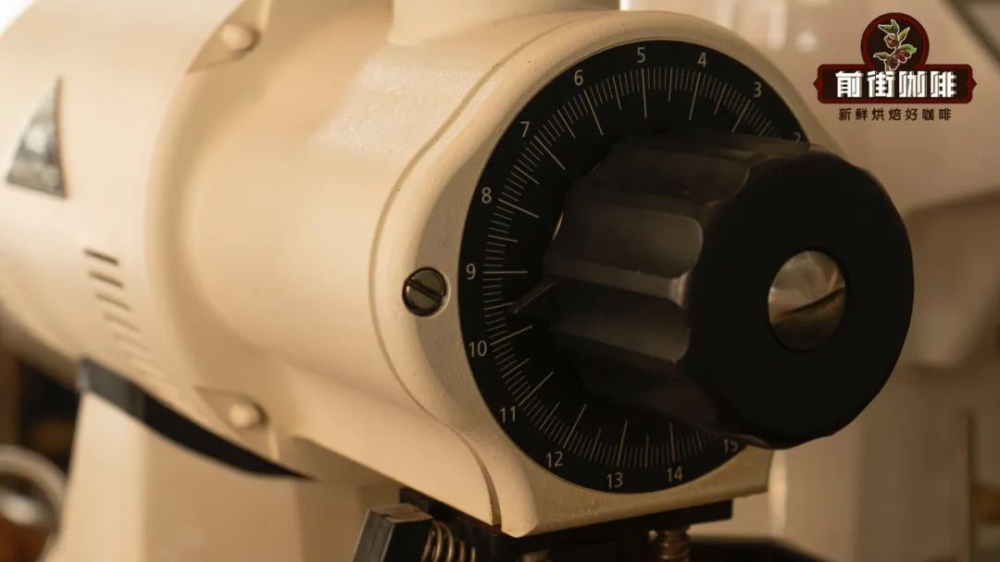
This method uses the numerical values on the grinder scale to indicate grind coarseness, typically referencing common and widely compatible grinder models, such as the EK-43 grinder’s 7 setting or the C40 grinder’s 26th click.
However, the downside of this approach is quite obvious. With the wide variety of grinders on the market, the scale systems of different brands and models vary greatly. Even if the scale numbers are the same, the actual fineness of the resulting coffee grounds can differ significantly. Even for the same model, differences in installation method, burr wear, or user habits can lead to varying performance at the same setting. If two coffee enthusiasts use grinders of different models and try to communicate grind size via scale numbers, it’s almost mission impossible. Therefore, the grinder setting reference method is only suitable as a personal record for daily use, not as a standardized communication tool across devices.
II. Visual Analogy Method: Comparing Grind Size to Everyday Objects
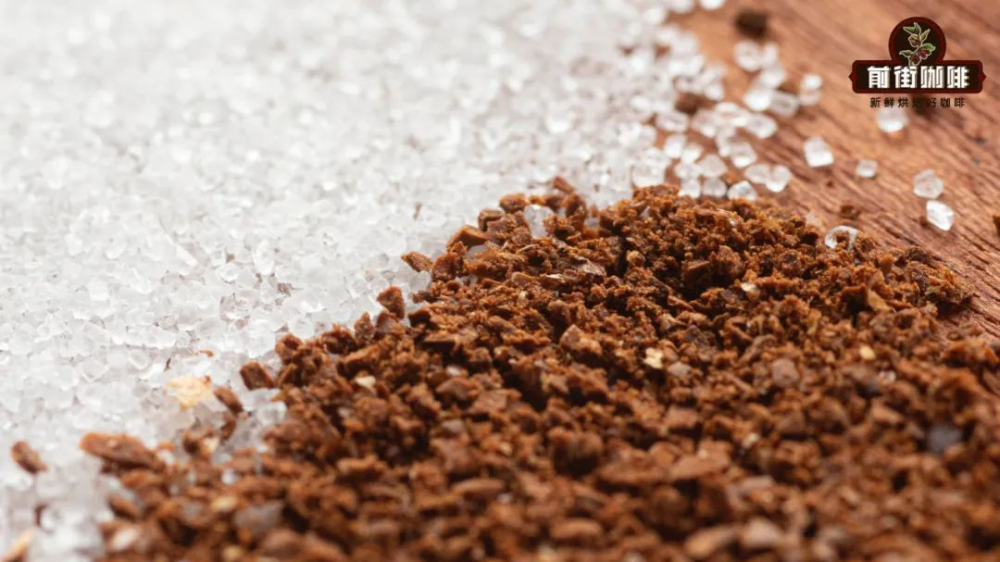
The visual analogy method uses common objects in daily life to describe the particle size of coffee grounds, such as coarse sugar or granulated sugar being the most frequently referenced. This approach is intuitive and easy to relate to, helping beginners quickly build a basic understanding of grind size.
But the accuracy of this method is questionable. The human eye has limited ability to distinguish tiny particles, especially in coffee grounds produced by hand grinders, where a few slightly larger particles may stand out, leading to visual misjudgment. For example, when you see a few larger coffee particles, you might assume the overall grind is at a “coarse sugar” level, when in fact it’s closer to “granulated sugar.” It’s recommended to spread the coffee grounds flat when making visual judgments to avoid localized visual errors, which can improve the accuracy of preliminary assessments.
III. Sieve Calibration Method: A Scientific Way to Quantify Grind Size
The sieve calibration method is currently one of the most accurate ways to quantify grind size, and it is commonly used by many specialty shops and cupping enthusiasts. Among them, the most frequently mentioned is the use of a No. 20 standard sieve, which has a mesh diameter of 0.85mm, used to assess the overall particle distribution of coffee grounds, rather than simply sieving out fines.
The biggest advantage of this method is its “repeatability.” As long as you record the filtration rate at a specific grind size, even if you switch to a grinder of a different brand or model, you can adjust the grind coarseness to achieve a similar filtration percentage, thereby maintaining consistent extraction characteristics. The downside is that it requires more time and effort for manual sieving, and you need to maintain a steady shaking motion during the process, which can be quite labor-intensive.
The specific operation process is as follows: take 10 grams of coffee beans (it’s recommended to use multiples such as 20 or 30 grams to improve data accuracy), select an initial grind size to grind the beans, pour the ground coffee into a No. 20 sieve, then sieve by shaking it horizontally left and right for about 3 to 5 minutes until no more particles are visibly falling. Finally, weigh the sieved coffee grounds and calculate the filtration rate using “weight of sieved grounds ÷ total weight.” For example, if 10 grams of coffee beans yield 8 grams through the sieve, the filtration rate is 80%; if you wish to increase it to 90%, you can further adjust the grind to be finer, retest until the target is met.
Through these three methods, whether you are a beginner or a coffee enthusiast pursuing precise extraction, you can choose the most suitable method for judging grind size based on your own conditions. Whether referencing grinder settings, using visual analogy, or quantifying filtration rates through sieving, the ultimate goal is to help you effectively reduce the trial-and-error cost of adjusting parameters before actual brewing. Then, by observing flow rate and brew time, you can gradually find the optimal grind setting for that particular coffee bean.
The above content is compiled by CoffeeHunters, a coffee news website.


