








Introduction:Ethiopia is a globally renowned specialty coffee origin, with its grading system centered on defect rates and cupping scores. Among these, washed Yirgacheffe G1 and G2 beans receive the most attention. Through practical examples, this article takes you through a step-by-step analysis — from green bean appearance and defect ratios to pour over flavor profiles — helping you choose the coffee beans that best suit your preferences.
As a genetic treasure trove of Arabica coffee, Ethiopia is home to numerous wild and semi-wild varieties. As such, its grading method differs significantly from other regions. Since coffee trees mostly grow naturally and harvests often mix multiple varieties, grading by bean size alone isn’t viable. Instead, the country has shifted to usingdefect rateas the main grading criterion. After the new ECX (Ethiopian Commodity Exchange) system took effect in 2009,cupping scoreswere also introduced, allowing even natural process beans the chance to be classified as G1 or G2. So, what exactly is the difference between washed Yirgacheffe G1 and G2 beans? We’ll take Kochere G1 and regular washed Yirgacheffe G2 beans as examples and compare them across multiple dimensions.

Grading logic varies considerably across global coffee origins. For example, Kenya emphasizes bean size, Blue Mountain coffee is judged by altitude, while Ethiopia relies primarily ondefect rateas the key metric. Due to the extreme diversity of local coffee varieties — and in order to protect native species resources — many are broadly categorized as “Heirloom (heirloom variety).” These heirloom beans are typically small in size, irregularly shaped, and tend to have a rounder appearance.
Coffee in Ethiopia mostly grows in the wild or semi-wild state, and harvests often mix different varieties, making it difficult to strictly separate them. Farmers usually harvest entire plots and send them to processing facilities, leading to significant variation in green bean size and shape. For this reason, unlike Kenya — where beans can be graded by size — Ethiopia instead usesthe number of defective beansas its grading standard.
Before the implementation of the 2009 ECX system, Ethiopia’s coffee grading was based solely on defect rates, divided into five grades. Among these,G1 and G2 were limited to washed beansand considered specialty coffee. It’s worth noting that at that time, most washed beans could only reach G2 level, with G1 being extremely rare and hard to find in the market.
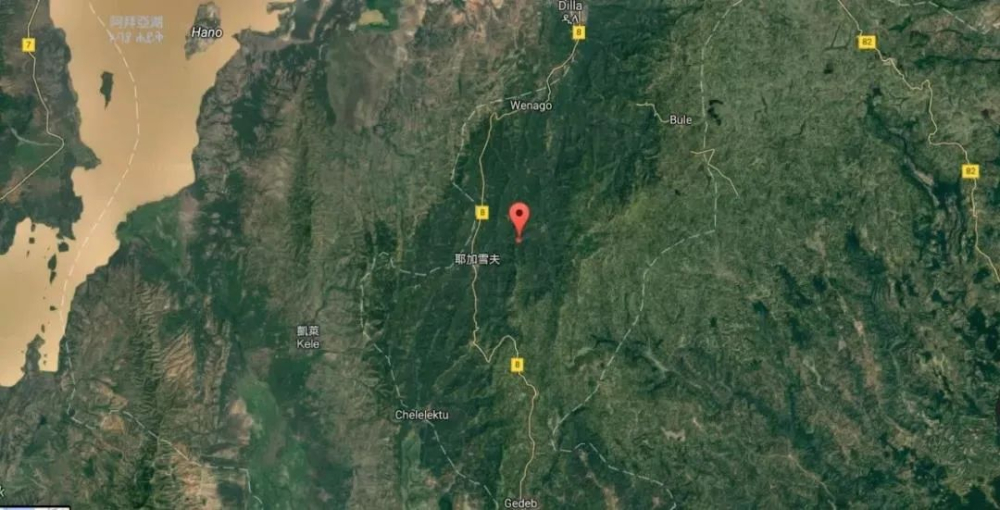
Traditional natural processing methods were relatively crude, often involving direct sun drying in courtyards or on the ground. This not only made it easy for foreign matter to mix in, but also affected flavor consistency. Therefore, in the 1970s, Ethiopia introduced the washed processing method, which uses floatation to remove unripe beans and impurities, significantly improving stability and quality. As a result, washed beans were considered a higher-grade processing method at the time, and the only type eligible for G1 and G2 classification. Back then, natural beans were generally relegated to G3 or lower grades.
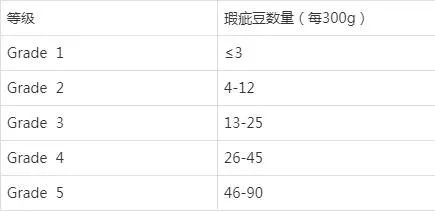
Under the old system,washed beans at G1 level were defined as having no more than 3 defective beans per 300 grams;G2 allowed 4 to 12 defective beans. This standard made G1 extremely rare in the market and represented higher quality and consistency.
In October 2009, with assistance from international specialty coffee organizations, Ethiopia launched the new ECX system. Grading was no longer based solely on defect rates but also incorporatedcupping scoresfor a comprehensive evaluation. This reform allowed natural process beans to also qualify for G1 and G2 levels, breaking the previous framework where naturals were confined to lower tiers. Today, it’s common to see Ethiopian natural beans labeled as G1 or G2, while G3 grades have gradually become less prevalent.
The ECX classifies coffee into three main processing categories and evaluates them based on defect rates and cupping performance. So, what are the actual differences between washed Yirgacheffe G1 and G2 beans? We compared Kochere G1 and regular washed Yirgacheffe G2 beans, analyzing everything from green bean appearance to brewed flavor.

Looking at the unroasted green beans, G1 beans are more uniform in size, with consistent color, and noticeably fewer defects. In contrast, G2 beans vary more in size and have a higher proportion of defects. While many people intuitively assume that uniformly sized and visually appealing beans must taste better,flavor is not directly related to bean size— it depends more on processing and roasting techniques. Additionally, during actual roasting, defects are typically screened out again, so even beans classified as G2 may be comparable in quality to G1 after screening. From a roasting efficiency standpoint, choosing G1 can save considerable time in bean selection.
This test used a light roast, brewed via V60 dripper with water at 91°C, a 1:15 coffee-to-water ratio, and a grind size of about 80%. In terms of flavor, the G2 washed Yirgacheffe displayed pronounced white floral notes, lemon, and citrus tones, along with a tea-like aftertaste. The G1 beans, in addition to retaining similar floral and acidic qualities, delivered an overall cleaner profile, with more delicate aromas and richer layers, clearly outperforming in taste purity and flavor detail.
In summary, although both G1 and G2 are high-quality washed Yirgacheffe beans, G1 demonstrates greater consistency and refinement in terms of defect rate, green bean appearance, and final flavor profile. If you’re seeking a purer and brighter coffee experience, G1 is definitely the more worthwhile choice.
The above content is compiled by CoffeeHunters, a coffee news website.


