







Introduction:Many coffee enthusiasts often encounter issues with insufficient sweetness and flat flavor profiles when brewing iced pour over. This article delves into the extraction principles to help you understand how adjusting grind size, number of pours, and brew ratio can effectively enhance the sweetness of iced pour over. Using a Costa Rican strawberry syrup-flavored bean as an example, we detail tested parameters and brewing steps to guide you in making a fruity and sweet iced coffee.
Iced pour over, due to its lower brew ratio and the cooling dilution effect of ice, often faces challenges such as under-extraction and incomplete release of sweet compounds. Compared to hot pour over, the brewing environment for iced pour over is more demanding. How to effectively extract the sweet elements from coffee within limited pouring time and water volume is a key concern for many pour over lovers.
Generally speaking, to compensate for the reduced extraction efficiency caused by less water in iced pour over, the grind size is adjusted slightly finer than that of hot pour over to extend the contact time between water and coffee. However, even so, iced pour over still cannot fully replicate the extraction effect of the mid-to-late stages in hot pour over, resulting in overall flavor complexity and sweetness that are not as rich as those from hot brewing.
Some readers have asked: Can iced pour over achieve both a rich mouthfeel and clear sweetness without over-extraction? This is indeed a topic worthy of deeper exploration. In fact, the release timing of acidity, sweetness, and bitterness in coffee varies — with sweet compounds mostly released in the mid-to-late stages. Due to the short pouring time and small water volume in iced pour over, these sweet components often dissolve incompletely before extraction ends.
Therefore, if you want to enhance the sweetness of iced pour over, the key lies in creating more opportunities for sweet compounds to dissolve — that is, extending their release and extraction time. Additionally, selecting a coffee bean with a naturally mild flavor profile, low acidity and bitterness, and rich in fruitiness and fermentation aromas is also a crucial factor. Certain well-known beans from specific regions, such as those with notes of blackberry, Huakui, Sidra, or Mozart, are great choices.
For this session, we used a strawberry syrup blend from Costa Rica as our demo bean. This is a Geisha-flavored blend with prominent notes of strawberry taffy, ripe tropical fruits, and raisins. Its sweet characteristics are distinct, making it highly suitable for iced pour over, especially in the summer.
In our first attempt, we fine-tuned the grind size to EK43 setting 8.5 — finer than our usual production setting of 9.5 — hoping to extend the water-coffee contact time. Although the finer grind visibly slowed the flow rate and extended the brew time, the overly fine grind increased the risk of over-extraction. Even with ice added to lower the temperature, the coffee did not exhibit richer sweetness but instead showed slight bitter and astringent notes at the end, indicating that an overly fine grind is not the ideal strategy.
Next, we changed our approach by increasing the number of pours to improve extraction uniformity and overall brew time. After the bloom, adding more pour stages allows for more frequent agitation and rinsing of the coffee bed, aiding the release of sweet compounds. However, more pour stages mean smaller water volume per pour, which demands higher pouring stability. Therefore, we also adjusted the brew ratio to 1:12 to ensure the overall strength wasn’t too high and to facilitate subsequent ice dilution.
The tested parameters were as follows: 15g coffee, 91°C water temperature, total brew water 180g, grind size EK43 setting 9, using a four-pour method: 30g (bloom) + 50g + 50g + 50g.
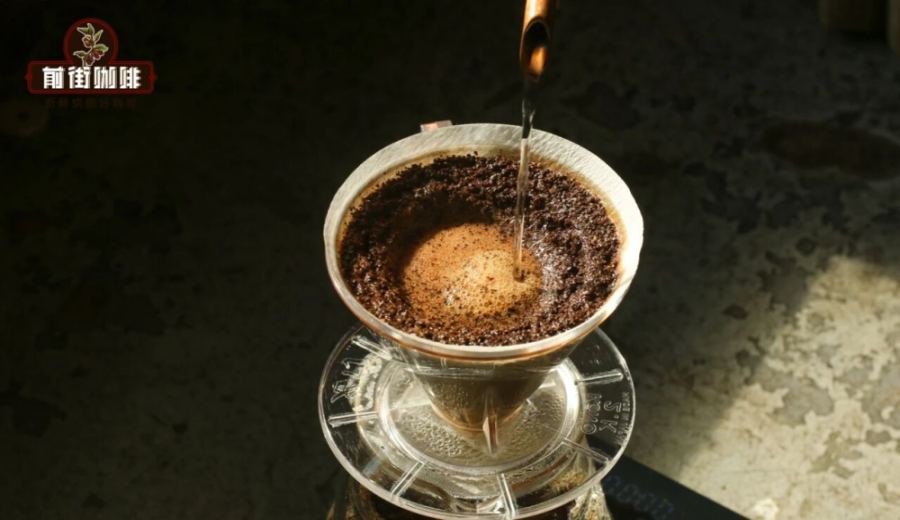
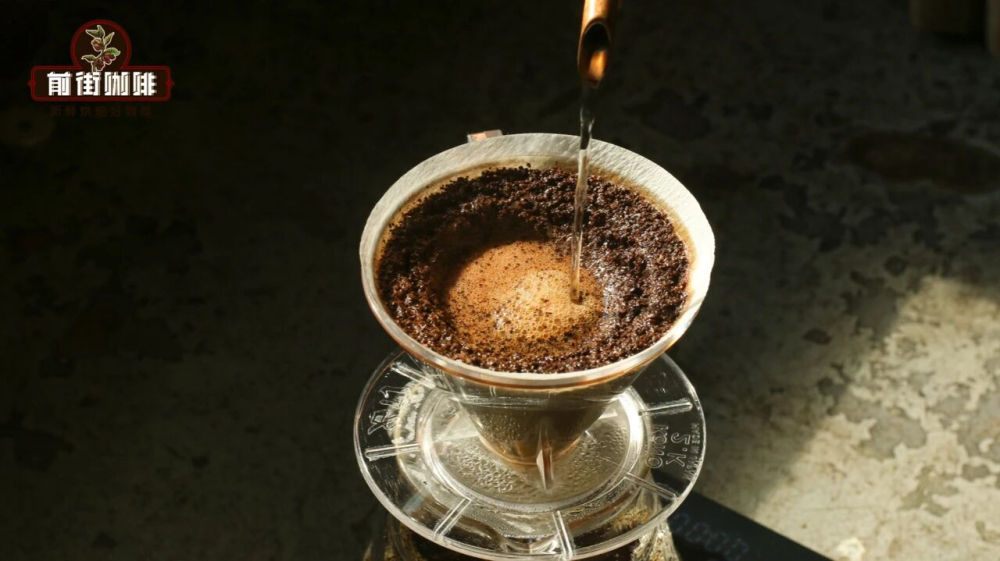
In terms of technique, we also paid special attention to water flow control. First, we bloomed with 30g of water for 30 seconds. The first pour reached 80g using a small stream circling from the center outward to gently release bubbles in the coffee bed. The second pour reached 130g, again using a gentle outward expansion with a small stream to ensure even saturation of all coffee grounds. The final pour slightly increased the flow rate, focusing on the center to reach 180g. The total pour time was approximately 1 minute and 35 seconds, with dripping completed around 2 minutes and 5 seconds.

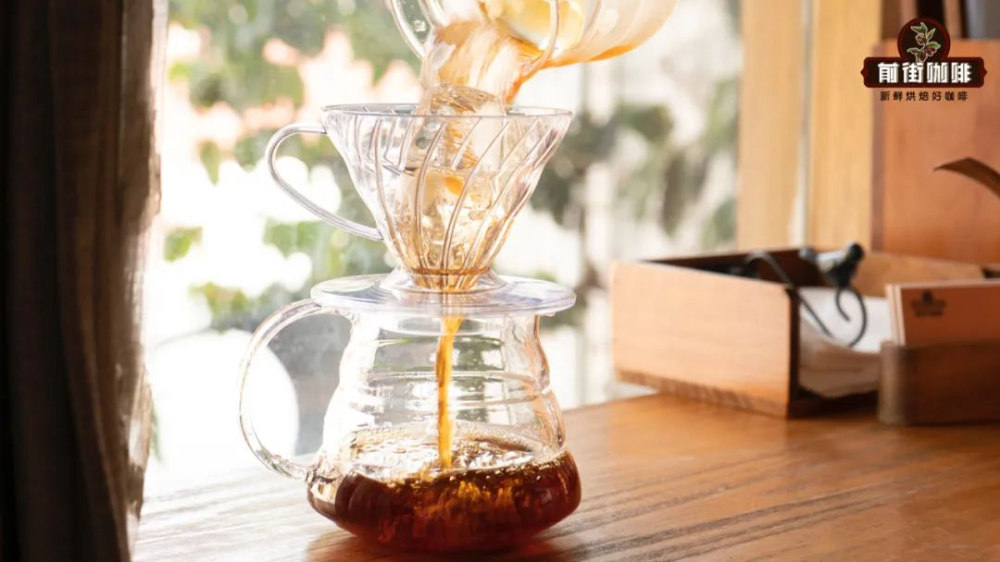
To further enhance the cool taste after extraction, we quickly poured the hot-brewed coffee liquid over a large amount of hard ice, cooling it down to 5–10°C, ultimately yielding about 200g of iced coffee. It’s recommended to pour the coffee into a pre-chilled glass to help maintain flavor and taste stability.
The final brewed strawberry syrup iced pour over exhibited full fruitiness and a clear dried fruit-like sweetness, with fermentation aromas reminiscent of fruit wine, accompanied by subtle floral notes. The aftertaste was long-lasting and memorable. Although these parameters and techniques were tailored to this particular bean and flavor goal, the underlying extraction logic and practical details offer high reference value for anyone seeking to enhance the sweetness of their iced pour over.
It’s important to note that the method shared in this article is not a one-size-fits-all solution. The beauty of pour over lies in the process of continuous experimentation and adjustment, where the unique flavor profiles of each bean and technique can be discovered. We encourage all coffee enthusiasts to try various approaches and find their own optimal balance in extraction.
The above content is compiled by CoffeeHunters, a coffee news website.


