








Introduction:When the new Chinese-style tea beverages successfully captured consumer interest through ritualistic presentation and local elements, the coffee scene often lost public favor due to excessive gimmickry. This article delves into how traditional Chinese culinary wisdom can be transformed into inspiration for coffee brewing methods. From water bath simmering and purple clay steaming to clay pot brewing, we analyze how these techniques—through low-temperature slow extraction and even heat distribution—draw out richer, smoother coffee flavors. Practical parameters and tips are also provided to help enthusiasts explore a coffee expression tailored to the Chinese palate.
In recent years, the milk tea industry has created a new wave of beverage trends by perfectly blending ritualistic elements with regional ingredients through "jar-roasted milk." In contrast, the "new Chinese-style" experiments in the coffee world often spark controversy due to their jarring combinations. In reality, the techniques embedded in traditional Chinese cooking and tea artistry are excellent sources of inspiration for localizing coffee. Methods such as water bath coffee, purple clay steamer coffee, and even Macau’s unique clay pot coffee all utilize the principles of low-temperature slow extraction and even heating, resulting in a more rounded and mellow coffee flavor profile.
These experiments with Chinese-style coffee share a similar philosophy with the once-popular "stove-boiled tea." By gathering around the fire and watching the tea slowly come to a boil, stove-boiled tea creates a cozy winter ambiance and gained immense popularity during the fall and winter seasons. As temperatures rose, though the stove-boiled trend gradually cooled down, consumers’ desire for ritualistic beverage experiences remained. Businesses that adeptly captured this demand quickly introduced "jarred milk tea"—convenient to prepare yet still ritualistic—allowing people to enjoy a spring-inspired, Yunnan-flavored hot drink after just a short wait.

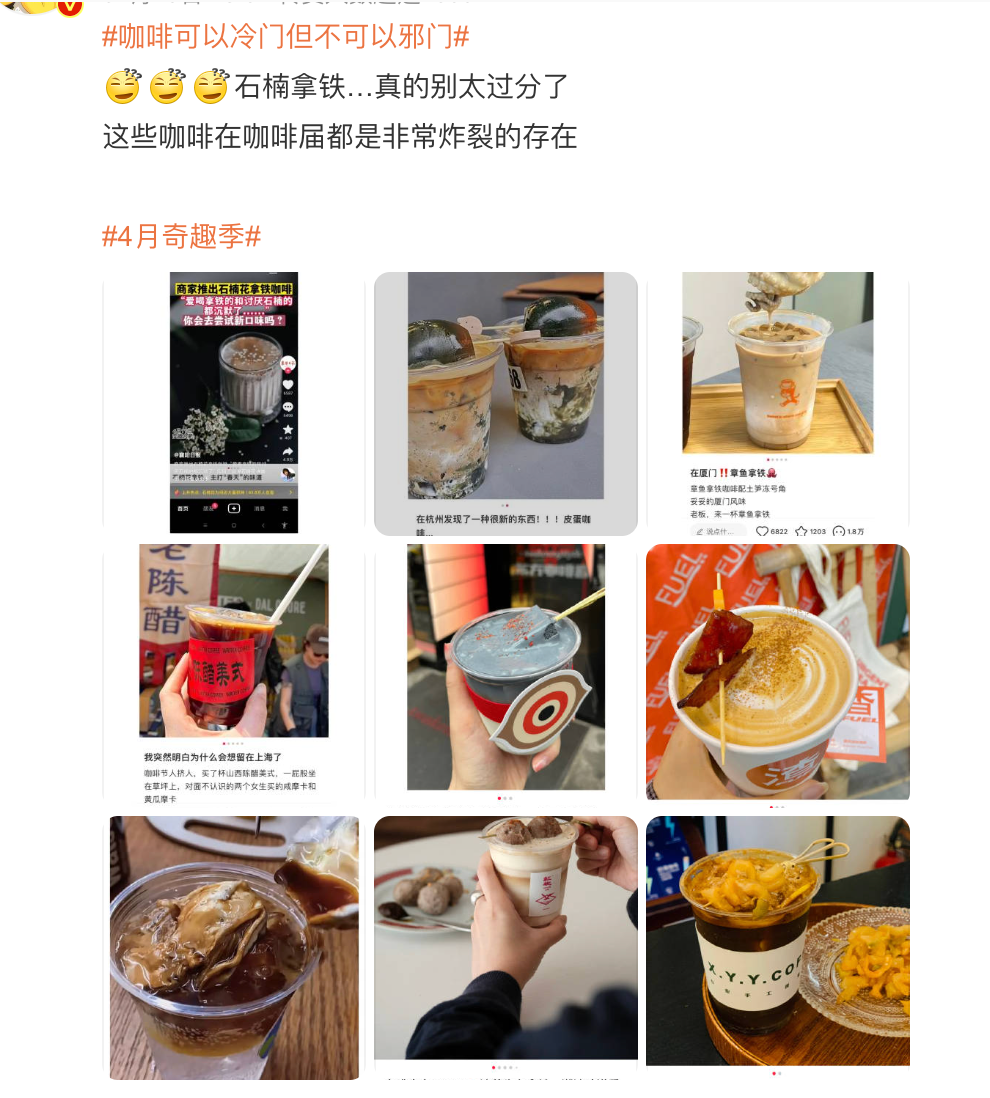
This jarred milk tea not only uses locally sourced Yunnan tea leaves and fresh milk but also cleverly incorporates edible roses, energy-boosting red dates, healthful goji berries, and lung-moistening yellow rock sugar, precisely tapping into young consumers’ dual aspirations for health and ritual. In contrast, some innovations in the coffee world have often ended up feeling inaccessible. As various coffee drinks fused with local snacks frequently appeared, an online article bluntly titled "Coffee can be niche, but not bizarre" quickly resonated with the public, exposing widespread confusion and fatigue over overly eccentric combinations.
In truth, the development of new Chinese-style coffee could have taken a more stable path. Observing the evolution of coffee cultures in other regions: Italy established the espresso style by inventing the pressure coffee machine; Japan shaped a Japanese aesthetic through unique roasting and brewing techniques; and Australia pioneered an Aussie-style identity through its rigorous pursuit of milk coffee flavors. Clearly, if China aims to create a representative Chinese-style coffee, it too must seek answers from its own culinary and tea culture.
With the diversity of Chinese cooking techniques and the profound depth of tea ceremony, both offer fertile ground for innovation in Chinese-style coffee. For example, the much-discussed "water bath coffee" over a year ago drew inspiration from traditional soup simmering. This method involves placing preheated coffee slurry in hot water and slowly simmering it, using precise control over grind size and extraction time to allow coffee particles to release rich and pleasant flavor compounds in a water-bath environment.Although the entire process involves high-temperature simmering, the internal temperature of the container is effectively controlled within an appropriate range, helping to suppress the release of bitter substances and ensuring the final coffee tastes rich and smooth, with almost no noticeable bitterness.
Another noteworthy example is the "purple clay steamer coffee" unveiled at a coffee exhibition half a year ago. This method also emphasizes low-temperature slow extraction. Although the temperature inside the steamer is relatively high, the coffee inside the pot heats up noticeably slower than with direct heating. Due to the smaller amount of water used in the steaming process, the coffee liquid can quickly reach saturation,effectively preventing off-flavors or excessive bitterness in the later stages.Additionally, the purple clay material itself has the property of adsorbing odors, further reducing undesirable flavors in the coffee and enhancing overall quality.
As for "clay pot coffee," which has evolved into a specialty drink in the Macau region, it is a classic application combining charcoal fire and traditional clay pots. By slowly simmering over a charcoal stove, the clay pot evenly conducts heat, allowing the coffee grounds to fully release their aroma. According to insights from seasoned enthusiasts, the key to clay pot coffee lies in pre-treatment: coarse-ground coffee particles are steamed without water for about 1 to 2 hours, which helps reduce astringency. Moreover,it is recommended to use an unglazed clay pot, which can further reduce bitterness.You can also add roasted eggshells to impart a uniquely rich aroma to the coffee.
Looking at these practices of Chinese-style coffee, it’s not hard to see that traditional cooking and tea art techniques can indeed bring a fresh perspective to coffee. From the precise temperature control of water bath brewing, the adsorption properties of purple clay, to the even heat conduction of clay pots, each method embodies unique scientific principles and practical skills. Coffee innovation should not be confined to existing brewing frameworks but needs the courage to step out of the comfort zone and integrate the essence of local culture to create a truly Chinese-style coffee vocabulary—allowing more people to appreciate the deep heritage of Chinese coffee starting from the essence of flavor.
The above content is compiled by CoffeeHunters, a coffee news website.


