







Introduction:During the pour over brewing process, the shape of the coffee bed (or "powder pit") is often used by enthusiasts as an important clue to evaluate extraction effectiveness. But can the powder pit truly reflect the flavor performance of a cup of coffee? This article delves into the mechanics behind powder pit formation, interprets the extraction issues suggested by different shapes, and offers practical diagnostic techniques and adjustment suggestions to help you more scientifically assess brew quality.
During pour over brewing, many coffee lovers have the habit of observing the grounds in the filter after brewing—especially the state of the powder pit. Some people, upon seeing an even distribution of coffee grounds and a well-formed pit, expect the resulting coffee to perform well. Conversely, others may assume the coffee will be subpar if the powder pit looks irregular. So, can the powder pit really serve as a key indicator of coffee quality? In truth, the information provided by the powder pit has its limitations, but it can indeed help us understand potential issues during the brewing process.
Observing the formation of the powder pit can help us review operational details throughout the pour over process—such as the evenness of water pouring, the stability of the pouring path, and whether the grind size is consistent. An experienced barista once likened powder pit deformation to an “operation log,” reflecting whether each step of your brewing technique was executed properly. Therefore, when the flavor of your brewed coffee doesn’t meet expectations, it’s worth taking a look at the shape of the powder pit; sometimes it can quickly reveal where the issue lies.
For example, if the brewed coffee has a noticeable bitter or astringent taste and the surface of the powder pit looks wet and muddy—almost slurry-like—this likely indicates an overly high ratio of fine particles, leading to over-extraction. On the other hand, if the coffee tastes flat and lacks complexity, with a clear separation between the coffee bed and the edge of the filter, it could mean that the pouring path was too small or the water flow unstable during brewing, resulting in uneven extraction. Additionally, if the coffee carries off-flavors and the powder pit shows inconsistent thickness, it often suggests that the pouring speed or technique was unstable, affecting overall extraction balance.
It’s worth noting that there is no so-called “perfect” powder pit shape. Different baristas have varying preferences for powder pit aesthetics—some like a volcano-like conical pit, some prefer a deep and evenly recessed shape, and others may even pursue an extremely deep pit bottom. In fact, as long as you use stable pouring techniques and appropriate grind settings, achieving a neatly formed powder pit isn’t difficult. However, the visual appeal of the powder pit does not directly determine the flavor performance of the coffee. A beautifully shaped powder pit doesn’t necessarily deliver satisfying taste; conversely, an irregular-looking coffee bed might conceal a coffee with excellent flavor and rich layers.
Therefore, we should regard the powder pit as one of the references for evaluating whether the overall brewing framework is reasonable—not as the sole criterion for judging coffee quality. If obvious abnormalities appear in the powder pit—such as severe central indentation, collapsed surrounding walls, or a clear correlation with extraction flavors—then it’s worth further analyzing and adjusting relevant parameters.
Rather than obsessing over the appearance of the powder pit, a more practical approach is to prioritize the main flavor characteristics of the coffee—such as whether the acidity is bright, the sweetness is sufficient, the bitterness is excessive, and the overall balance is good. Once obvious flaws in flavor are confirmed, you can then combine the powder pit’s shape to further examine key variables—including roast level, filter design, grind size, coffee-to-water ratio, water temperature control, and total brew time—and make targeted adjustments.
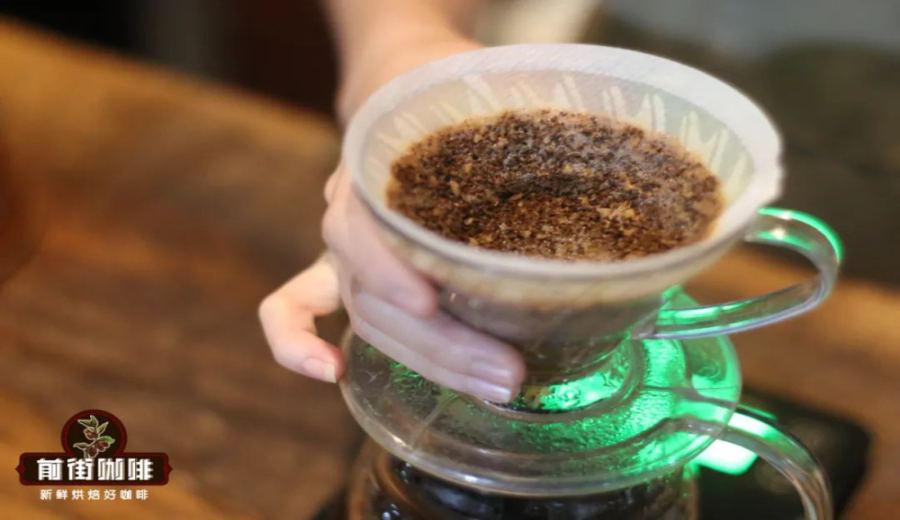
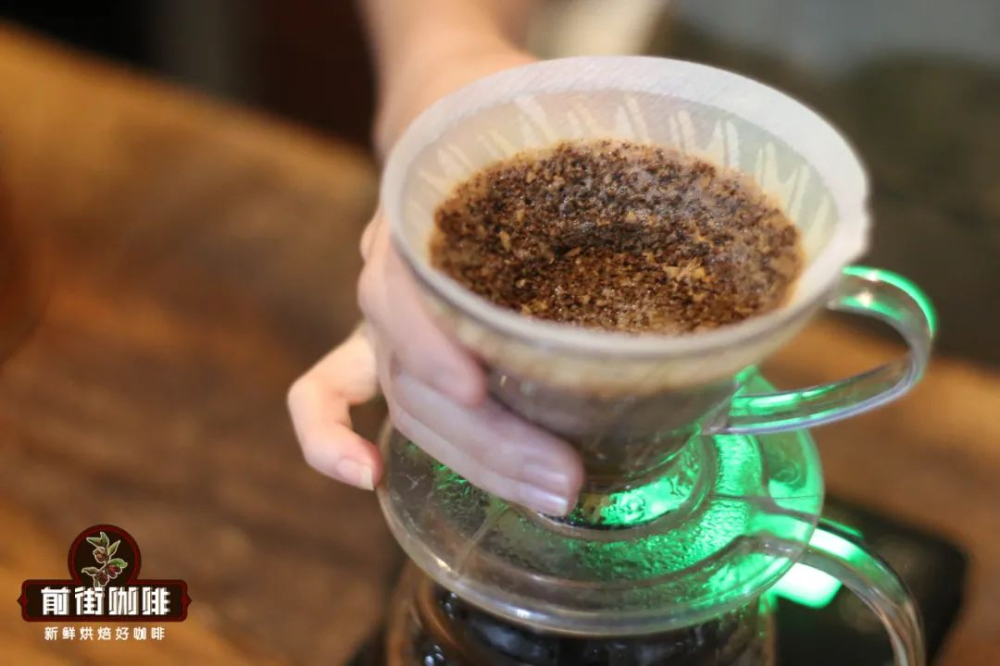
If you’re aiming for a pour over coffee with uniform extraction and balanced flavors, here are the characteristics of an ideal powder pit: the overall shape resembles a bowl, with uniformly thick surrounding coffee walls that naturally extend along the inner wall of the filter down to the bottom, and a flat pit bottom without obvious indentations or protrusions. Such a powder pit usually indicates stable pouring, even water distribution, and facilitates uniform extraction of coffee grounds—resulting in a more complete flavor expression.
Although producing a flat and aesthetically pleasing powder pit can bring a sense of accomplishment and is a testament to your pouring technique, remember that the essence of pour over coffee lies in flavor presentation and layering. The powder pit is just one tool to help us understand the brewing process—the true determinant of a great cup of coffee is always the flavor itself.
The above content is compiled by CoffeeHunters, a coffee news website.


