







Introduction:Leveraging its background as the "founder of Luckin Coffee" and a low-barrier franchise policy, Cotti Coffee is actively poaching Luckin’s franchisees and baristas, engaging in head-to-head competition in third- and fourth-tier cities. This article provides an in-depth analysis of how Cotti is gradually eroding Luckin’s market share through strategic site selection, attractive joint-operation models, and talent acquisition, while also offering practical insights and market dynamics to help readers understand the business logic behind this fierce competition in the coffee industry.
The rivalry between Luckin and Cotti Coffee, founded by Lu Zhengyao, has long extended beyond products and markets to include competition for franchisees and talent. Recent market reports indicate that some merchants originally interested in joining Luckin have been swayed by the appeal of being backed by the "founder of Luckin" and Cotti’s more flexible franchise terms, leading them to switch sides.
Across various promotional channels, Cotti consistently emphasizes its connection to the "founder of Luckin." Whether in official recruitment materials, store advertisements, or ground promotion events, this label is ubiquitous. More notably, Cotti’s core team shares deep ties with Luckin — from senior management to store operations, many members previously worked at Luckin. After leaving Luckin, Lu Zhengyao first brought along his former colleague Qian Zhiya to serve as Cotti’s CEO, and later recruited several former colleagues who had been involved in building Luckin’s key systems, including the technical team formerly responsible for the store monitoring system, who are now developing a new backend support system for Cotti.
Market observers note that in some coffee franchisee discussion groups, Cotti has become a hot topic, even frequently appearing in communities that were originally dedicated to Luckin. Experienced potential franchisees revealed that they had been hesitant due to Luckin’s higher franchise entry barriers, but Cotti’s franchise-free joint-operation model — which promises to collect only a service fee from store gross profit and claims a payback period of as little as a month and a half — combined with the marketing slogan "coffee dreamers," has led many to opt for Cotti instead.
Another real-world case shows that a franchisee who once opened seven consecutive Luckin stores decided to switch to Cotti at the end of last year. He first opened three Cotti outlets, then continued to expand, and the scale has been growing ever since. He even renamed all the social media accounts he previously used for Luckin operations — including Weibo, Xiaohongshu, and Douyin — to official Cotti accounts, continuing to operate under the Cotti brand.
This franchisee who switched to Cotti further pointed out that Cotti’s initial market focus was mainly on third- and fourth-tier cities, which also happen to be the target areas for Luckin’s aggressive downward expansion. As a result, in many county-level commercial districts, Cotti and Luckin stores are often located just a stone’s throw apart, even facing each other directly.
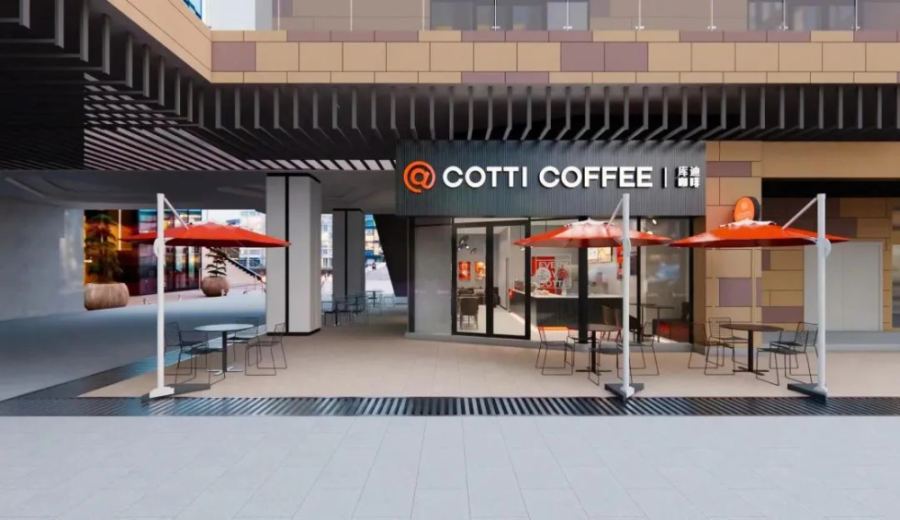
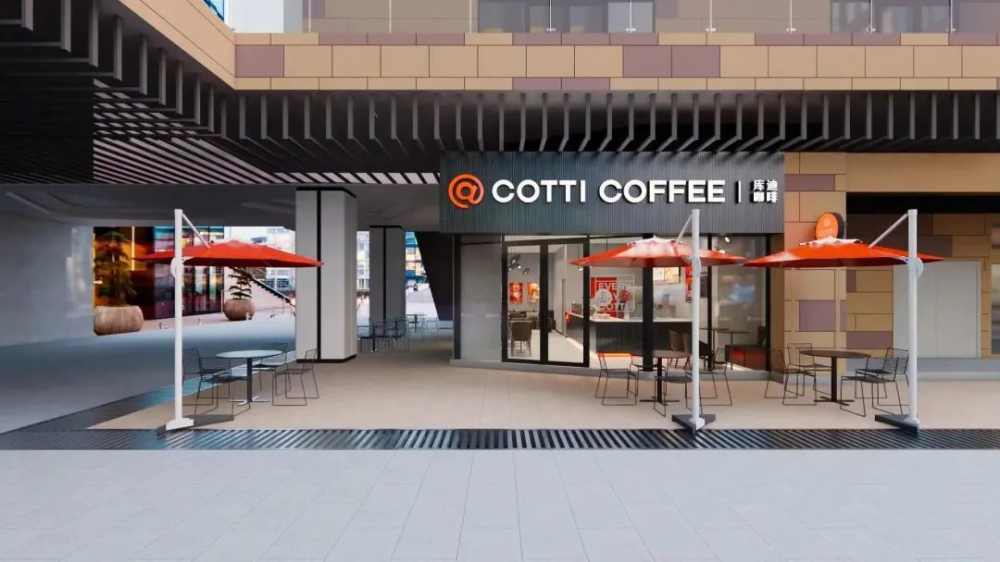
A Cotti recruitment manager revealed that new Cotti stores are typically located within the same commercial districts as existing Luckin outlets, with the shortest distance between them being just a few dozen meters and the longest no more than a hundred meters, forming a clear encirclement strategy. The goal of this site selection approach is evident: to directly intercept Luckin’s existing customer traffic and gain market advantage through quantity and density.
Beyond franchisees, baristas are also a key target for Cotti. A former Luckin barista noted that due to limited internal promotion opportunities at Luckin, and hearing that Cotti offers better compensation and faster career development, they ultimately chose to switch jobs. Cotti even promises that experienced employees can directly assume the role of store manager and encourages them to refer former colleagues, guaranteeing a starting position no lower than assistant store manager.
A Cotti expansion manager said in an interview that choosing to join Cotti is about "fighting for pride." Meanwhile, multiple major Cotti franchisees have publicly stated that their team’s goal is clear: to "take down Luckin." This competitive mindset, from Lu Zhengyao down to grassroots employees, has formed a distinct corporate culture.
Overall, Cotti’s strategy can be summarized as: capitalizing on Luckin’s brand popularity and market foundation while aggressively seizing its commercial districts, franchisee base, and talent resources, gradually establishing its own coffee empire in third- and fourth-tier markets. For readers interested in coffee franchising or following market trends, this showdown between Cotti and Luckin offers a wealth of practical business insights.
The above content is compiled by CoffeeHunters, a coffee news website.


