







Introduction:The coffee brand market is highly competitive, with low-price promotions coexisting with hidden price hikes. Investigations have found that Luckin Coffee applies differential pricing based on customers' purchasing frequency, where regulars may end up paying more. This article delves into the phenomenon of low-price coupons on platforms such as Douyin, and through hands-on testing, uncovers the opacity of the system’s recommendation mechanisms—helping coffee enthusiasts master discount strategies and avoid becoming victims of "price discrimination against loyal customers."
In recent years, the coffee market price war has intensified, with many brands slashing the original price of coffees (often over 20 RMB) down to around 10 RMB, or even launching limited-time 9.9 RMB promotions. However, while attracting new customers, brands also tacitly allow various “coupon-hacking” guides to circulate on social media, creating a situation where low-price customer acquisition and higher prices for loyal customers coexist.
In fact, according to investigations, Luckin Coffee adopts differentiated pricing strategies for users with different purchasing frequencies: frequent buyers often face higher per-cup prices, while occasional purchasers enjoy more discounts.This invisible price difference is worth every coffee enthusiast’s understanding.
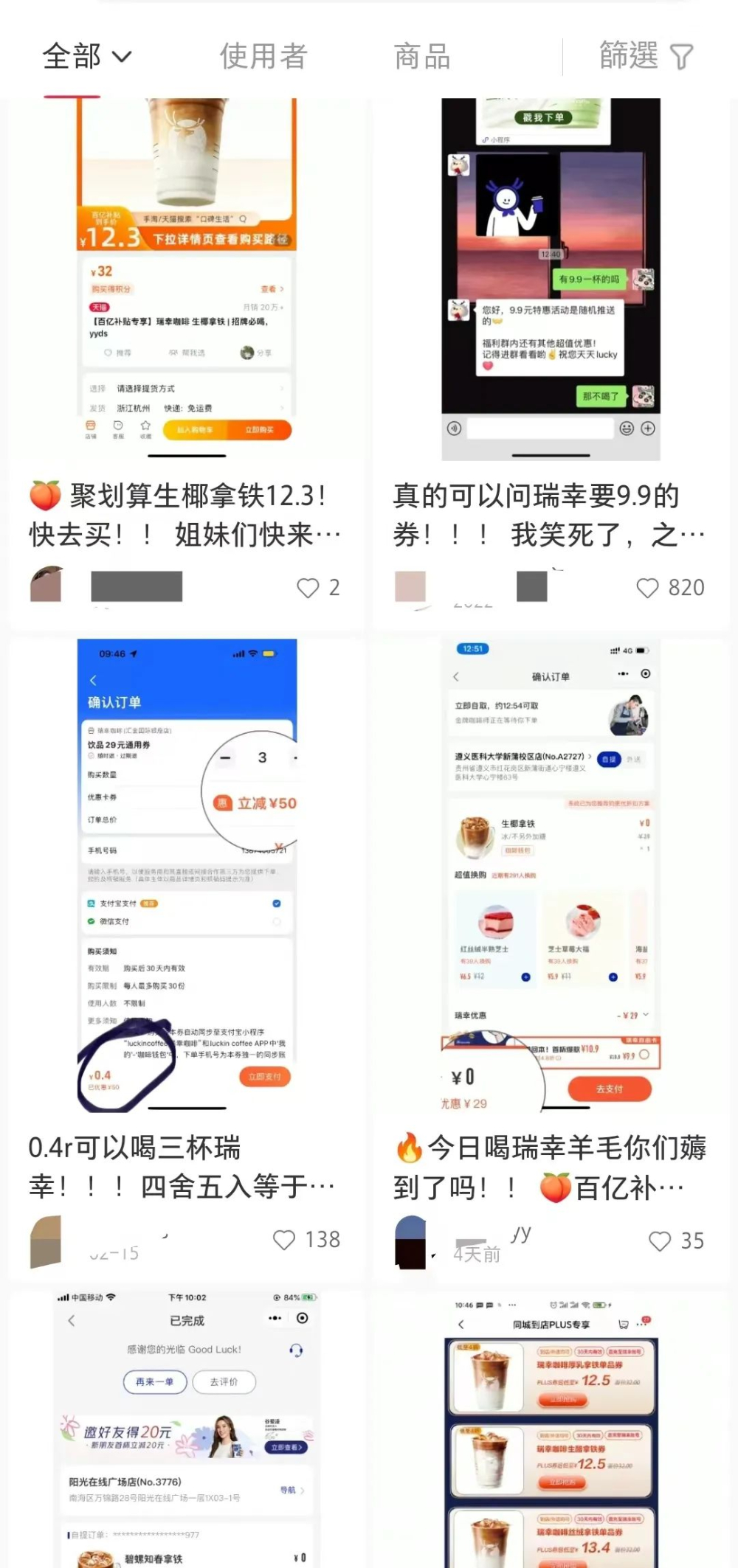
On social platforms like Douyin and Xiaohongshu, simply entering relevant keywords can easily yield a wealth of “coupon-hacking” tutorials—such as “drinking Luckin for one cent,” “getting a Manner coffee for five yuan,” or even Starbucks offering 9.9 RMB deals. Once users search for such content, platform algorithms continue to push similar guides, creating an information cascade effect.
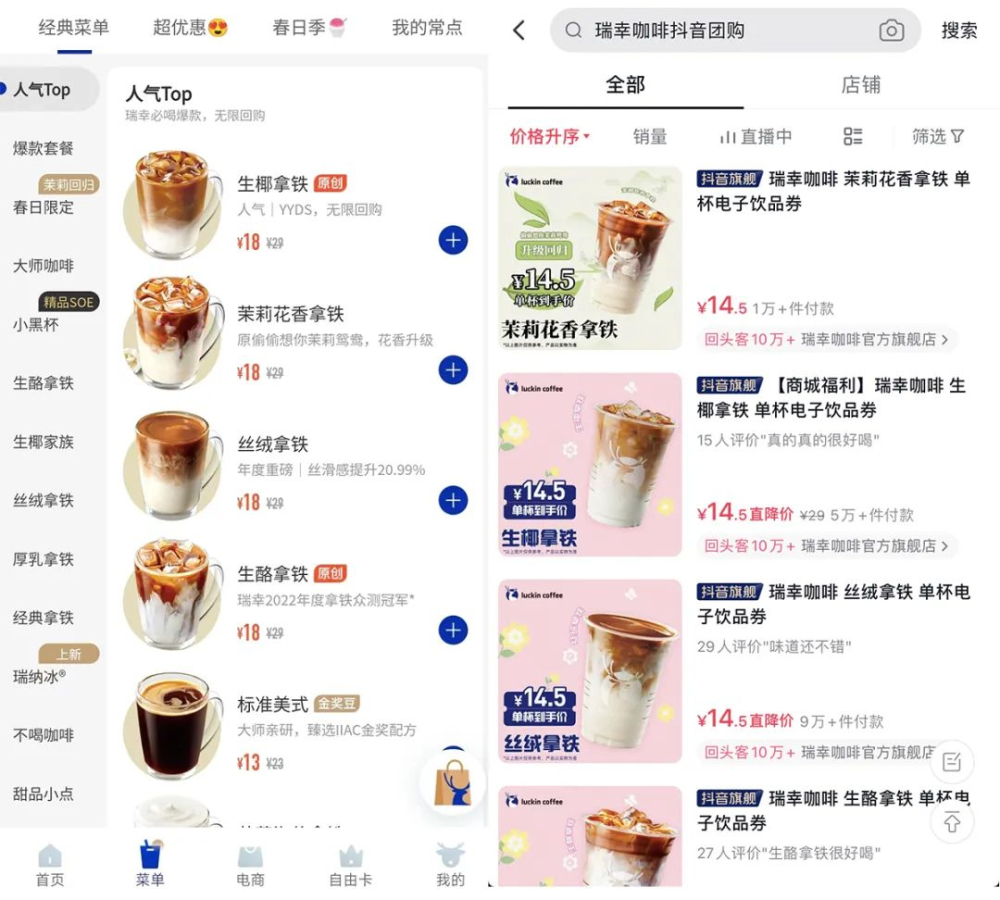
Taking the Douyin Mall as an example, ordering a latte directly via Luckin’s official mini program might cost 18 RMB; however, purchasing an electronic coupon through the Douyin Mall can bring the same drink down to 14.5 RMB. Such cross-platform price differences motivate consumers to seek better deals.
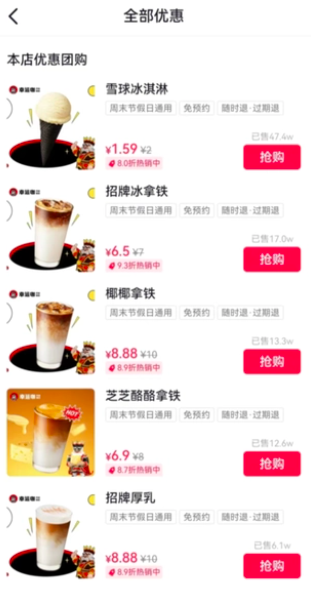
It’s worth mentioning that Xingyuku, known as a market representative for budget-friendly pricing, already offers low prices—but after snapping up coupons on Douyin, they can get even cheaper. Data shows that Xingyuku’s 6.5 RMB iced latte coupon has sold 170,000 units, the 8.88 RMB coconut latte coupon reached 133,000 sales, and the 6.9 RMB cheese latte also sold 126,000 units—illustrating the strong appeal of low-price strategies to consumers.
However, while consumers are keen on seeking out discounts, brands are quietly adjusting their strategies to “balance” profits and customer segments. According to in-depth media investigations, reporters placed nearly a hundred orders using different phones on the Luckin mini program, covering over a hundred cups of coffee, and found:The more frequently one buys, the higher the actual per-cup payment tends to be—sometimes even exceeding that of occasional customers.
The report noted that on February 14th, the reporter placed two coffee orders in succession using the same phone, with the first two settlements priced at 33.8 RMB and 35.2 RMB respectively. But when the order sequence was adjusted without completing payment, the third order dropped to 30.65 RMB. Official explanations cited “the system has recommended a better discount plan for you,” yet users cannot view specific discount details, resulting in information asymmetry.
In a subsequent month-long test, the reporter used three phones to place orders: Phone A ordered daily, Phone B ordered only three times, and Phone C never made a purchase. On March 10th, when all three phones selected the same coffee, Phone A was shown a price of 20 RMB, Phone B 18 RMB, and Phone C just 12 RMB. This test result clearly reflects how the system dynamically adjusts prices based on user behavior.
Many netizens have also shared similar experiences on social platforms, stating that they often use the Luckin mini program and haven’t seen a 9.9 RMB coupon for over half a year, whereas occasionally purchasing relatives or friends still see discounted drink recommendations on the homepage.
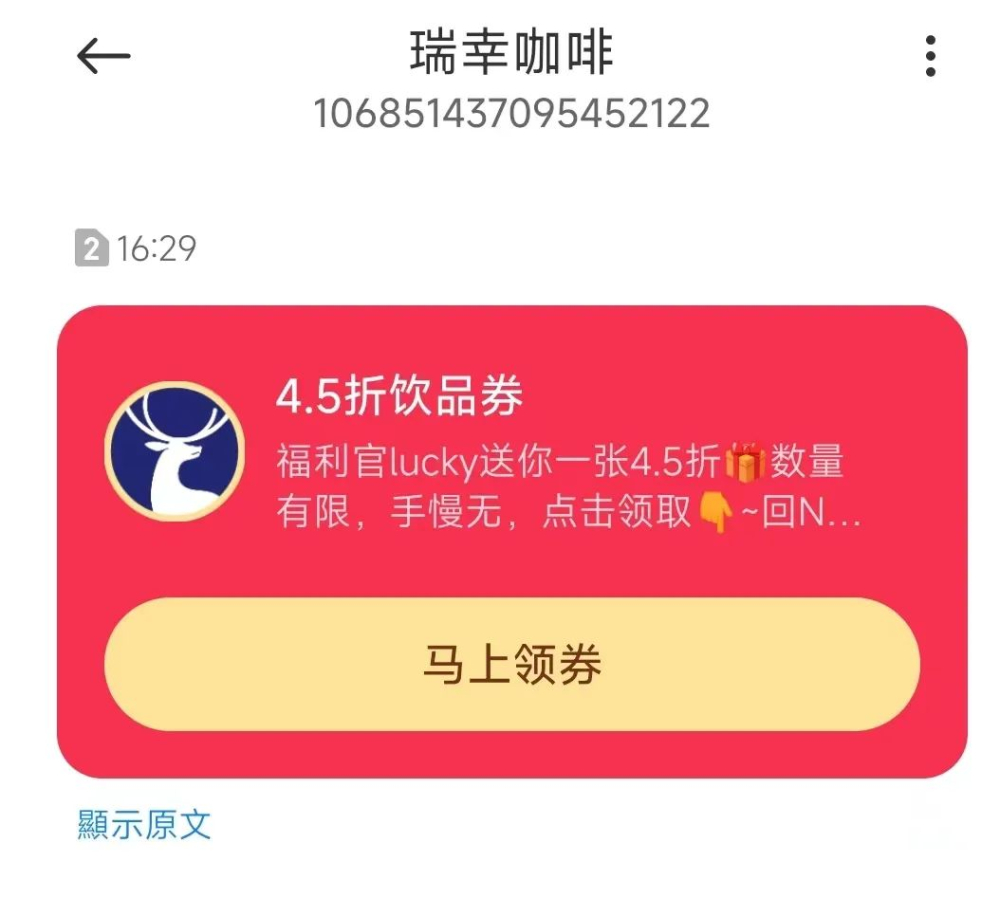
Furthermore, if users spend too much time lingering on the ordering page, the system may send them coupon redemption links via SMS. For instance, some media observed that after browsing the Luckin mini program at 4:20 PM, they received a 45% off coupon notification just nine minutes later—indicating the system adjusts promotional strategies in real time based on user behavior.
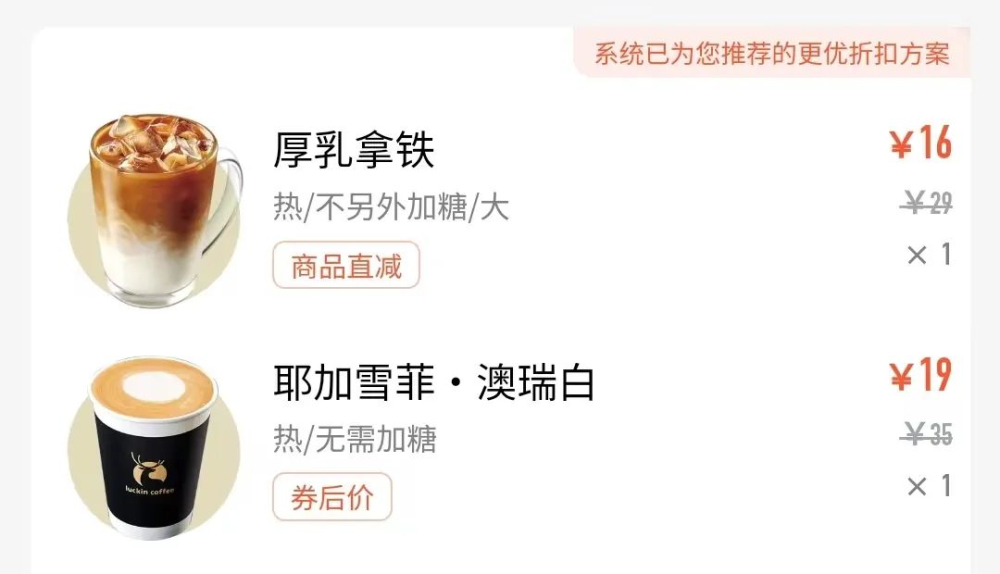
In response to this phenomenon, some Luckin store staff commented: “The initial low prices were due to available coupons; it’s not that prices went up later, but that the coupons ran out.” This statement indirectly confirms the key role of coupons in the pricing strategy.
For coffee enthusiasts looking to enjoy a higher cost-performance ratio, it’s advisable to pay attention to professional brand or community-recommended discount info, while also keeping an eye on platform algorithm push logic and system discount mechanisms—avoiding missing out on better deals due to habitual consumption habits, or even becoming a victim of “price discrimination against loyal customers.”
The above content is compiled by CoffeeHunters, a coffee news website.


