







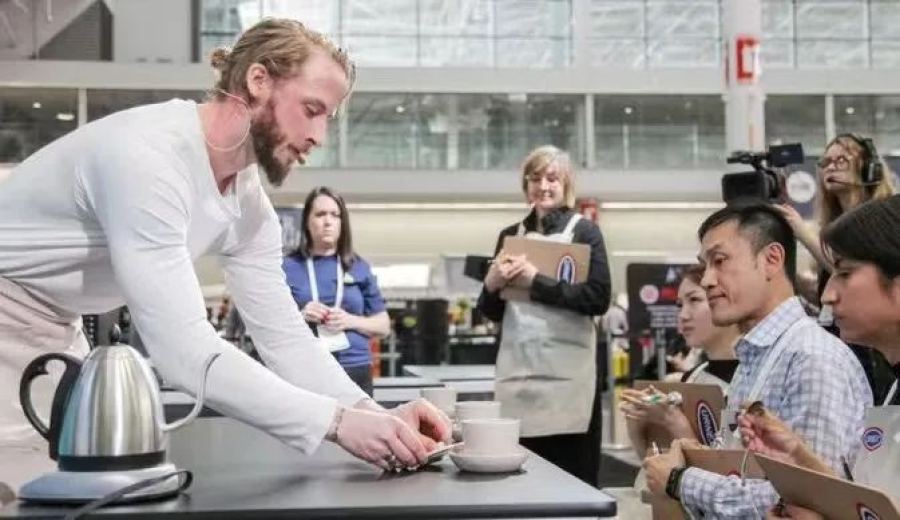
Introduction:Want to showcase the bright acidity and fruity sweetness of light-roast coffee beans through pour over, but worried your water-pouring skills aren’t up to par? Patrik Rolf, founder of the Norwegian brand April and 2019 WBrC runner-up, shares this two-pour method that delivers clean and balanced flavors — no bloom step required. Using an Origami dripper with cake filters simplifies the process, making it easy for beginners to replicate and quickly grasp the key elements of extraction.
The brewing method for light-roast coffee has always been a focal point among coffee enthusiasts. How to highlight its vibrant acidity and rich sweetness poses a major challenge in pour over technique. This article delves into an unconventional manual brewing approach proposed by Patrik Rolf, founder of the Norwegian coffee brand April and 2019 World Brewers Cup (WBrC) silver medalist. This technique employs an Origami dripper with cake filters and involves only two pouring steps, skipping the conventional bloom phase — placing almost no demand on pouring control. Practical testing shows that this method works well with most commercially available light-roast beans, yielding coffee with a smooth, mellow mouthfeel and clearly defined layers of fruitiness and sweetness. Below is a step-by-step breakdown of its parameter settings, pouring rhythm, and the underlying extraction principles.
Patrik Rolf has conducted in-depth research and developed unique insights into both coffee roasting and brewing. The brewing method he proposes differs significantly from conventional practices, yet is highly practical — especially suited for those who seek simplicity while still highlighting the nuanced flavors of coffee. The core equipment combination for this method is the Origami dripper paired with cake filters, a choice that is pivotal to the overall brewing outcome. Switching to other drippers or filter types, even when using the same parameters, would make it difficult to achieve the expected results.
This brewing method is broadly applicable to commonly found light-roast beans processed by standard methods. Tested on multiple commercial beans, the results were consistently satisfying. The main parameter settings are as follows: 12 grams of coffee grounds, total water volume of 200 ml (a coffee-to-water ratio of approximately 1:16.7), with a recommended water temperature of 94°C. The grind size is relatively coarse, with a 20-mesh sieve retention rate of around 65% to 70% — similar to the coarseness used in the three-pour method typically applied to dark-roast beans.
The entire pouring process is extremely simplified, consisting of just two pours. The first pour, done within about 10 seconds, involves adding 100 ml of water. At this stage, the flow rate can be relatively fast; there’s no need for excessive control, just maintain a small circular motion centered around the coffee bed. Under normal circumstances, about 50 seconds to 1 minute after pouring, the coffee will have mostly dripped through the dripper, leaving behind a coffee bed with a dished “bowl” shape — concave in the center and surrounded by a thick layer of coffee grounds forming a “wall.”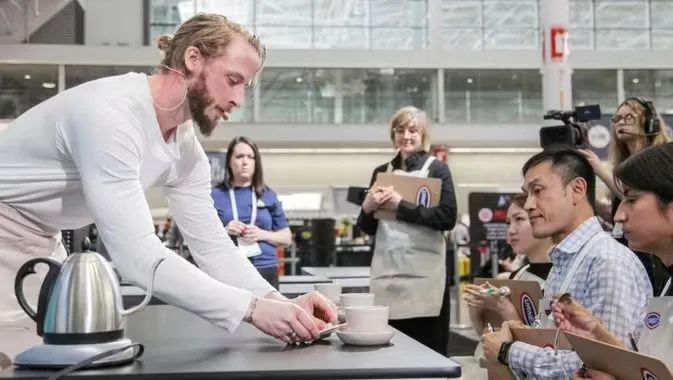
The second pour begins at the 1-minute mark, adding another 100 ml of water. This time, it’s recommended to start pouring around the outer edge of the coffee bed, gently breaking up the thick layer of grounds along the wall before slowly moving the stream back toward the center. This stage usually finishes around the 1:20 mark, and again, precise pouring control isn’t necessary — even if some water touches the filter paper itself, it won’t cause major issues. Afterward, let the coffee drip naturally through the dripper. It typically finishes dripping around the 2:40 mark, but Patrik suggests waiting until the 3-minute mark before removing the dripper. This not only helps maintain operational consistency but also accounts for the fact that although the coffee bed may appear dry on the surface, trace amounts of coffee liquid may still be slowly dripping from the bottom. Allowing a bit more time ensures a fuller release of the coffee’s flavors.
At first glance, this brewing method might seem too casual — especially given the omission of the traditional bloom step — which could raise doubts. However, actual brewing reveals that the resulting cup is smooth and clean, with clear and balanced expressions of fruitiness and sweetness. Here’s a brief analysis of the brewing logic behind it: choosing the Origami dripper with cake filters not only helps reduce the height of the coffee bed (in combination with the relatively small dose of 12 grams), but its folded paper structure also fits snugly against the filter, minimizing channeling issues even without a pronounced coffee bed wall.
Overall, this technique can be summarized as “enhancing extraction uniformity and stability by extending the brewing time.” As such, the parameter design emphasizes avoiding over-extraction — for example, by opting for a coarser grind. Although there’s no visible bloom step, the initial 100 ml pour actually serves a similar function and lasts for about 1 minute. This approach not only ensures that residual gases in the coffee grounds are fully released, but also allows the early drips to primarily extract the bright acidic notes. The second 100 ml pour then functions as a long immersion-style extraction aimed at evening out the overall concentration, enhancing sweetness, and contributing to the body of the final cup.
While this brewing method isn’t universally applicable and its approach breaks from tradition, the specific data provided by Patrik offers high compatibility with most light-roast beans. Even novice pour over brewers can easily replicate a well-balanced cup simply by following the suggested parameters. More importantly, this method requires virtually no advanced pouring skill or precise control over water flow, significantly lowering the barrier to entry.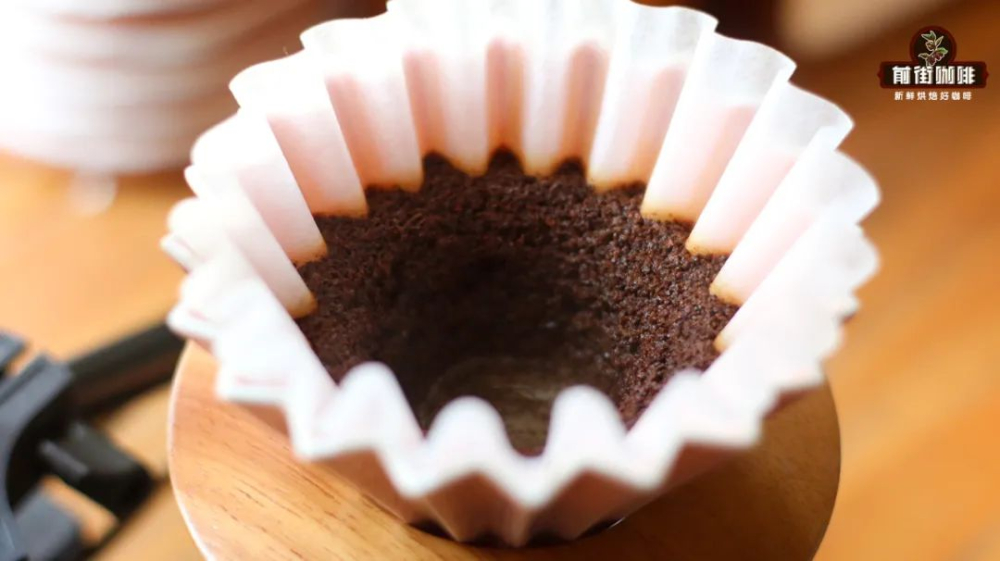
The above content is compiled by CoffeeHunters, a coffee news website.


