







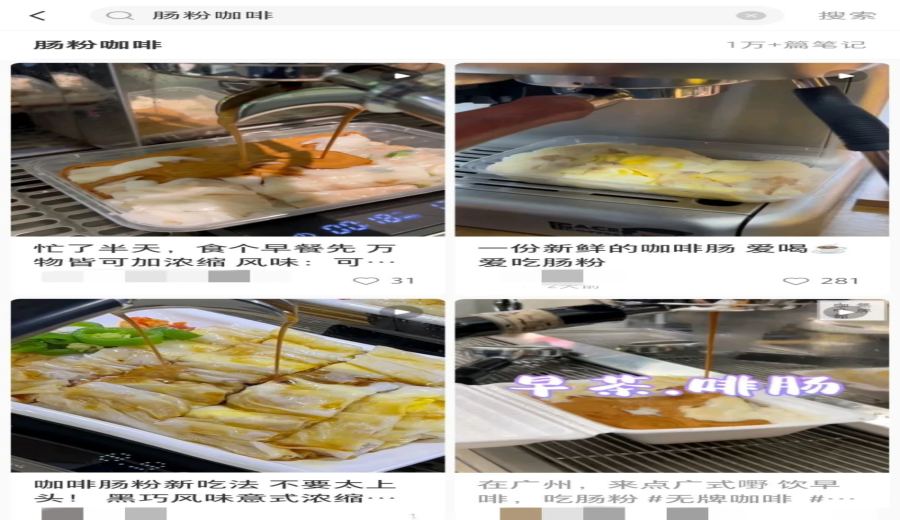
Introduction:When Guangdong’s classic breakfast dish, cheung fun, meets Italian espresso, this seemingly mismatched combination has sparked heated discussions on social media platforms, with Xiaohongshu posts surpassing ten thousand shares. From the clash between traditional cuisine and modern beverages to how coffee culture is localized in China, this article takes you behind the scenes of this emerging food trend and explores more unexpected pairings of Chinese dishes with coffee.
What if the traditional soy sauce used in Guangdong’s cheung fun were replaced by a rich shot of espresso? Does this combination sound astonishing? Recently, on social media, this creative twist—replacing the usual cheung fun dipping sauce with espresso—has gone viral, catching the eye of countless netizens, with Xiaohongshu posts exceeding ten thousand. Some find it utterly absurd, while others, with an open mind, are eager to give it a try. In fact, this isn’t the first time coffee has “cross-branded” with Chinese breakfast; combinations like Chengdu’s fat intestine noodles with coffee or deep-fried dough sticks with coffee have already stirred online conversations, constantly challenging the public’s perception of coffee culture.
Cheung fun, as one of Guangdong’s most iconic traditional Han Chinese snacks, belongs to the Cantonese cuisine system and can be traced back to the Tang Dynasty in Lungzhou, today known as Luoding City in Yunfu, Guangdong Province. Depending on the method of preparation, cheung fun can generally be divided into two main types: “cloth-poured cheung fun,” steamed using a white cloth, and “drawer-style cheung fun,” made directly in a drawer-style steaming tray. Different regions often tweak the seasoning and fillings of cheung fun according to local taste preferences—for example, “Guangzhou Xiguan Cheung Fun” common in Guangzhou, and “Chaozhou Cheung Fun” from the Chaozhou area, both variations that blend tradition with regional characteristics.
Coffee, as an imported beverage, has long taken root in China. With a lengthy history of cultivation, in recent years it has also undergone various cross-industry experiments to find the coffee culture expression that best suits local palates. From breakfast pairings to dessert combinations, the fusion of coffee and Chinese cuisine reflects the evolution of China’s localized coffee culture and contemporary trends. The “experimental pairing” of cheung fun and espresso is undoubtedly one of the most controversial yet talked-about examples.
Reactions online to such creative pairings are polarized: many netizens are left speechless by the “cheung fun and coffee” combo, with comments like “People who like both cheung fun and coffee don’t know what to say about this,” “I suddenly feel like I should take your coffee powder and leave,” or “They might be okay meeting in the stomach, but not in the mouth,” showing resistance to such extreme mashups. However, another group of netizens approach it with curiosity and openness, saying “It’s weird, but actually eye-catching,” “Breakfast and coffee all in one—energizes me for the whole morning,” or “If it ever goes on sale, I’d definitely try it,” showing that novel food combinations still hold certain appeal.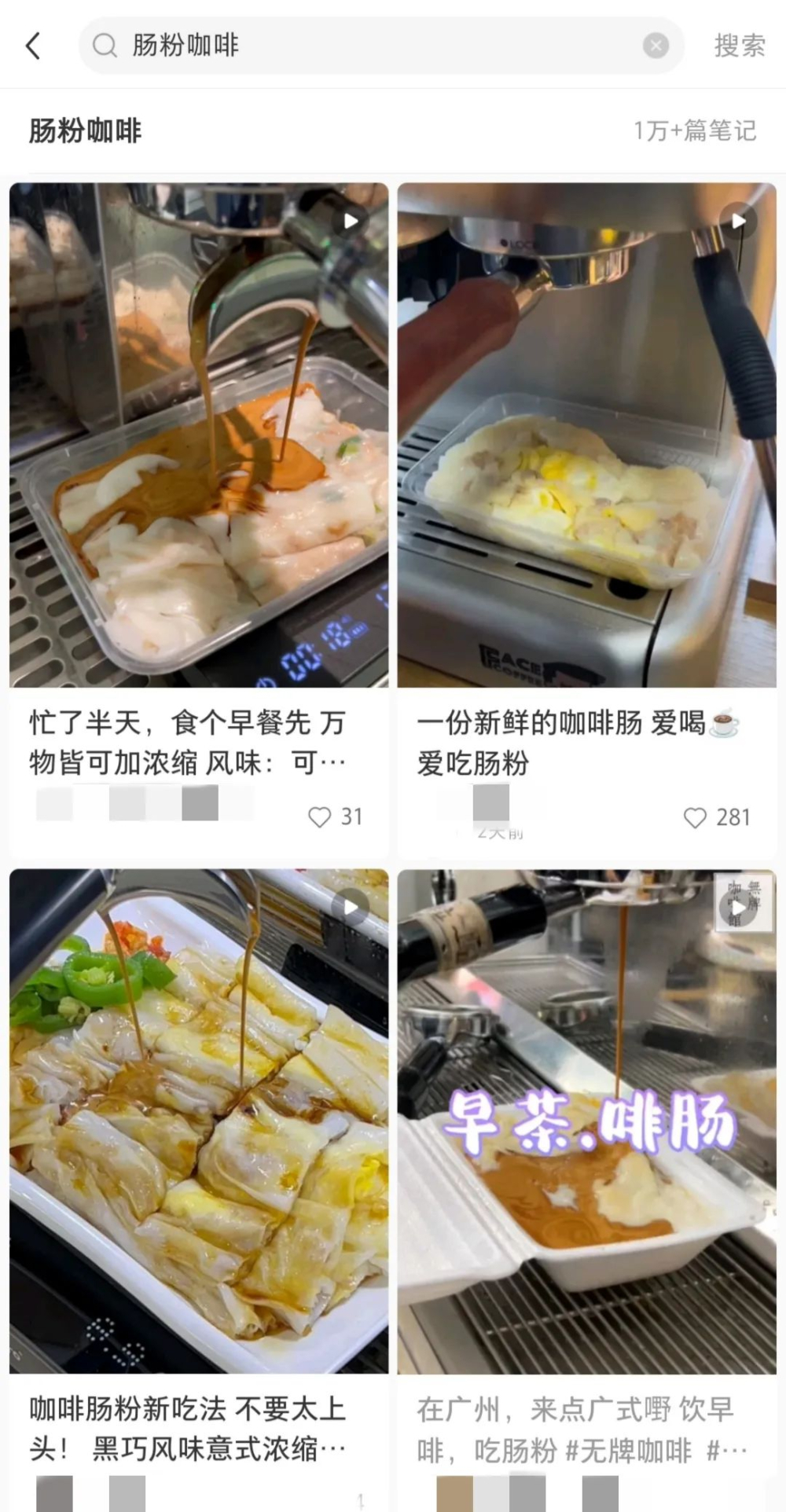
In fact, this kind of “coffee + Chinese breakfast” crossover attempt had already shown signs in the Chinese market several years ago. For example, in 2021, a well-known old-brand fat intestine noodle shop in Chengdu, “Yan Ji Old Brand Fat Intestine Noodles,” launched a “fat intestine noodles with coffee” combo. It was said to have started as a curious coffee stand set up by the owner, which unexpectedly sparked heated online discussion and attracted many diners who specifically came to try it. Common combinations at the time included a steaming bowl of fat intestine noodles paired with a shot of espresso, or traditional Chinese breakfast items like baked flatbread and deep-fried dough sticks eaten alongside coffee—essentially similar to the concept of Western brunch, but with a strong local flavor.
However, as the trend progressed, more “deep mashups” emerged, such as adding espresso directly into cheung fun, pouring coffee into tangyuan (glutinous rice balls), or even shocking combinations like mixing coffee with tofu pudding or sesame paste. Though visually stunning, these highly experimental combinations inevitably raise questions: Are they really delicious? Could they cause indigestion or other discomforts? For consumers with more sensitive stomachs, perhaps a more conservative approach is better.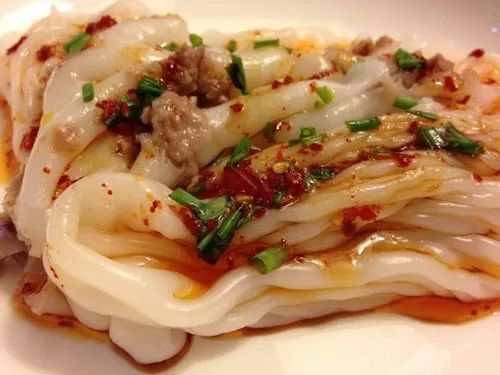
In summary, this wave of “cheung fun with espresso” enthusiasm not only reflects the rapid changes in food culture in the age of social media but also reveals the ongoing process of localization and innovative expression of coffee in the Chinese market. Whether you’re open-minded or skeptical about such cross-industry pairings, there’s no denying that it has successfully reignited public thinking about “how else can we drink coffee?” and opens unlimited possibilities for future fusions of Chinese and Western cuisines.
The above content is compiled by CoffeeHunters, a coffee news website.


