







Introduction:The average monthly salary of baristas nationwide is approximately 4,200 yuan, reaching up to 6,024 yuan in first-tier cities such as Shanghai. However, high salaries are often concentrated among experienced or highly skilled professionals. This article delves into the income structure, career bottlenecks, and advancement pathways of baristas, offering an in-depth look at the true realities of this profession and how to break through its challenges.
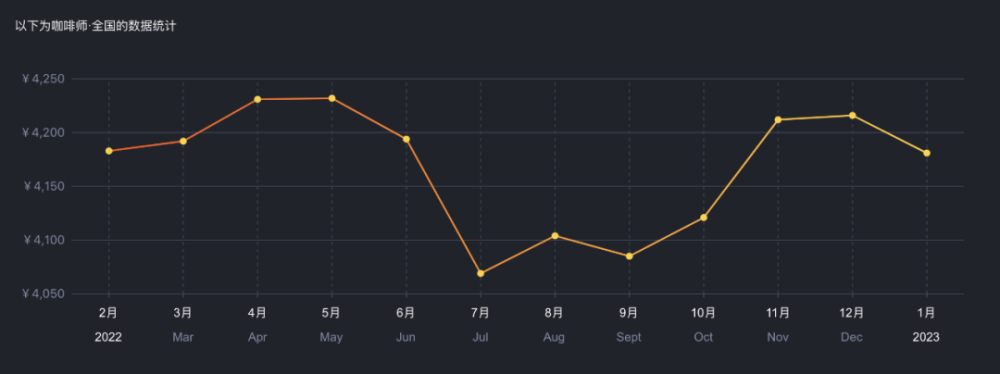
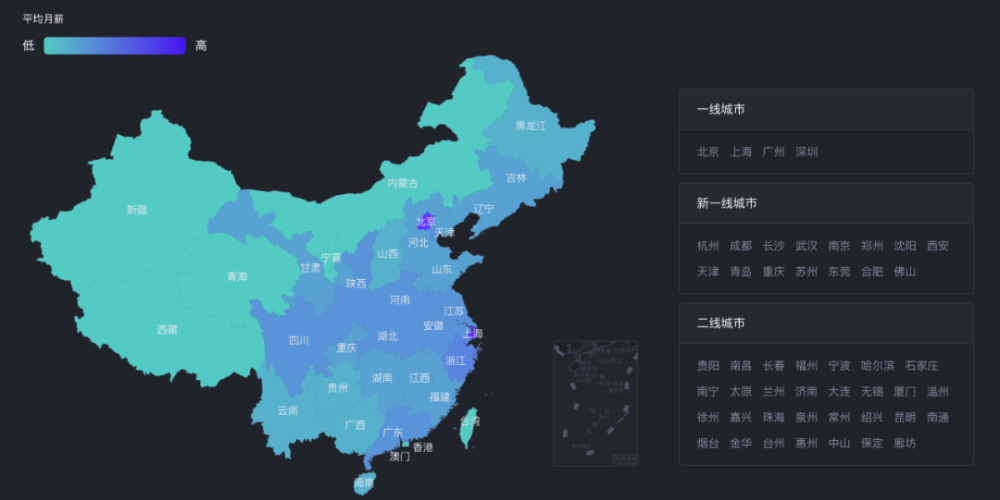
In recent years, the coffee consumption market has flourished, with coffee shops springing up like mushrooms on every street corner. Yet, the actual income level of baristas — the very soul of these establishments — often falls short of public expectations. According to nearly one million recruitment listings collected over the past year, the average monthly salary of baristas across the country is around 4,200 yuan, with salaries in first-tier cities significantly higher. For example, in Shanghai, the average monthly wage can reach6,024 yuan, followed closely by Beijing at about5,756 yuan.
In terms of city distribution, besides Shanghai and Beijing,Shenzhen, Hangzhou, and Suzhoualso rank among the top ten cities for barista income, indicating a certain positive correlation between economic development and barista compensation. However, even in first-tier cities, reaching6,000 yuan or moreremains somewhat challenging unless one has extensive experience or diverse skills.
Looking at the age structure of industry practitioners, it’s surprising to find thatthose under 24 years old account for as much as 78%of the workforce, while those aged 25 to 29 make up only 16%. Additionally, in terms of work experience, baristas with 1 to 3 years of experience represent 77% of the total, whereas those with 3 to 5 years of experience comprise just 6%. This shows that the industry is generally young, but the proportion of seasoned professionals is relatively low, which directly impacts the overall salary structure and technical depth.
Notably, previous surveys predicted that the proportion of baristas aged 26 to 35 would rise year by year, even becoming the dominant demographic. In reality, however, more mature-aged practitioners opt to switch careers or pursue other paths due to limited salary growth and insufficient development opportunities. Especially against the backdrop of continuously rising living costs, the current average monthly salary struggles to support stable living needs.
In fact, the long-standing issue of low barista wages has long been a recognized challenge within the industry. Over the past decade, despite the expansion of the market and rapid brand growth, the base salaries of baristas have remained stagnant at the lower end, even leading to a “use it or lose it” dilemma. Although there seem to be slight annual increases, compared to soaring prices, the real purchasing power has actually declined.
The reasons behind this can be primarily attributed to two core issues: first, the industry’s general lack of emphasis on the “professionalism” of baristas, and second, the insufficient cultivation of comprehensive skills (including operations, management, education, etc.). Large chain coffee shops, in their pursuit of rapid expansion, often prioritize efficiency over expertise in hiring, valuing immediate capability more than professional skill — hence the generally modest salary offers. On the other hand, independent coffee shops that emphasize coffee quality and technique also frequently struggle to offer more competitive compensation due to fierce market competition and limited business models.
A low-salary environment naturally leads to high job mobility. Many people view being a barista as merely a short-term job or a hobby, with very few willing to invest the time to deeply study the craft and industry knowledge. As a result, although the number of practitioners is large, those with deep technical expertise and well-rounded abilities remain scarce resources in the market.
Moreover, many consumers and even industry insiders commonly believe that a barista’s job is simply “being able to make coffee,” a simplified perception that not only underestimates the technical complexity of the role but also limits the career vision of practitioners. Over time, many either exit the field due to frustration or hastily open their own shops without fully understanding the industry’s operational logic, ultimately facing management challenges.
So, do baristas really have no future or room for advancement? The answer is no. Being a barista is not just a technical role — it can also be a multifaceted position spanning technology, education, and management. High-earning baristas are often not just “good at making coffee,” but also possess capabilities in product development, customer communication, brand management, and even team leadership.
However, most employers still view baristas as general service staff, expecting only basic operational tasks and neglecting the planning of technical deepening and career development. Coupled with limited investment in professional training and systematic education within the industry, many baristas who are eager to learn lack reliable resources and guidance.
To break out of this predicament, the key lies in whether practitioners can actively step out of the comfort zone of the “coffee bar” and explore the upstream and downstream aspects of the coffee industry — for instance, learning about roasting, quality control, coffee bean procurement, or even retail operations. Only by building professional depth and diverse skill sets can one stand out in the fiercely competitive market and earn remuneration commensurate with their abilities.
In summary, the barista profession is not without prospects — it simply demands clearer career planning and continuous self-improvement. By facing the realities of the industry from the outset and actively accumulating specialized and cross-disciplinary skills, one can not only develop steadily in their career but also create their own coffee business empire.
The above content is compiled by CoffeeHunters, a coffee news website.


