







Introduction:In recent years, the cross-industry pairing of luosifen (river snail rice noodles) and coffee has sparked widespread discussion. From Foshan to Kaifeng, many establishments have achieved impressive business results thanks to this combination. Is this "noodle-coffee combo" merely a flash-in-the-pan internet trend or a new opportunity for culinary cultural fusion? This article explores customer reactions, store operation models, and the broader food trends behind this innovation through real-life examples and market observations, helping readers better understand the potential and challenges of this unusual pairing.
The combination of coffee and Chinese cuisine is certainly not a new concept. From the classic pairing of youtiao (fried dough sticks) with coffee, to shaobing (sesame flatbread), roujiamo (Chinese hamburger), and even the strongly regional-flavored feichangfen (intestine noodle soup), these items have all collided with coffee in unique ways. Now, even luosifen — known for its distinctive pungent aroma — has become the latest star of this culinary experiment. On Xiaohongshu (Little Red Book), check-ins featuring "luosifen coffee" have surpassed 20,000 posts, and many specialty shops in various cities have reported daily revenues of several thousand yuan thanks to this combo.
Luosifen, a specialty snack originating from Liuzhou, Guangxi, is famous for its unique sour and pungent smell. While loved by enthusiasts as a delicious treat, it is avoided by others. Yet, it is precisely this highly controversial flavor that has attracted numerous coffee professionals keen on culinary innovation. They have combined luosifen with coffee to create a love-it-or-hate-it “dream pairing,” which has quickly sparked discussions among younger consumer groups.
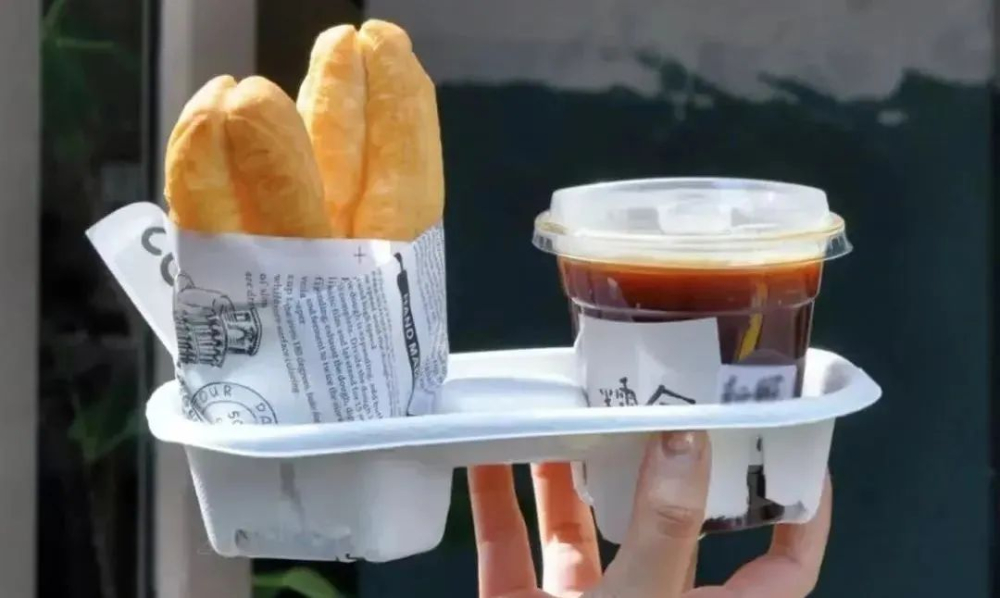
In fact, the coffee industry’s attempts at “East-meets-West” pairings have never ceased. As early as a few years ago, we began seeing combinations of coffee with Chinese breakfast items like youtiao, baozi (steamed buns), and cheung fun (rice noodle rolls), gradually gaining popularity in neighborhood coffee shops. Later, snacks such as niurouza (beef offal stew), Jianbing guozi (savory Chinese crepes), and roujiamo also “married” coffee, sparking waves of social media check-in trends. More recently, the combination of luosifen and coffee has stirred up a fresh wave of discussion on social platforms and even become a highlight in the sales of certain stores.
Before luosifen, coffee had also been paired with everyday dishes like suancai lu rou fan (pickled vegetable braised pork rice) and laomian (hand-pulled noodles), but most of these remained isolated cases, struggling to sustain lasting popularity. However, the luosifen and coffee pairing unexpectedly gained considerable favor among younger consumers. It has not only received frequent exposure on social media but has also led to the opening of physical stores in multiple cities dedicated to promoting this combo.
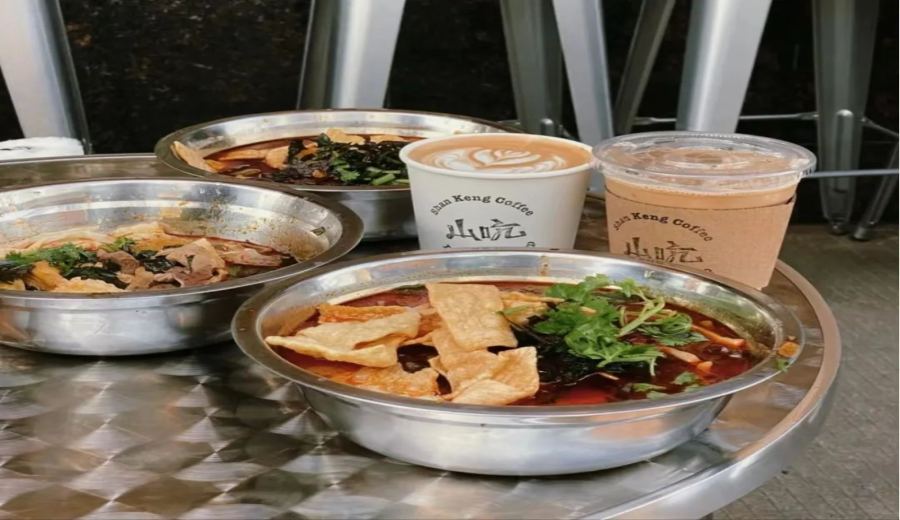
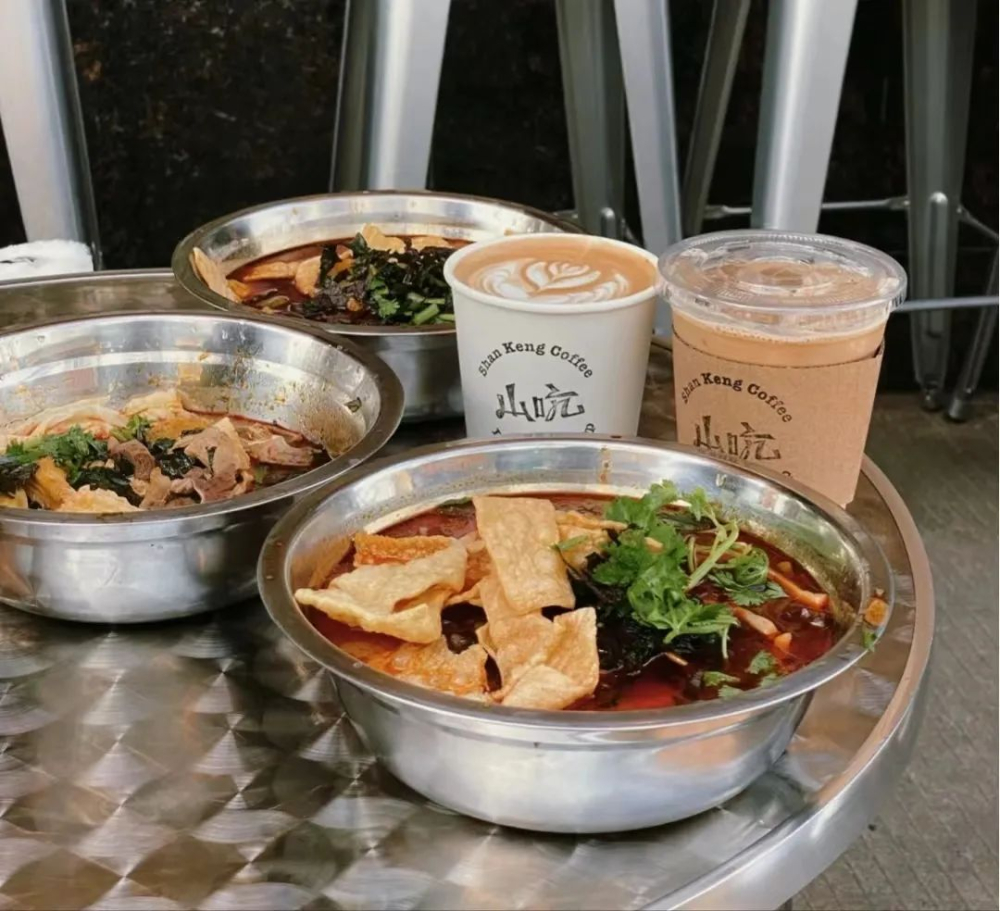
Take Foshan as an example. A shop named Shan Keng & Coffee has quickly gained popularity since opening late last year, thanks to its luosifen and coffee combo. According to the owner, up to 300 bowls of luosifen are sold daily, with many customers specifically coming to try the "noodle-coffee pairing." The shop is divided into a luosifen section and a coffee section. The original-flavor luosifen is priced at 12 yuan per bowl, with add-ons ranging from 3 to 12 yuan. For coffee, they offer two single-origin beans that can be used to prepare various espresso-based drinks such as Americano, latte, and flat white, priced between 10 and 18 yuan. With an overall low consumption threshold — under 40 yuan for the full combo — it’s very affordable for customers.
Another example is Chouchoucha Luosifen in Kaifeng, which also focuses on the creative pairing of luosifen and coffee. Prices for luosifen range from 13 to 17 yuan, and for coffee from 13 to 19 yuan, with average per-person spending around 30–40 yuan. The owner mentioned that the store’s daily turnover can reach about 5,000 yuan, indicating a certain level of market acceptance for this combo.
Luosifen’s ability to become a popular choice for cross-industry pairing is not only due to its unique flavor, but also its explosive nationwide popularity in recent years. From street-side stalls in Liuzhou to supermarkets and restaurants across the country, luosifen has captured the taste buds of many young consumers with its strong “pungent” character, even becoming a cultural phenomenon. Coffee, as a globally popular beverage, is also gradually transitioning from a high-end indulgence to an everyday drink in the Chinese market. The combination of the two perfectly caters to younger generations’ pursuit of novel and diverse culinary experiences.
However, whether the "noodle-coffee pairing" trend will have lasting power still depends on market feedback and consumer acceptance. After all, luosifen’s smell and taste are highly controversial. While the pairing with coffee can generate buzz, truly integrating into mainstream food culture still faces significant challenges.
Overall, the cross-industry pairing of luosifen and coffee, whether as a temporary internet phenomenon or a long-term trend of culinary cultural integration, provides an interesting perspective for observing market innovation and consumer behavior. For coffee professionals and F&B entrepreneurs, such experiments not only expand product diversity but also inspire more cross-industry creativity.
The above content is compiled by CoffeeHunters, a coffee news website.


