







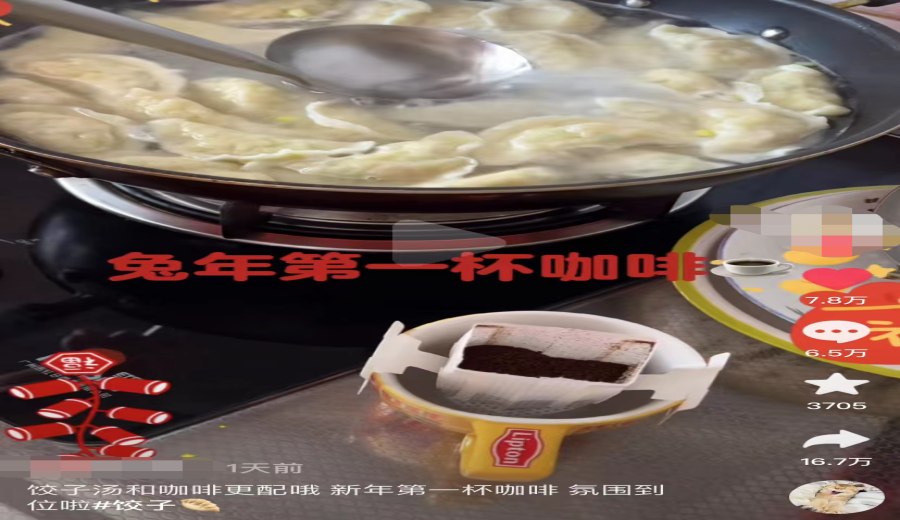
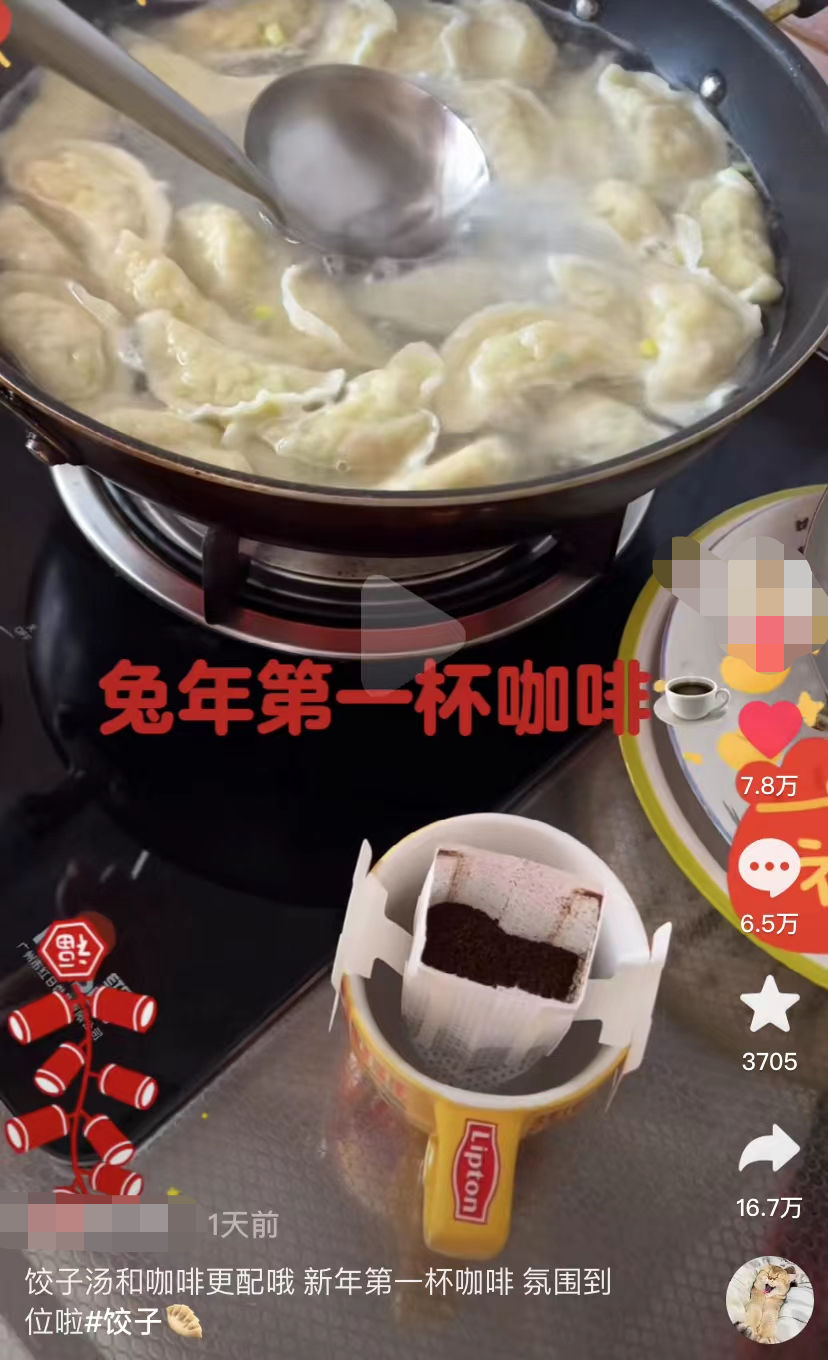
Introduction:During the Spring Festival, coffee enthusiasts boldly experimented with brewing coffee using dumpling soup, sparking heated discussions online. From tangyuan (sweet rice balls) and tofu pudding to green bean popsicles, a variety of creative cross-cultural pairings between traditional Chinese desserts and coffee have emerged. Are these innovative combinations delightful new drinks or culinary disasters? This article delves into the flavor interaction principles between Eastern and Western ingredients, offers practical pairing suggestions, and explores how to achieve balanced taste through adjustments in brewing parameters.
During the Spring Festival holiday when people return home to reunite, many coffee lovers got creative by combining traditional festive foods with coffee. Among them, the unusual pairing of “coffee brewed with dumpling soup” quickly became a hot topic on social media platforms. This unconventional way of drinking not only showcases the collision between Eastern and Western food cultures but also challenges the boundaries of dietary habits.
As the soul food of the Spring Festival dining table, the broth from boiling dumplings contains umami substances from flour and meat fillings. Combining this salty and savory base with the acidic and bitter flavors of coffee actually creates a contrast effect similar to “salted caramel”—The monosodium glutamate in the broth can mellow the astringency of the coffee, while the tannins in the coffee can enhance the layered complexity of the broth. However, it’s important to note that excessive oil content in the broth may cause emulsification and cloudiness, so it is recommended to skim off any floating oil before use.
Similar creative pairings include tangyuan coffee and tofu pudding coffee, where most of these combinations involve immersing the whole food item directly into the coffee rather than enjoying them separately. From a professional perspective, pairing desserts with coffee requires consideration ofsweetness, texture, and flavor profileas three key indicators: for example, the bean aroma of green bean popsicles can echo the nutty notes of coffee, but overly sweet flavors should be avoided as they may mask the fruit acidity inherent in the coffee.
Practical testing has found that the pairing of dumpling soup with light-roast coffee tends to result in more noticeable conflicts, so it is recommended to usemedium to dark roast beans(such as Sumatra Mandheling) to reduce the acidity contrast. Brewing parameters can be adjusted to a coffee-to-water ratio of 1:15, water temperature of 88°C, and medium-coarse grind, utilizing the higher temperature to extract more sweetening compounds that help neutralize the saltiness.
Industry insiders point out that while such experimental pairings are certainly attention-grabbing, everyday consumption still requires attention to hygiene and flavor harmony. If you want to try it, it is suggested to start with a small proportion test (e.g., 1/4 cup of broth + 3/4 cup of coffee) and observe the sedimentation speed of the ingredients—combinations that separate quickly usually indicate lower compatibility.
From the perspective of food culture, these creative mixtures reflect modern consumers’ demand for “food narratives.” Incorporating hometown flavors into everyday beverages is essentially a process of seeking emotional connection. However, professional baristas remind us that formal coffee tasting should still maintain the purity of the beverage, and special pairings are better suited for fun experiences in informal settings.
The above content is compiled by CoffeeHunters, a coffee news website.


