







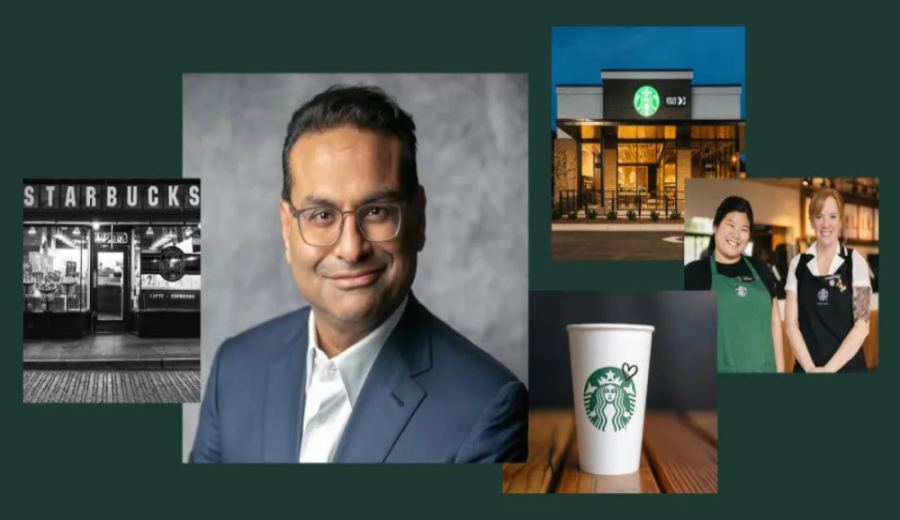
Introduction:As Starbucks prepares to welcome its new CEO, Laxman Narasimhan, in April 2023, the globally renowned coffee chain is facing multiple challenges. This article will take an in-depth look at Narasimhan’s business strategies post-appointment, the obstacles he faces, and the brand’s next moves in global markets—especially China and the United States—to help readers grasp the direction of the brand’s future development and the key transitions in the market.
Starbucks announced that Laxman Narasimhan will succeed as CEO, officially taking office in April 2023. During the transition period, the brand’s founder Howard Schultz will continue to serve as interim CEO, assisting the new leader in getting familiar with internal operations and the direction of brand repositioning.
Narasimhan’s arrival comes at a time when Starbucks is grappling with a series of challenges, including growing unionization trends among baristas in the U.S. market, intensified global competition, ongoing supply chain bottlenecks, and fluctuations in coffee bean prices. He also needs to revitalize underperforming regional markets and accelerate the exploration of new business models and store design innovations.
Notably, Starbucks’ senior leadership has undergone significant changes over the past year, with departures including Rossann Williams, head of the North American region; Rachel Gonzalez, general counsel; George Dowdie, vice president of global supply chain; and John Culver, chief operating officer. Additionally, long-time board member Javier Teruel resigned at the end of 2022, and recently, a senior executive from the brand’s creative department ended a 14-year tenure.
This wave of executive turnover may signal that Schultz and incoming CEO Narasimhan are paving the way for the brand’s future, preparing to introduce new management thinking and an executive team. Narasimhan brings nearly 30 years of leadership experience at McKinsey, PepsiCo, and Reckitt, particularly excelling in formulating global strategies for multinational consumer brands.
Past experience shows that Narasimhan often demonstrates a style of quick decision-making and bold reform upon taking the helm of a new company, including adjusting the senior management team and bringing in talent with fresh perspectives. This aligns with Schultz’s previously stated position: “My temporary return is not to stay long-term, but to find a new generation of leaders with greater vision and execution capabilities.” This applies not only to the CEO role but also extends to all major management positions.
Currently, Starbucks has begun reshaping its corporate culture. While Howard Schultz has stabilized the situation to some extent, union issues in the U.S. remain unresolved, employee turnover remains high, and the Chinese market continues to face challenges due to uneven post-pandemic recovery. Effectively addressing these issues will undoubtedly require more systematic strategies and the support of a stable management team.
The choice of Narasimhan also reflects Starbucks’ expectations for its operational capabilities in international markets, especially in the U.S. and Asia (particularly China). With the easing of China’s pandemic policies, market demand is gradually recovering. Although Starbucks has seen initial signs of improvement, clearer expansion and product strategies are still needed to maintain a leading position in an increasingly competitive coffee market.
Overall, Narasimhan’s appointment marks a new phase for Starbucks. How to stabilize internal operations while actively responding to market changes and consumer demands will be the greatest test for the new CEO—and could also open a new chapter for the brand.
The above content is compiled by CoffeeHunters, a coffee news website.


