







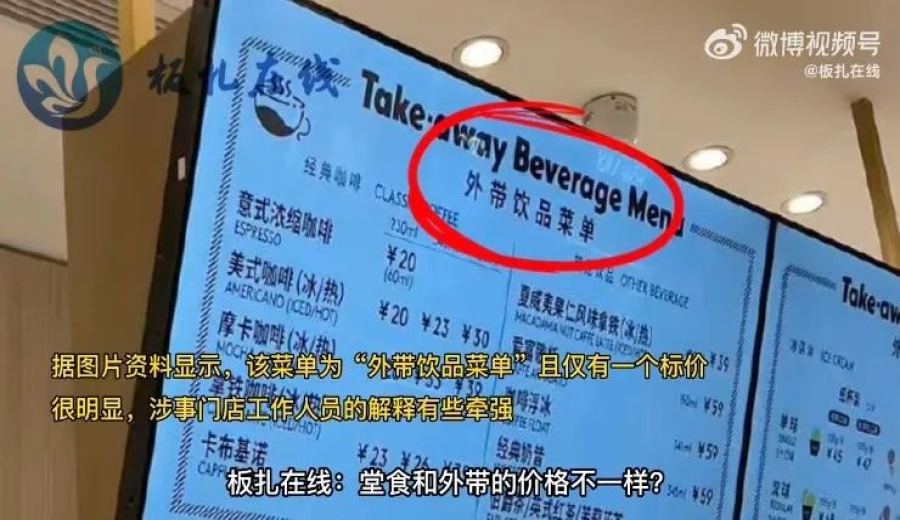
Introduction:A consumer in Suzhou, Jiangsu Province, China discovered that the menu at a Häagen-Dazs store listed the price of an espresso as 20 RMB, but was actually charged 23 RMB at checkout. The store explained that the difference was due to different pricing for dine-in and takeout, but the menu clearly indicated it was a “takeout beverage menu” and only listed a single price without mentioning any additional fees, raising doubts among consumers. This article details the full incident and provides background information on the Häagen-Dazs brand as well as relevant regulations to help readers avoid similar consumer traps.
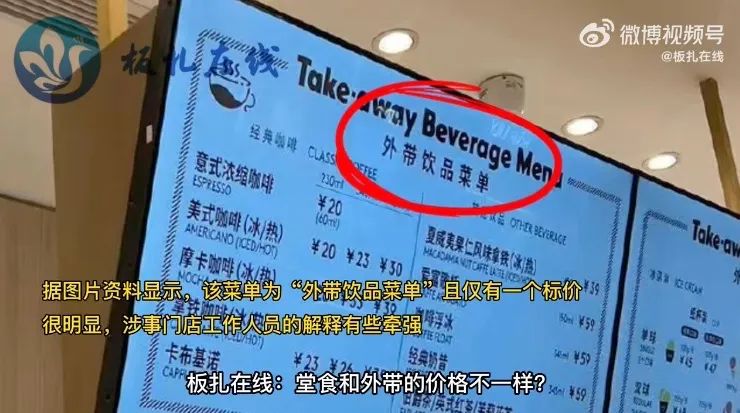
Recently, a netizen in Suzhou, Jiangsu Province, shared on social media that at a local Häagen-Dazs store, the “takeout beverage menu” listed the price of an espresso as 20 RMB, but was charged 23 RMB at the time of payment, leaving the consumer confused. Although the store later explained that dine-in and takeout prices are different and that 23 RMB is the takeout price, a leaked video screenshot shows that the menu clearly stated “takeout beverage menu” at the top, and only a single price was listed under the beverage item, with no mention of any additional charges for takeout, making the store’s explanation hard to believe.
In fact, since entering the Chinese coffee market in 2014, Häagen-Dazs has aggressively expanded its store presence. According to data from Zhaomen Canyan, as of January 3, 2025, the brand has a total of 482 stores across 33 provinces and 86 cities in China, with an overall satisfaction rating maintained at 85.4 points. This pricing dispute is not the first time the brand has faced negative publicity — in July 2022, Häagen-Dazs vanilla ice cream produced in France was reported by the EU Rapid Alert System for Food and Feed for containing ethylene oxide, a Class 1 carcinogen. The affected products had been distributed to over 80 countries and regions, including China. Although the manufacturer voluntarily recalled the products afterward, the incident still drew widespread attention from consumers.
In response to this incident of mismatched coffee pricing between what was displayed and what was actually charged, many netizens left comments expressing dissatisfaction. Examples include: “It’s understandable that dine-in and delivery prices are different, but self-pickup and takeout should usually be the same,” “The menu clearly said 20 RMB for takeout,” “China does have law enforcement agencies, you know,” and “This is the first time I’ve heard that the price on a takeout menu isn’t the actual takeout price.” These responses highlight consumers’ basic expectation for clear and transparent pricing.
According to Article 20 of the Law of the People's Republic of China on the Protection of Consumer Rights and Interests, business operators must provide truthful and comprehensive information regarding the quality, performance, usage, and validity period of goods or services, and must not engage in false or misleading advertising. They should also give truthful and clear answers to consumer inquiries about the quality and usage of goods or services, and all goods or services must be clearly priced. In other words, if the displayed price of a product does not match the actual price, consumers have the right to file complaints or claims with the seller; if no agreement can be reached through negotiation, they may also file a complaint with the Consumers' Association to seek mediation and compensation.
Notably, Häagen-Dazs has a rather distinctive brand history. The brand originated in the United States, where Reuben Mattus developed the first ice cream product in 1921. It went public in New York in 1962, was sold to Pillsbury in 1983, which was then acquired by General Mills. In 2002, Nestlé acquired all registered trademark rights to Häagen-Dazs ice cream in the United States for over 1 billion Swiss francs (approximately 600 million US dollars), but General Mills retained the trademark rights for regions outside the United States. It was not until 2014 that Häagen-Dazs officially entered the Chinese market as a coffee shop chain, with its first store opening in Shanghai on May 8.
The above content is compiled by CoffeeHunters, a coffee news website.


