







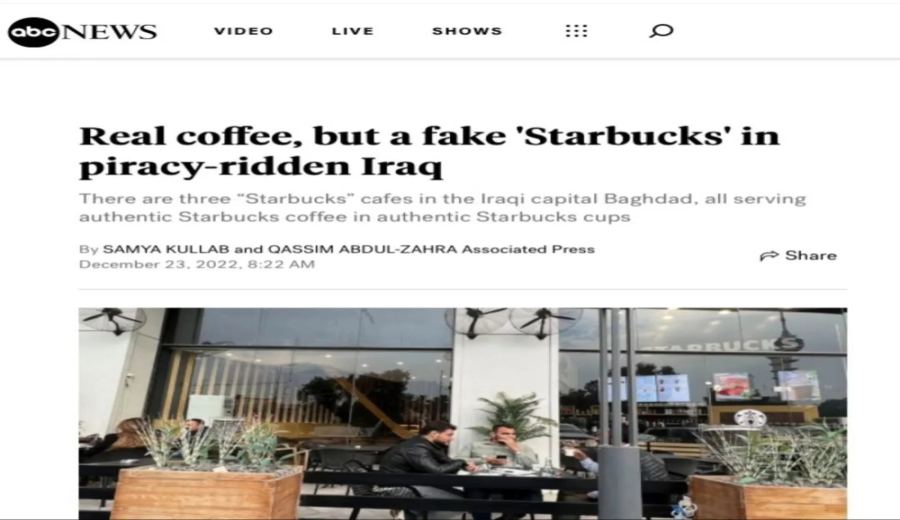
Introduction:In the capital of Iraq, Baghdad, a counterfeit Starbucks that looks almost identical inside and out continues to operate despite facing legal action. This unauthorized café imitates everything from décor and tableware to beverages, drawing widespread attention to the issue of trademark piracy in the region. This article delves into the full story behind the incident, explores the reasons behind the business’s violations, and examines how trademark infringement impacts brands and market order.
In the capital of Iraq, Baghdad, there is a café that at first glance looks nearly identical to the globally renowned coffee chain. It uses the same cups, napkins, and even claims to serve authentic coffee—but in reality, it is an unlicensed, imitation outlet. Despite ongoing legal proceedings, the shop remains open for business, sparking broad public concern.
Every detail of this counterfeit outlet meticulously mimics Starbucks—from the mermaid logo on the signboard to the interior layout and presentation of drinks, making it nearly indistinguishable from the real thing. However, the shop has not obtained any operating license from Starbucks headquarters or its official Middle Eastern agent. The Starbucks-branded items it uses are imported from neighboring countries, constituting serious trademark infringement.
It is understood that as early as early 2020, Starbucks had instructed lawyers to file a lawsuit demanding authorities shut down this unlicensed, imitation store. However, the case has not progressed smoothly. According to sources in Iraq’s legal community, the store owner once threatened the lawyers representing Starbucks, which led to an interruption in the legal proceedings.
The owner of the counterfeit shop, Amin Makhsusi, told the media that he had advised the lawyers to “be more careful,” claiming he had good relationships with local militia groups and influential political figures, including some armed factions. However, in a later interview, he retracted his threat, emphasizing that in Iraq, dealing with powerful individuals is necessary for smooth business operations—especially given the unstable political and economic environment.
Makhsusi further explained that he had attempted to apply for an operating license through formal channels with Starbucks’s official Middle Eastern agent but was rejected. He also tried to reach out to Starbucks headquarters via contacts in the United States but similarly failed to secure authorization.
After multiple unsuccessful applications, he chose to open the shop on his own and said he was willing to face all consequences. He viewed opening this “Starbucks” as a way to overcome challenges and emphasized that items such as the mermaid-logo cups, stirrers, and napkins used in the store were imported through connections from Turkey and Europe. He also claimed the coffee sold was “authentic Starbucks coffee,” no different from that served in licensed stores.
He also revealed that he had held a meeting with the lawyers hired by Starbucks in hopes of reaching some kind of settlement, but so far, no concrete outcome has been achieved. Regarding this trademark dispute, Starbucks has made it clear that the store is not operated by Starbucks or any of its authorized partners, and stressed that it has invested significant resources in building the brand and protecting intellectual property, and will continue to defend its legal rights.
This incident is not just about a single counterfeit store—it reflects the broader and serious issue of trademark piracy across Iraq. Industry experts point out that beyond retail and the coffee industry, piracy is also rampant in areas such as online video streaming, highlighting the major challenges the region faces in protecting intellectual property.
Relevant companies and U.S. officials have stated that piracy not only damages brand reputation and economic interests, but in some cases, may also endanger consumer safety. The reason these infringers act with impunity is often tied to the protection provided by certain powerful local groups.
In response to media inquiries, a Starbucks spokesperson reiterated: “The Baghdad store is not operated by Starbucks or any of our authorized partners. We are evaluating our next steps and have a responsibility to protect the brand’s intellectual property and reputation.” This incident also serves as a reminder to global brands entering emerging markets to pay greater attention to intellectual property strategy and the assessment of local legal environments.
The above content is compiled by CoffeeHunters, a coffee news website.


