







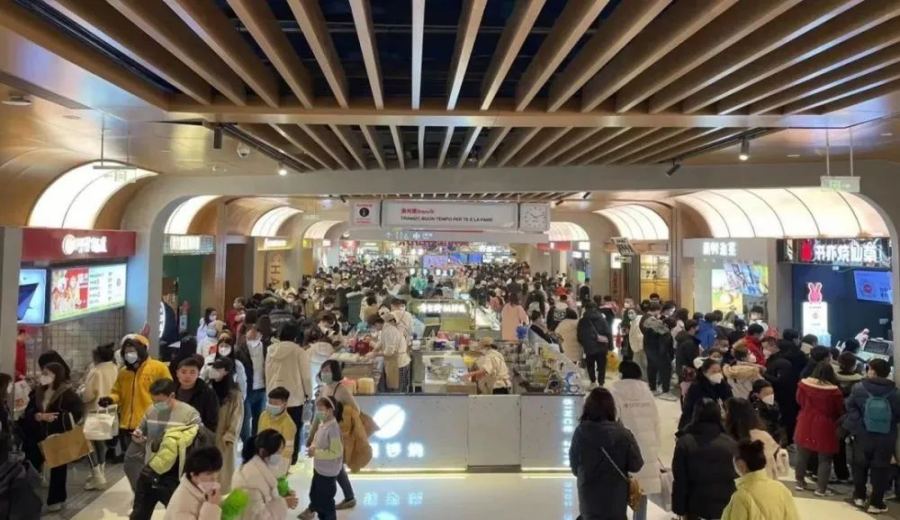
Introduction:As the first New Year’s holiday following the adjustment of epidemic prevention policies came to an end, coffee and tea beverage outlets across the country welcomed long-awaited queues, signaling a notable rebound in the consumer market. This article delves into the data changes behind the queuing phenomenon, explores which regions and brands have seen the most significant recovery, and shares industry forecasts for consumption trends in the upcoming spring and summer seasons to help readers grasp market dynamics and shifts in consumer behavior.
During the first short New Year’s holiday after the easing of pandemic control measures, many “recovered” individuals ventured out of their homes, rapidly heating up the dining and beverage consumption market. Strolling through streets and alleys, it was easy to spot long lines at coffee shops and bubble tea outlets again. Some popular stores even experienced such a surge in orders that their ordering systems were backlogged, with waitlists exceeding a hundred cups—scenes reminiscent of the pre-pandemic boom.
Sales data released by several well-known chain brands show clear signs of a significant overall rebound. Foot traffic in commercial areas of certain regions has gradually recovered to 60–80% of pre-pandemic levels, indicating that the city’s “vibrant atmosphere” is gradually returning. Although recovery paces vary across locations, the overall trend is decidedly upward, and the industry holds optimistic expectations for the upcoming spring market.
This New Year’s Day fell when most cities had entered the “recovered” phase, with people’s daily routines gradually returning to normal, leading to a noticeable rebound in beverage consumption. Many outlets that were once deserted are now seeing queues again, with some peak periods even experiencing order surges that kept staff extremely busy.
On social media platforms, many users shared their “queuing experiences”—some spent hours waiting in line for a meal, while others were amazed by the bustling crowds on the streets. Were it not for the widespread use of face masks, the impact of the pandemic would have been almost imperceptible. This wave of holiday consumption has set a positive tone for 2023 and reflects the gradual release of consumers’ long-suppressed demand.
In fact, even when opting for delivery services, customers may still face extended wait times. One consumer shared that at around 1 p.m., they attempted to order bubble tea via their phone, only to find that the system indicated over 150 drinks were still ahead of theirs in the queue, ultimately leading them to abandon the order. This phenomenon highlights the busyness of popular beverage outlets and the urgent return of consumer demand.
According to media reports, the sales performance of certain brands has been particularly eye-catching. For instance, one brand saw a significant week-on-week increase in overall sales across its national outlets, with the first day of the holiday recording nearly a 60% rise in revenue compared to regular days, and some stores in North China even achieving a more than fourfold increase in turnover, demonstrating strong consumption recovery momentum in specific regions.
It is worth noting that this consumption rebound has not occurred uniformly across the country. In some cities, the convergence of factors such as “recovery,” “weekend,” and “Christmas” drew large crowds into malls, with some even setting a record of 100,000 visitors in a single day. Related topics sparked heated discussions on social media, leading some to wonder if this was a case of “revenge spending” post-pandemic. Some tea beverage outlets sold over a thousand cups in a single day, and snacks like candied hawthorn also saw queueing crowds, indicating signs of a diversified consumption recovery.
Based on data compiled by local media, major cities including Guangzhou, Beijing, Shenzhen, Shanghai, and Zhengzhou generally saw餐饮 industry foot traffic and revenue during the New Year’s period recover to 60–80% of the same period in previous years. Moreover, most outlets showed a continuous upward trend, injecting a strong boost of confidence into the overall industry. The sector widely anticipates a full return to normal operational rhythms in spring and summer.
Taking some leading brands as examples, data from a week before the holiday already showed a noticeable rebound in foot traffic across their national outlets, especially in regions such as North China, Central China, and Southwest China, where order volume increased by over 35%. Among these, North China saw a week-on-week order growth of 35.7%, and the top ten highest-selling outlets were mostly concentrated in Beijing, with only one located in Shijiazhuang, Hebei.
It is undeniable that after three years of pandemic impact, the road to recovery for the dining industry still faces challenges. While some outlets have regained their queuing popularity, others have opted to close early due to various reasons. Overall, although the market is still in a “just-warming” stage, the positive trend is gradually becoming clear, and the vitality and “daily bustle” of cities are slowly returning bit by bit.
The above content is compiled by CoffeeHunters, a coffee news website.


