







Introduction:Starbucks China has publicly disclosed for the first time its long-term coffee procurement and export data from Yunnan over the past decade. Over ten years, the company has cumulatively purchased more than 56,000 metric tons of green coffee beans, of which 43,000 tons were exported to overseas markets via its global supply chain. Beyond the figures, this article delves into how Starbucks has leveraged technical support, certification systems, and retail channels to help transform Yunnan from a raw material origin into a specialty coffee region, and also shares practical advice for selecting high-altitude Yunnan beans.
Starbucks China recently revealed key achievements from its ten-year deep engagement in Yunnan’s coffee growing region: since establishing its first Asia-Pacific Coffee Farmer Support Center in Pu’er in December 2012, it has cumulatively sourced 56,433 tons of green beans locally and exported 43,000 tons to major consumer markets in Europe, the Americas, and Asia through its own international network. This bean selection also includes 99 tons of high-altitude specialty beans that meet the “Reserve” standard, demonstrating that Yunnan’s production region already has the capability to produce top-tier flavor profiles.
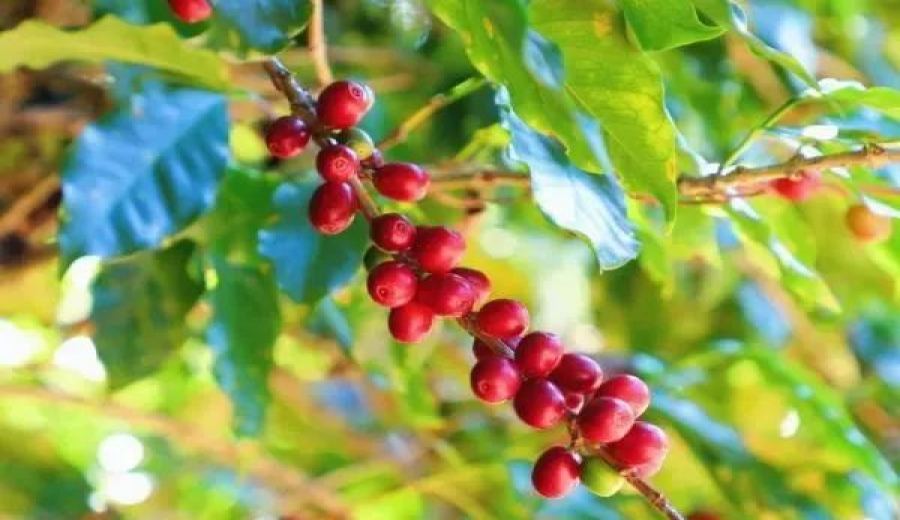
Pu’er, as one of China’s oldest coffee-growing regions, combines over 130 years of cultivation history with its unique highland terrain, resulting in distinct fruity acidity and a rich body. Data published by Starbucks shows that Yunnan now accounts for over 98% of both coffee planting area and production nationwide. In 2021, despite climate-related yield reductions, the entire industry chain achieved a record-high output value of 31.672 billion yuan, marking a year-on-year increase of 1.72%.
The brand’s technical support system has been a core driver of the region’s transformation — what began as a single agronomist at the Pu’er support center has expanded over ten years into a team of 28 members, who have provided training to more than 30,000 farmers cumulatively. These courses cover practical operations such as shaded cultivation and pest and disease control, and have introduced the “Coffee and Farmer Equity (C.A.F.E.) Practices” certification system. To date, 2,860 farms have obtained this certification, covering an area of 340,300 mu.
Notably, Starbucks has not confined itself to the role of a simple buyer. Its more than 6,000 stores across China have become important showcases for Yunnan beans. Over the decade, the company has launched ten Reserve series products inspired by local terroir, such as single-origin beans from the Gaoligong Mountains with notes of cherry and caramel in the finish. This “from origin to cup” direct-connect strategy has successfully cultivated a group of consumers who appreciate Yunnan’s flavor profile.
Experts point out that when selecting Yunnan specialty coffee, three key points should be noted:Prioritize beans of the Typica or Catimor varieties grown at altitudes above 1,200 meters— beans from this altitude range typically exhibit brighter citrus acidity and red wine-like aromas;The roast level is recommended to be medium to medium-dark— this helps balance their natural herbal character; when brewing, use water at 92–94°C with a fine grind to highlight the sweetness layers. Market observations also show that besides Starbucks, domestic brands including Luckin and Seesaw have in recent years launched Yunnan-exclusive product lines.
From the trial of a single store to the establishment of a comprehensive support network, Starbucks’ presence in Yunnan reflects the global supply chain’s reliance on stable sources of quality. Over ten years, its agronomist team has conducted field visits to 68 townships, covering approximately 480,000 kilometers in travel distance. This long-term, in-depth approach not only improves yield efficiency, but more crucially embeds the quality control standards of “specialty coffee” deep within the local industry chain. As more international buyers take note of the potential of Asian beans, Yunnan is gradually moving from price competition to a new phase of value competition.
The above content is compiled by CoffeeHunters, a coffee news website.


