







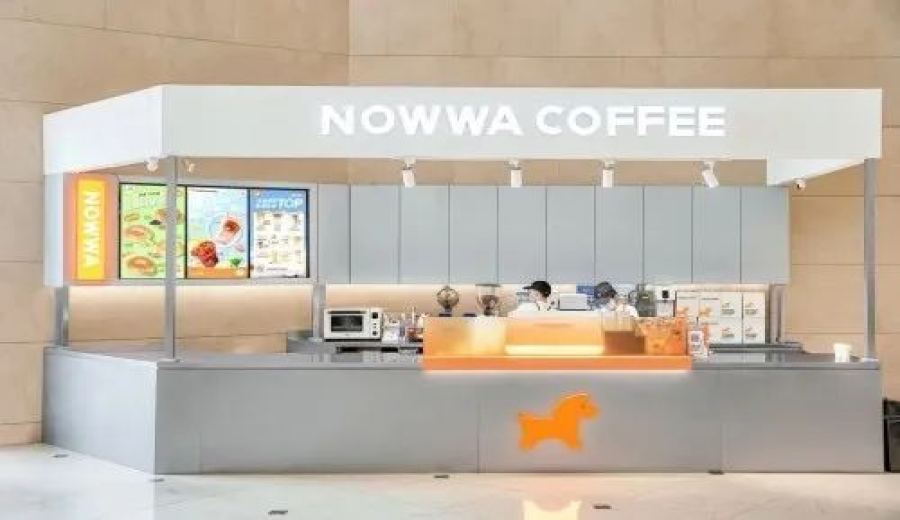
Introduction:NOWWA Coffee, established in 2019, has recently opened 120 new stores simultaneously, bringing its nationwide total to over 1,700 outlets, covering more than 100 cities. How has this affordable coffee brand, which focuses on a budget-friendly price point of 15 RMB, rapidly risen under the shadow of industry giants such as Starbucks and Luckin Coffee, with a business model that relies on 75% delivery orders? This article explores its expansion path from its Shanghai origins to penetration in third-tier cities, as well as the operational keys behind its co-branding marketing and quick-service small-store strategy.
NOWWA Coffee recently announced through official channels that its strategic plan to open 120 new stores in one go has officially been implemented. This expansion not only consolidates its presence in first-tier markets such as Guangzhou but also marks its first entry into 10 emerging cities including Nanchang, Jinhua, Huangshan, and Zhanjiang, demonstrating the brand’s determination to penetrate lower-tier markets. Since its founding in June 2019 in Shanghai, this chain brand under Shanghai Lixing Technology Co., Ltd. has quickly secured a place in the highly competitive coffee market by accurately targeting the consumption needs of professionals aged 25 to 35, with a pricing strategy of around15 RMB per cup.
According to the latest statistics, as of July this year, NOWWA Coffee’s total number of stores nationwide has surpassed 1,700, distributed across more than 100 cities, ranking third in scale among domestic chain coffee brands. Notably, among the newly opened stores,East China accounts for 37%(44 stores),Central China 25%(30 stores), whilethird-tier cities make up as much as 32%(38 stores), reflecting a clear strategy of deliberately avoiding saturated first-tier markets and focusing on regions below the second tier.
Since its inception, the brand has adhered to an "online-first" operational model, with delivery platform orders consistently accounting for over75%of total revenue. This asset-light characteristic allows it to expand rapidly at relatively low cost — currently mainly reaching consumers via major delivery services such as Ele.me and Meituan, meeting the core demand of modern urbanites for "convenient access to high-value-for-money coffee." Observing its product mix, in addition to its signature freshly ground coffee, it also offers tea beverages, baked goods, and branded merchandise, creating a differentiated advantage as a "one-stop light food and coffee solution."
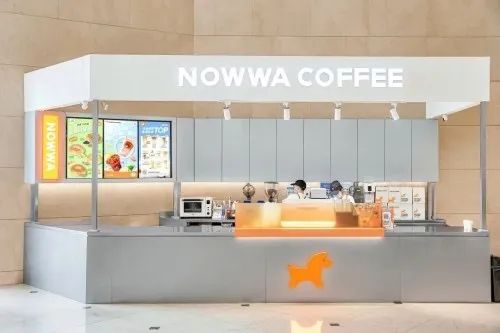
Market analysis indicates that China’s coffee consumption is expected to hit 1 trillion RMB by 2025, attracting numerous brands to join the expansion race. Market leaders such as Starbucks and Luckin have respectively unveiled ambitious plans like “adding 3,000 new stores in three years” and aiming for “9,000 stores”; while premium-focused brands such as Manner and Seesaw are also accelerating their market push. Against this backdrop, NOWWA Coffee has chosen to focus on a dual-track model of “quick-service small stores + alliance partnerships”: in its initial two years, it steadily operated a few dozen stores, until last year when it entered a period of explosive growth — just last June it announced the addition of 100 new stores in a single month (bringing the total to over 1,500 at the time), and now within half a year it has added another hundred, showing its growth curve of approximately 500 new stores per year continues to climb.
The brand’s marketing strategy is also noteworthy. In recent years, NOWWA Coffee has successfully generated buzz through cross-industry collaborations, including launching a limited-edition “liquor bottle coffee” in partnership with outdoor gear brand NORTHLAND, as well as teaming up with Chengdu’s traditional Chinese dim sum brand “Li Yu Bai” to create a breakfast combo called “Eat Green Buns, Guard the Green ‘Horse’,” These IP and local culture-inspired creative products have effectively attracted the curiosity of younger consumers. From operational data, its success lies in balancing three key elements: “affordable pricing (within the 15 RMB range),” “efficient service (primarily delivery-based),” and “emotional connection (through creative collaborations),” precisely capturing Gen Z consumers’ expectations for “everyday coffee.”
Industry insiders point out that future competition in the coffee market will focus more on the ability to achieve “mass-market accessibility” — including consistent quality supported by stable supply chains, product adjustments tailored to local tastes, and store models that can be rapidly replicated. The expansion speed of “nearly 500 stores per year” and the penetration rate in third-tier cities currently demonstrated by NOWWA Coffee may be signaling the development trends of the next phase in the chain coffee market.
The above content is compiled by CoffeeHunters, a coffee news website.


