







Introduction:Tims China's first quarterly financial report after its NASDAQ listing showed that its total net revenue in the third quarter reached RMB 306 million, a significant year-on-year increase of nearly 70%, setting a new historical single-quarter high. In addition to its strong financial performance, the brand is also accelerating the expansion of its store network and actively laying out the ready-to-drink (RTD) coffee market. This article will provide a detailed analysis of Tims China’s latest financial data, store expansion pace, strategies for different types of stores, as well as its strategic layout in the RTD coffee segment, helping readers gain an in-depth understanding of this international coffee brand’s development strategy and future direction in the Chinese market.
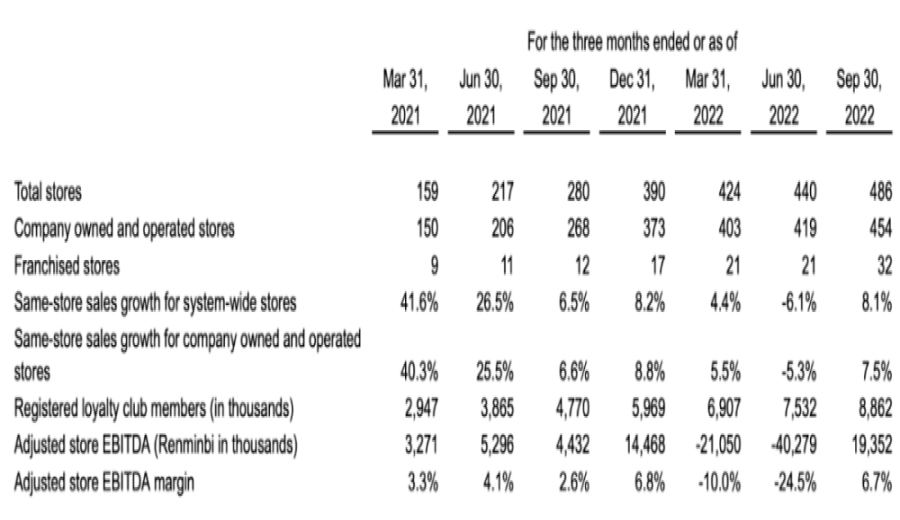
In the third quarter of 2022, Tims China released its first financial statement since its NASDAQ listing. The data showed that the total net revenue for the quarter reached RMB 306 million, a year-on-year growth of 67.9%, marking the highest single-quarter revenue in the brand’s history since entering the Chinese market. This growth reflects not only the enhanced brand recognition but also the effectiveness of its adjustments in product and market strategies.
As of the end of September 2022, Tims China had entered 27 cities nationwide, with a cumulative total of 486 stores opened, including 454 directly operated stores and 32 franchised stores. The brand maintained a steady pace of store expansion, opening approximately one new store every two days, and successfully achieved the milestone of its 500th store in October. However, due to external factors such as the pandemic, the brand has adjusted its original plan of “1,500 stores in ten years” to a long-term goal of “reaching 2,750 profitable stores by 2026,” with a continued focus on directly operated stores in the initial phase.
In terms of store types, Tims China currently focuses on four formats: flagship stores (also known as Golden Leaf stores), standard stores (Red Leaf stores), convenience-oriented stores (Tims Go, also called Swift Leaf stores), and co-branded quick-service stores (such as Tims Express). Among them, Golden Leaf stores have an area of about 200 square meters, mostly located as city-first outlets, emphasizing brand image and customer experience; Red Leaf stores are around 150 square meters and are widely distributed in shopping malls, office buildings, and communities, offering a full range of coffee and light food options. Tims Go, on the other hand, is a smaller, convenience-focused store format with a compact size and faster service, making it highly suitable for high-traffic commercial areas or transportation hubs.
Notably, in 2022, Tims China partnered with Yijie Coffee, a subsidiary of Sinopec, to launch “Tims Express Lingfeng Stores,” a small counter-style store format requiring only about 20 square meters of space and minimal operational setup, offering high scalability. These stores have been successfully launched in cities including Beijing, Shanghai, and Suzhou, demonstrating strong operational performance. The brand plans to further accelerate the expansion of such small-format stores in 2023 to enhance market penetration.
In addition to physical store expansion, Tims China is also actively laying out the ready-to-drink (RTD) coffee market. In July 2022, following its collaboration with Yijie Coffee, Tims China announced on November 18 a two-year strategic partnership with Shanghai-based Hema (Freshippo), under which the two parties will co-brand and launch RTD coffee products, exclusively sold through Hema’s online and offline channels. This collaboration marks Tims China’s second major move in the RTD sector, demonstrating its intention to reach more daily consumption scenarios through ready-to-drink, portable product formats.
RTD coffee has become an important growth driver in the global coffee market in recent years. Especially in the busy urban lifestyle, RTD coffee is increasingly favored by consumers for its convenience and diverse flavors. Whether in convenience stores, supermarkets, or e-commerce platforms, RTD products have gradually become common choices. Tims China’s accelerated entry into this field not only complements the limitations of freshly brewed coffee in certain scenarios but also helps to increase the brand’s frequency of contact and stickiness with consumers in their daily lives.
Regarding overall financial performance, Tims China CEO Lu Yongchen noted: “Our strong performance reflects consumers’ high recognition of the high convenience, localized products and services, and continuously innovative brand value offered by Tims China.” He further emphasized that the brand will continue to enhance user loyalty and brand influence through more collaborative models, innovative services, and product offerings, seizing greater market opportunities in the future.
Overall, Tims China’s impressive third-quarter financial results are not just about numerical growth but also represent the gradual implementation of its market strategy in China. From the steady expansion of store numbers, the flexible configuration of diverse store formats, to the active push into the RTD coffee market, all demonstrate the brand’s clear vision and execution capabilities for future development. As market maturity increases and consumer habits evolve, whether Tims China can continue to stand out in the fiercely competitive coffee market is worth ongoing observation.
The above content is compiled by CoffeeHunters, a coffee news website.


