







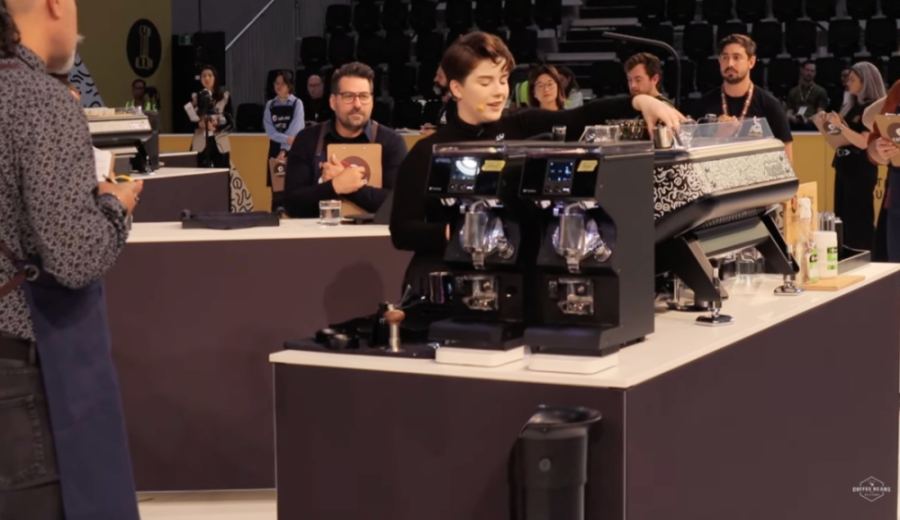
Introduction:In 2022, Morgan Eckroth, the runner-up of the World Barista Championship (WBC), shocked the audience by smashing a coffee cup on stage, drawing widespread attention. Behind this symbolic act lies her deep reflection on the current state of the specialty coffee industry. By selecting the endangered variety Eugenioides and incorporating kintsugi craftsmanship along with local cultural elements, Morgan not only demonstrated exceptional brewing skills but also explored the future of coffee in the face of climate change. This article will delve into her competition strategy, key parameters, and creative inspirations, offering insights into the challenges and breakthroughs in specialty coffee.
On the stage of the 2022 World Barista Championship (World Barista Championship, WBC), American competitor Morgan Eckroth, who finished as the runner-up, made a stunning move—right in front of the judges, she deliberately smashed a coffee cup. This coffee creator, who has over 7 million followers on social media, conveyed her profound concern about the current state of the specialty coffee industry through every aspect of the competition.
Unlike many competitors who focused solely on technical presentation, Morgan chose to explore the existential crisis facing specialty coffee through a metaphorical approach. From selecting the nearly extinct coffee variety “Eugenioides (Coffea Eugenioides)” to integrating traditional Colombian elements and kintsugi repair techniques in the creative beverage round, each of her steps revolved around a central theme: how should specialty coffee reinvent itself when faced with climate anomalies, shifting consumer markets, and industry decline?
“Specialty coffee was on the brink of extinction two years ago. In the past, it could build deep emotional connections with customers, but now, although service has become more efficient, it has also become increasingly dull,” Morgan stated during the competition. She further pointed out that even as we strive to move the industry forward, the loss of service experience is an undeniable reality. While pursuing efficiency and progress, we should also revisit the essence of coffee and rediscover its humanistic value and professional charm.
During the milk coffee round, Morgan used an extremely rare variety from Colombia—Eugenioides. This coffee is considered the “maternal” variety of Arabica, originating from East Africa. Its leaves and fruits are both smaller than those of Arabica. Although it is not particularly difficult to cultivate, its yield is very low, and it has long been limited to experimental planting. She mentioned: “This coffee has an extremely unique flavor profile that makes you rethink the possibilities of coffee. Thanks to the efforts of a coffee lab, this variety has been reintroduced and cultivated in the Andes Mountains of Colombia, allowing it to re-enter the public eye.”
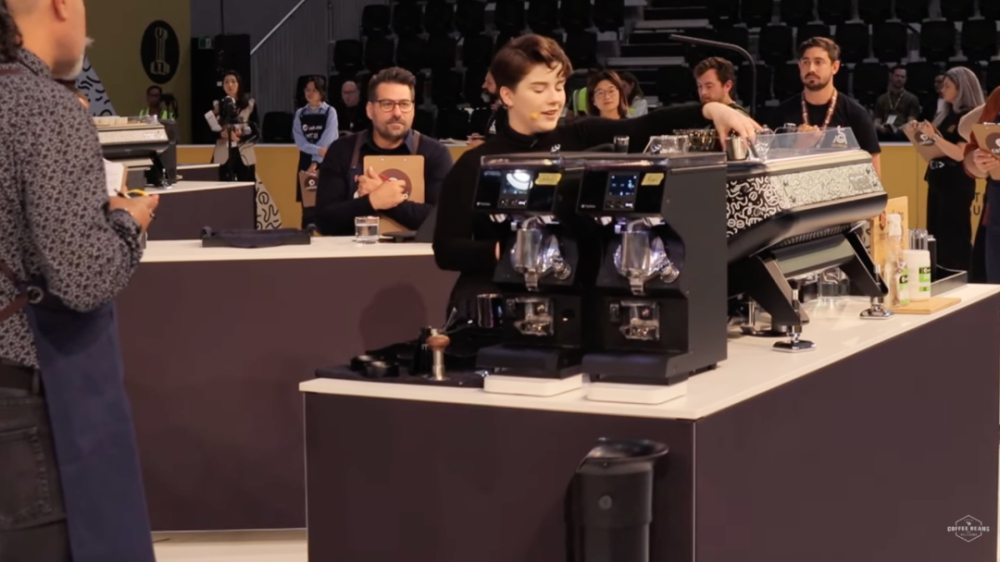
After being processed through natural sun-drying, Eugenioides exhibits low acidity and rich sweetness—traits that were further highlighted through Morgan’s meticulous extraction. For the milk coffee round, she used23 grams of coffee grounds,extracted 36 grams of coffee liquid in 25 seconds, and paired it with whole milk that had been purified through frozen distillation. This milk was frozen and concentrated to30%, giving it a texture closer to cream. When heated, the lactose is released more fully, blending perfectly with the natural sugars in the coffee to bring out a candy-like sweet flavor.
The addition of the purified milk gave this cup of coffee layered flavors reminiscent of yellow cake batter, melted chocolate ice cream, caramel butter, sugar, vanilla, and salty nuts, along with a rich milky mouthfeel and a silky, buttery texture. Morgan hoped that through this design, more people could experience the hidden flavor potential of Eugenioides and thus pay attention to this variety that faces the threat of extinction once again.
Moving on to the creative coffee round, Morgan selected a light-roast, naturally processed Rume Sudan from Colombia. This bean retains distinct tropical fruit acidity, setting the tone for the overall creative beverage. She used18.2 grams of coffee grounds, and similarly extracted40 grams of espresso in 25 seconds. The flavors showcased red grapefruit, floral notes, brown sugar, and kiwi, with a medium body and a soft mouthfeel. The aftertaste transitioned into rose and orange acidity.
In this round, Morgan further demonstrated her creativity: she had pre-made80 grams of Rume Sudan espresso, which was then frozen and preserved, and mixed with Lulo—a unique citrus fruit from Colombia—anda 1:1 syrup made with 25 grams of sugar, resulting in flavor layers similar to tamarind and maple syrup.
Next, she added30 grams of pineapple juice with added saline. The saline helped balance the sharpness of the overall flavors and enhanced the sweetness, bringing hints of spice and cocoa. She then added20 grams of frozen distilled milkto contribute a creamy texture. Finally, she infused carbon dioxide and poured in the previously untouched espresso that the judges had not yet tasted, culminating in the dramatic act of smashing each cup of coffee.

This destructive act symbolized the multiple crises currently facing the specialty coffee industry, including climate change, market shrinkage, and shifting consumer interests. Through her actions, Morgan reminded the world that even amid turmoil, hope can be found in the innovation and rebirth of coffee. She further poured the mixed coffee into cups repaired using Japanese kintsugi techniques, symbolizing that even when broken, things can become stronger through careful restoration—embodying the resilience of both the coffee industry and humanity.
Lastly, she sprayed a mixture of orange blossom water and tea over each cup, mimicking Colombia’s national drink Agua Diente, conveying a celebratory spirit as well as hopes for the future of specialty coffee.
Through this competition, Morgan not only demonstrated professional extraction techniques and creative thinking but also sparked deep industry reflection on the value and future direction of specialty coffee. In the face of various challenges, how to use precise parameter control, flavor description, and cultural communication to help more people understand and fall in love with specialty coffee will be a shared challenge for every professional in the field.
The above content is compiled by CoffeeHunters, a coffee news website.


