







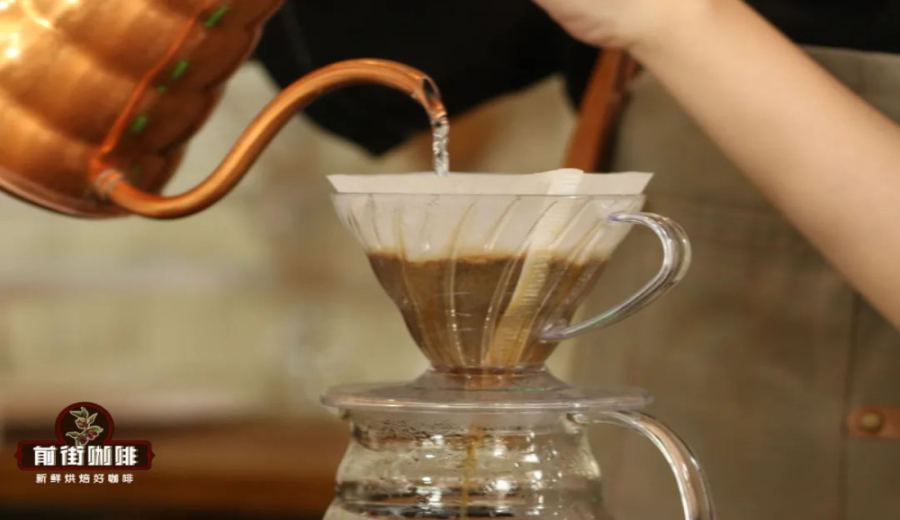
Introduction:The brewing time of pour over coffee is closely linked to its flavor profile. Mastering the drip pace within the ideal range is a challenge for many coffee enthusiasts. This article delves into the relationship between extraction time and flavor expression, explores common causes of overly slow dripping—including practical details such as grind uniformity and pouring technique—and introduces the "Four-Six Brewing Method," which uses time as the core control factor to help you achieve more stable and delicious pour over coffee.
In the world of pour over brewing, brewing time is never just a single number, but an important indicator closely tied to extraction yield. Generally speaking, when the extraction yield falls within the ideal range of 18% to 22%, coffee tends to exhibit a richer and more balanced flavor. This extraction yield range is also reflected in the specific brewing time, forming what is known as the "optimal brewing time range." This range is not fixed, but adjusts according to different brewing parameters (such as coffee dose, water temperature, grind size, etc.).
For example, when using lightly roasted coffee beans with 15 grams of coffee grounds, a 1:15 coffee-to-water ratio, a water temperature of about 91°C, a #20 mesh filter with an 80% pass-through rate, and a three-pour brewing method, the ideal brewing time generally falls between 1 minute 50 seconds and 2 minutes 10 seconds. However, it’s worth noting that if you change the brewing technique—such as switching to a single pour (pouring all the water at once)—the brewing time is usually shorter, typically completing in about 1 minute 30 seconds.
Yet, many coffee lovers report that even when using the same parameter settings, the actual dripping time often exceeds expectations, leading to overly long brewing times. This situation is often related to two key variables: first, whether the particle size distribution of the coffee grounds produced by the grinder is uniform, and second, whether the pouring method and speed are appropriate.
First, let’s talk about the impact of grind size. Many people, while referencing brewing parameters, can precisely control the coffee dose, coffee-to-water ratio, and water temperature, but often make errors in judging "grind size." This mainly stems from differences in grind quality among grinders. High-quality grinders produce coffee grounds with a more concentrated particle size distribution and a small gap between coarse and fine particles, while low-quality grinders tend to produce uneven grind sizes, or even excessive amounts of both fine and coarse particles. This uneven coffee bed directly affects the speed at which water passes through, thereby lengthening the dripping time. It is recommended to use a #20 mesh filter to test the pass-through rate; if the pass-through rate is 80% but the proportion of fine particles is high, it can not only cause uneven extraction but also easily slow down the overall dripping process.
Another common issue is the pouring habit. Some baristas or amateur enthusiasts tend to pour with a very small stream of water during brewing. Although this approach may seem to allow for more precise control over water temperature and wetting, it often leads to excessively long pouring times, and the small stream struggles to lift the liquid surface in the filter, thereby affecting the drainage speed and ultimately extending the overall dripping time. To address this, it’s recommended to control the pouring speed during the second pour to about 5 milliliters per second, and raise the liquid surface to approximately half the height of the short spout of a V60 filter—maintaining a similar height at the end of the final pour also helps ensure smooth water flow and avoids unnecessarily prolonging the brewing time.
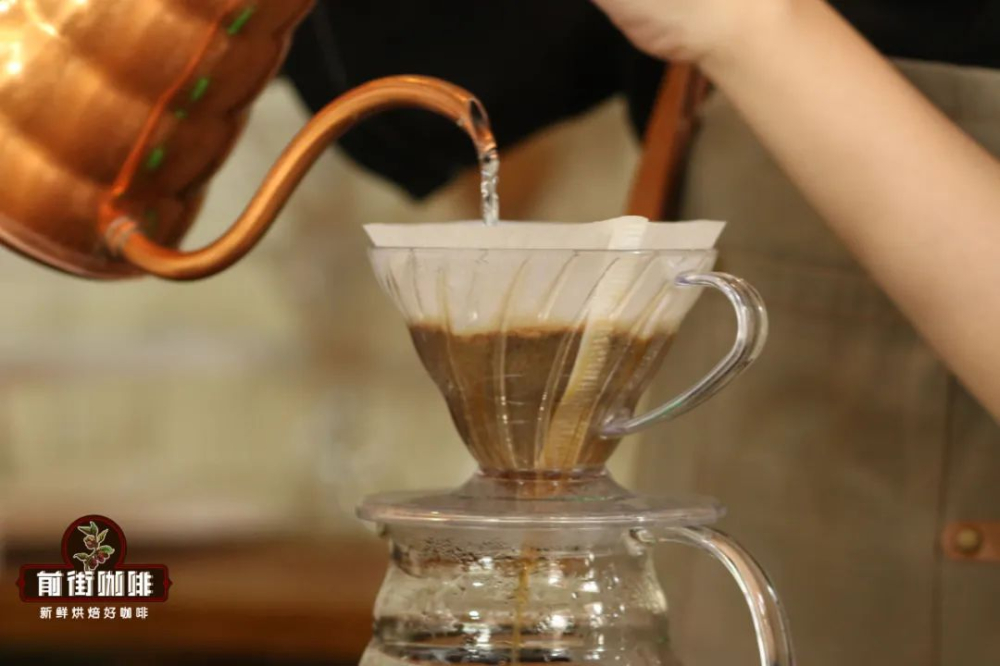
Most brewing tutorials or reference guides often treat brewing time as an outcome indicator, used to judge whether there are any abnormalities in the overall process. However, experienced baristas take it a step further by using time as an active control tool. One of the most representative methods is the "Four-Six Brewing Method" proposed by Tetsu Kasuya.
The hallmark of the Four-Six Brewing Method is its clear division of the entire brewing process into five pours, with a fixed interval of 45 seconds between each pour (based on a 20-gram coffee dose). Through this regularized timing design, brewers don’t need to frequently judge when to perform the next pour. By simply following a fixed rhythm, they can effectively control the overall brewing time, thereby maintaining consistency and stability in flavor. For beginners or daily drinkers looking to improve the stability of their brewing process, this is a highly practical, parameterized brewing strategy.
In summary, the dripping time of pour over coffee is not merely a passive waiting period, but a key element closely related to extraction yield and flavor release. From the quality of the grind, grind uniformity, to pouring technique and water flow control, every step can influence the dripping speed and the final coffee taste. If you want to gain more precise control over your brewing rhythm, try a time-based brewing method like the Four-Six Brewing Method—making your pour over process more relaxed and your coffee performance even better.
The above content is compiled by CoffeeHunters, a coffee news website.


