







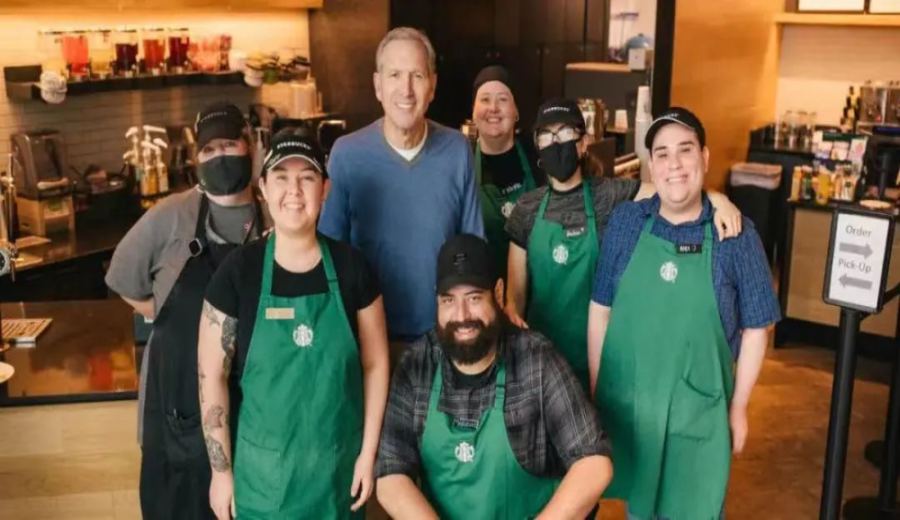
Introduction:Starbucks' legendary founder Howard Schultz has officially announced he will never return as CEO again, with former Reckitt Benckiser CEO Laxman Narasimhan taking the helm, effective October 1. How will the new leader reverse the sales decline in the Chinese market and tackle rising global costs? This article analyzes the strategic layout and market challenges behind Starbucks’ leadership transition.
The world’s leading coffee chain Starbucks is undergoing a major personnel change, as founder Howard Schultz, after his third return, has finally solidified a succession plan. The 68-year-old architect of the coffee empire has made it clear that he will not reassume the CEO role, instead transitioning to a board member and long-term advisor to fully support the new CEO, Laxman Narasimhan.Narasimhan will officially take over on October 1, describing this transitional period before his appointment as a “structured immersion” learning journey.
The now 68-year-old Schultz can be considered the soul of Starbucks. From joining as Director of Retail Operations in 1982 to acquiring the company in 1987 and serving two stints as CEO (2008–2017), he built a coffee kingdom with over 34,000 stores globally. On this occasion, he particularly emphasized thathis return as interim CEO was purely “out of a sense of duty”, even accepting only a symbolic $1 salary, mainly to ensure a smooth corporate transition.
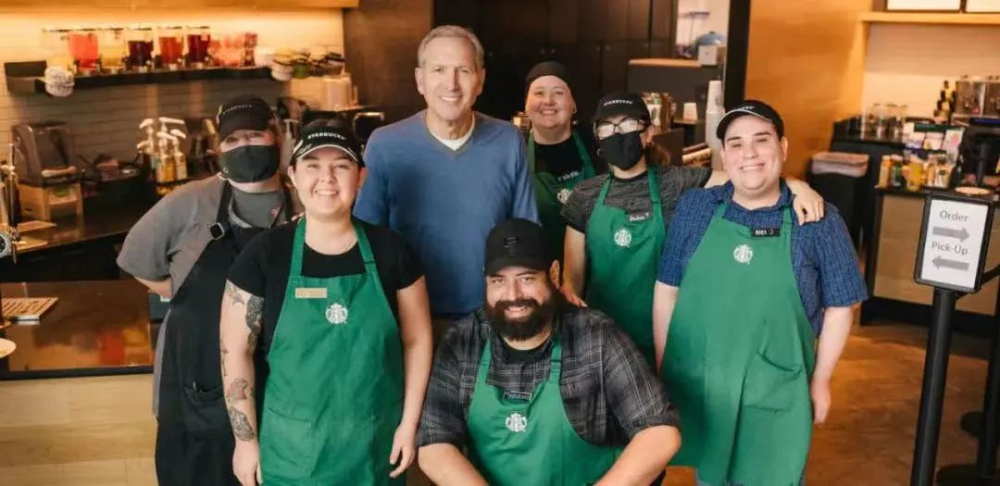
The new leader, Narasimhan, brings an intriguing background. Former CEO of British consumer goods giant Reckitt Benckiser, he will face the most complex operating environment in Starbucks’ history. Financial reports show that in Q3 2022, same-store sales in China plummeted by 44%, while North America grew by 9%, butglobal average same-store sales increased by just 3%, far below industry expectations. Even more challenging is the rise in global coffee bean prices and soaring shipping costs, which have directly impacted profit margins.
Market observers note that the Starbucks Narasimhan is about to take over is at a “critical juncture of strategic transformation.” In the Chinese market, local brands like Luckin Coffee are capturing younger demographics with their digital ordering systems; in its traditional strongholds in Europe and America, specialty coffee shops and ready-to-drink coffee products from chain supermarkets are diverting significant consumer traffic. One noteworthy detail is that although Starbucks’ global store count has grown by 5% compared to last year,the turnover rate among baristas in the U.S. region within 90 days has reached 25%, with the issue of manpower shortage becoming increasingly severe.
Looking back at Starbucks’ development history, Schultz left in 1985 after facing resistance to his vision of promoting espresso culture, later acquiring the company’s retail business for $3.8 million and gradually implanting the concept of the “third place” into the minds of consumers worldwide. His most famous reforms include introducing the “partnership culture” employee benefits system in the 1990s, and a sweeping supply chain overhaul upon his return in 2008—decisions that remain classic case studies in business schools to this day.
Industry insiders analyze that Narasimhan will need to prioritize three key challenges upon taking office:First, the reversal of competitive dynamics in the Chinese market, second, balancing digital services with the physical store experience, and third, controlling continuously rising raw material costs. Notably, Starbucks’ latest financial report shows significant growth in its ready-to-drink product line and coffee alliance businesses, which could become an important breakthrough for the new management.
With the Schultz era coming to a close, this coffee brand, founded in 1971, stands at the crossroads of generational leadership transition. Investors and consumers alike are watching to see whether Narasimhan, coming from the multinational consumer goods sector, can inject differentiated competitiveness into Starbucks, maintaining its global market share while opening up new growth trajectories.
The above content is compiled by CoffeeHunters, a coffee news website.


