







Introduction:Well-known brand Mstand was hit with an administrative penalty of nearly 487,000 yuan by Shanghai regulatory authorities for commissioning a supplier without proper production qualifications to manufacture ice cream ingredients, drawing public attention to loopholes in the vetting of food contract manufacturing credentials. This article delves into the case background, investigation process, and ruling basis, revealing potential compliance risks for smaller brands in outsourced production, and includes key points on food production licensing to help readers identify outsourcing pitfalls.
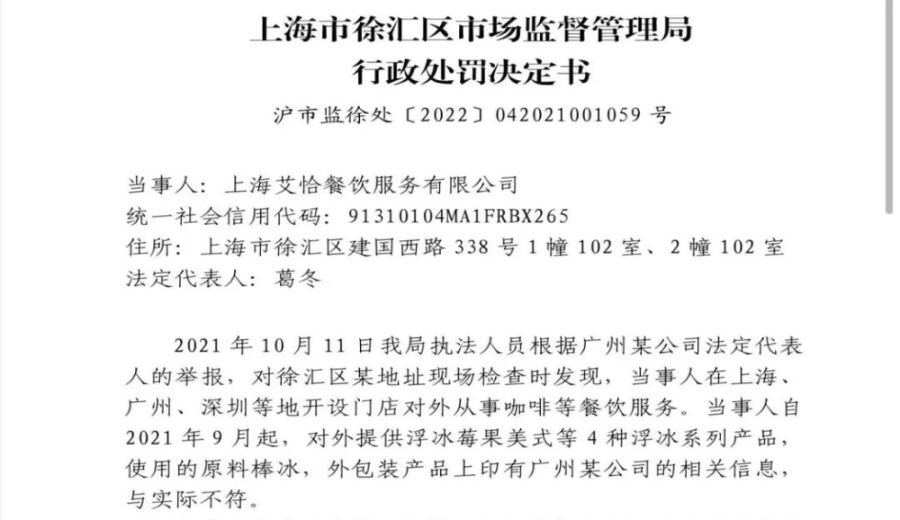
Recently, popular coffee brand Mstand received an administrative penalty totaling approximately 487,000 yuan from the Xuhui District Market Supervision Administration of Shanghai, including confiscation of illegal gains and fines, due to its ice cream ingredient supplier lacking a valid food production license. The case originated from the supplier’s alleged misappropriation of another company’s production credentials, exposing weak links in the vetting of credentials within the food contract manufacturing sector.
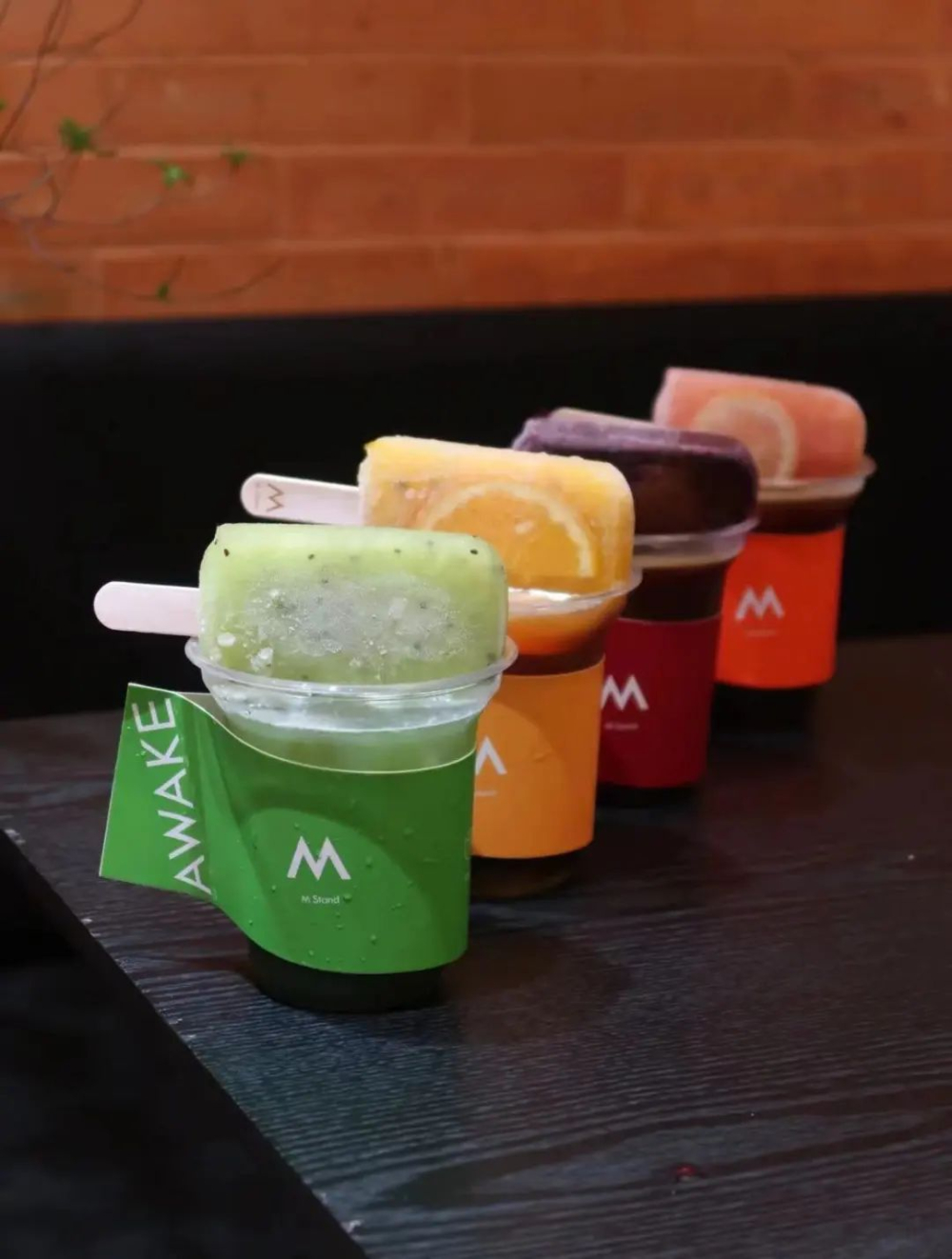
The investigation revealed that since August 2021, Mstand had signed a contract processing agreement with a Guangzhou-based company to produce a series of ice creams called “Wooden Harmony Series,” featuring flavors such as mulberry berry, passion fruit orange, grapefruit lemon, and kiwi green grape. The total order volume reached 80,000 units. These ice creams were later used as ingredients for Mstand’s Float Series beverages, launched in stores nationwide starting September 2021, including four popular items such as the Float Berry Americano.
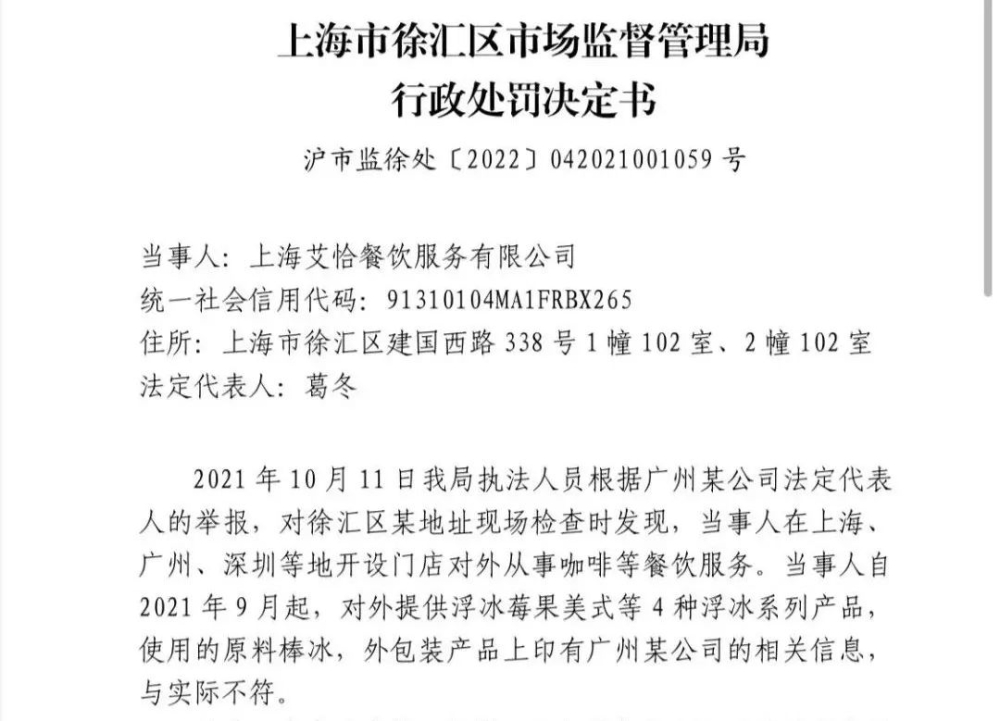
However, the investigation confirmed that these ice creams were not produced in a qualified factory but were instead made by the Guangzhou company on its own premises without obtaining a food production license. Mstand had already paid the related payment, and the supplier actually delivered 62,800 ice creams. Of these, 2,340 were rejected upon entry into a third-party warehouse, leaving 60,460 in storage. Among these, 15,400 were labeled as defective, while the remaining 25,860 were shipped to stores. According to records, 15,169 were used by the stores, with the corresponding sales amount serving as the basis for calculating illegal gains.
Based on the investigation results, the value of the ice creams and actual sales figures were meticulously calculated, and the final determination of illegal gains amounted to 127,116.2 yuan. On August 15, 2022, the Xuhui District Market Supervision Administration issued an administrative penalty against Mstand under Article 33(1) of the “Shanghai Food Safety Regulations,” which explicitly states that food producers and operators commissioning production must select enterprises that hold a food production license and meet corresponding conditions.
Since the Float Series beverages are take-away friendly and the ice creams are independently packaged products, their sales revenue can be calculated separately, thus making the illegal gains clearly attributable to the actual sales of the ice creams, totaling 127,116.2 yuan. Although Mstand immediately stopped selling the involved products upon discovering the issue, cooperated proactively with the investigation, and provided inspection reports proving the safety of the food products, and although the unlicensed production occurred in Guangzhou and Mstand claimed ignorance regarding the supplier’s qualification issues, the regulators still confirmed the supplier’s lack of credentials.
Taking into account that Mstand may not have had obvious subjective intent, according to relevant provisions of the “Administrative Penalty Law,” the penalty was ultimately mitigated. However, pursuant to Article 95(1) of the “Shanghai Food Safety Regulations” and Articles 28(1) and 32(1) of the “Administrative Penalty Law of the People’s Republic of China,” Mstand was ordered to rectify the issue immediately and was fined the confiscation of illegal gains of 127,116.2 yuan and an additional fine of 360,000 yuan, resulting in a total penalty and confiscation of 487,116.2 yuan.
This case reveals a common yet often overlooked issue: the food production license, as a basic industry threshold, is frequently bypassed by some small food enterprises—especially emerging or small-to-medium-sized coffee brands—who, due to cost considerations, opt not to build compliant production lines but instead outsource production. However, if the contract manufacturer lacks proper qualifications or even misuses others’ credentials, the brand is highly susceptible to legal risks.
Even more alarming is that some businesses, in order to cut costs, go so far as to directly steal or borrow third-party production credentials and produce on their own in unlicensed facilities. Such “misuse of credentials” is highly likely to be detected through inconsistencies such as mismatched production addresses and shipping locations, or discrepancies between the stated production license information and the actual operating entity. Once reported or discovered, the consequences can be severe.Food production compliance is not only related to brand reputation but is also a core aspect of legal liability.
As market regulation becomes increasingly stringent, the once-common “three-no products” (no production date, no quality certificate, no manufacturer) have significantly decreased, but hidden violations such as credential misuse and false labeling still occur from time to time. When purchasing coffee-related products, consumers are advised to pay attention to whether the production information on the packaging is complete and consistent with the actual supply chain. Brands, on the other hand, need to rigorously verify the production licenses and the authenticity of credentials when selecting outsourcing partners, to avoid significant losses due to oversights in the supply chain.
The above content is compiled by CoffeeHunters, a coffee news website.


