








Introduction:The pouring method in pour over coffee is one of the key factors influencing flavor extraction. Among these, the three-stage pouring technique stands out due to its simplicity and versatility, making it the preferred choice for many coffee beginners and professional shops. This article will delve into the practical steps of the three-stage pour, the distribution of coffee-to-water ratios, water flow control techniques, and explain which roast levels it suits best, as well as how to adjust water temperature and grind size according to bean variety—helping you brew more consistently balanced and layered coffee.
In the world of pour over coffee, the pouring method has always been a focal point of discussion among enthusiasts. Among various techniques, the three-stage pour is favored by many baristas and home brewers for its ease of use and stability. It works well with beans of varying roast levels—light, medium, and dark—and achieves a good balance in flavor expression. Especially for those new to pour over, it's a practical method that’s easy to master and less prone to mistakes.
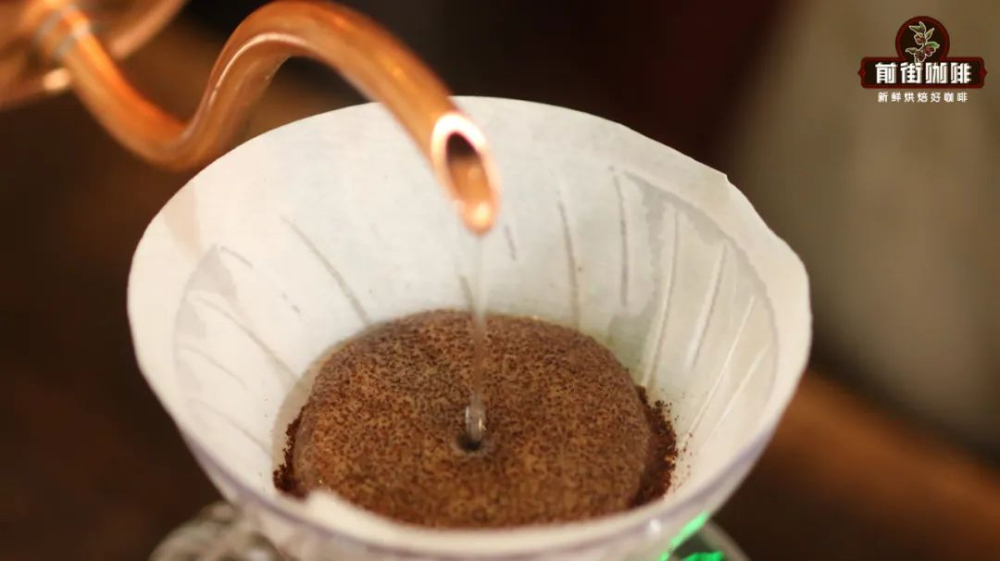
As the name suggests, the three-stage pour divides the total brewing water into three phases: the first being the bloom pour, followed by two extraction pours. This segmented approach makes the brewing process more flexible and allows opportunities for observation and fine-tuning, making it especially suitable for beginners to gradually get a feel for controlling water flow and timing.
The coffee-to-water ratio is the core factor determining the amount of water used in each stage. Taking the common example of 15 grams of coffee grounds, if using a 1:15 ratio, it is recommended that the first stage bloom pour be30 milliliters, the second stage pour100 milliliters, and the third stage another95 milliliters, for a total water volume of approximately225 milliliters. If you prefer a lighter taste, you can opt for a 1:16 ratio, where the first stage remains at30 milliliters for blooming, the second stage pour is120 milliliters, and the third stage90 milliliters, bringing the total water to240 milliliters.
So why is the three-stage method particularly beginner-friendly? The key lies in the additional observation and adjustment checkpoints it provides. If you were to use what’s called the “single pour” method—pouring all the remaining water after the bloom—pouring too quickly could result in under-extraction due to insufficient brewing time, leading to weak flavors. Conversely, pouring too slowly may over-extract the coffee, resulting in bitterness. In the single pour method, such issues are almost impossible to correct mid-brew.
The three-stage method is different. After completing the second pour, you can assess whether the final brew time falls within the ideal range (usually 2 to 2 minutes 30 seconds) based on how quickly the water level drops in the filter and the time already elapsed. If you notice that the second pour’s water flow was too strong, causing the coffee bed to rise excessively, you can switch to a finer, slower stream in the third pour to extend the brew time. On the other hand, if the second pour took too long, you can slightly increase the water flow in the third pour to avoid exceeding the optimal brew duration.
Some might ask, why not break the pour down even further, say into five or more stages? Theoretically, more stages allow for greater adjustability, but they also mean more decision points, which may actually lead to errors for beginners, resulting in unstable extraction. Therefore, when considering stability, ease of learning, and practicality, the three-stage method is considered the “golden ratio” suitable from beginner to advanced levels.
The flexibility of the three-stage pour allows it to be applied to a wide variety of coffee flavors—whether it’s a light roast with bright acidity and floral notes, or a medium-dark roast with a rich body and caramel aromas. With appropriate adjustments to water temperature and grind size, this method can bring out the unique characteristics of each bean type.
Generally speaking,for medium-light roasted coffee beans (such as those from Ethiopia, Kenya, and similar origins), it is recommended to use90~93°Ca higher water temperaturealong witha fine pour over grind75%~80%(approximately 20% extraction through a #20 sieve)to fully highlight the beans’ vibrant acidity and complex aroma layers. As formedium-dark roasted coffee beans (like Sumatra or Guatemalan beans known for their body and bold flavors)86~89°C, it’s advisable to lower the water temperature toand usea medium grind70%~75%(with around 20% extraction through a #20 sieve)
to balance the body while avoiding excessive bitterness caused by over-extraction.
The above content is compiled by CoffeeHunters, a coffee news website.


