







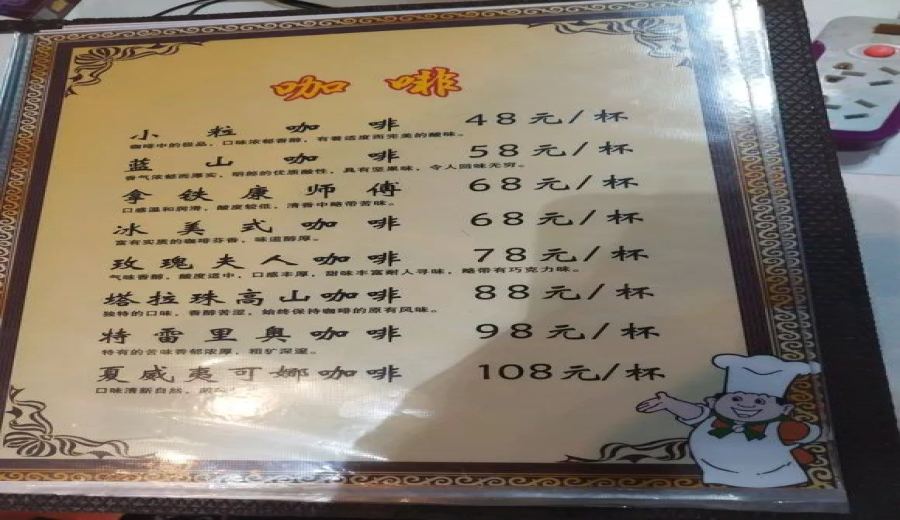
Introduction:A viral retro-style coffee menu has sparked discussion online due to its high-priced Americano and low-priced Blue Mountain coffee. Behind this price discrepancy lies not only a pricing gap but also issues related to the authentic standards of Blue Mountain coffee, the characteristics of Yunnan small-grain coffee, and the flavor profiles of well-known origins such as Costa Rica. This article will delve into the truths behind these coffees, helping readers discern authenticity and understand the unique flavor characteristics and brewing essentials of each origin.
Recently, a café menu circulating online has become a hot topic due to its vintage layout and astonishing pricing. A $6.80 iced Americano contrasted sharply with a $58 Blue Mountain coffee, leaving many to wonder: is this generosity on the part of the shop, or is there more to it? From a professional perspective, this menu not only reflects pricing strategy but also involves knowledge of multiple coffee origins, including the certification standards for Blue Mountain coffee, the characteristics of Yunnan small-grain coffee, and the flavor profiles of Costa Rica’s Tarrazú and Tres Ríos regions.
First, the authenticity of Blue Mountain coffee is worth exploring. According to regulations by the Jamaica Coffee Industry Board (CIB), only coffee beans grown at elevations above 2,200 feet (approximately 670 meters) in the Blue Mountains can be called "Jamaica Blue Mountain Coffee." These beans are further classified into Blue Mountain No. 1, No. 2, and No. 3 based on bean size and defect rate. For export, they must be handled by designated companies, shipped in wooden barrels, and accompanied by quality certificates, authorized sales certificates, and certificates of origin. Due to its limited production, authentic Blue Mountain coffee commands a high price. However, products commonly marketed as having a "Blue Mountain flavor" are actually unrelated to genuine Blue Mountain coffee. If a menu lists Blue Mountain coffee, customers can request to see the relevant certificates to confirm its authenticity.
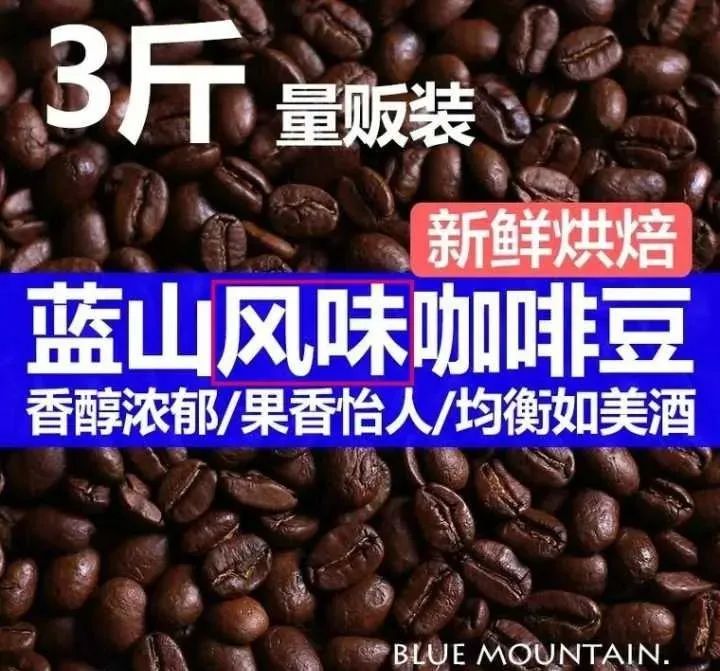
As for the $58 Blue Mountain coffee on the menu, if it’s not the genuine article, it might just be a blend with a Blue Mountain flavor. Blue Mountain-flavored coffee is not the same as Blue Mountain coffee—a common misconception among consumers. True Blue Mountain coffee is known for its balanced acidity and sweetness, along with a mild taste, whereas Blue Mountain-flavored coffee is often a blend of commercial beans with noticeably different flavors.
Next, the small-grain coffee on the menu generally refers to Arabica beans. Based on the flavor description—rich, mellow, with moderate acidity—it likely comes from the Yunnan region. In recent years, the quality of Yunnan small-grain coffee has improved significantly, featuring unique regional characteristics, and it remains relatively affordable, making it a high-value choice.
Regarding Costa Rica’s Tarrazú region, its coffee beans are known for their mild acidity and flavors of nuts and caramel. The menu describes them as "bitter," which may reflect the shop’s unique interpretation of its own offering. Meanwhile, Tres Ríos coffee also hails from a region in Costa Rica and shares similar traits of mild acidity with nutty and caramel notes. Yet, the menu describes it as "rough and profound," showcasing the shop’s bold naming style.
Finally, the most "normal"-priced item on the menu might be Hawaii Kona coffee. However, in recent years, political instability in Hawaii and restricted export channels for Kona coffee have made it essential for consumers to verify its origin. If authenticity cannot be confirmed, its legitimacy remains questionable.
Although this menu offers a fun sense of time-travel, it also highlights consumers’ growing awareness of coffee origins and flavor profiles. Understanding the characteristics and certification standards of each origin can help in selecting truly high-quality coffee beans and avoiding being misled by commercial gimmicks.
The above content is compiled by CoffeeHunters, a coffee news website.


