








Introduction:Tim Hortons, known for its coffee and donuts, recently launched limited-time pizza offerings at select locations in the Toronto area of Canada, sparking heated discussions among the market and consumers. This move is seen as a key step in the brand’s attempt to expand into lunch and dinner time slots, and also breaks away from its traditional foodservice positioning. This article will analyze Tim Hortons’ shift in product strategy, market feedback, and the business logic behind this new test.
As the most iconic coffee and donut chain brand in Canada, Tim Hortons has always been known for its affordable breakfast combos. However, the recent launch of limited-time pizza products at some outlets in Toronto has surprised many customers. This new venture is viewed as an important strategy for the brand to expand into the lunch and dinner markets, and also shows that it is gradually stepping out of its traditional coffee and dessert business framework.
In fact, this is not the first time Tim Hortons has introduced non-core products. Prior to this, the brand had already gradually added options such as burgers, hot dogs, milkshakes, sodas, and juices to its menu, steadily enriching its food offerings. But the appearance of pizza still came as a surprise to many consumers, and has sparked lively discussions online.

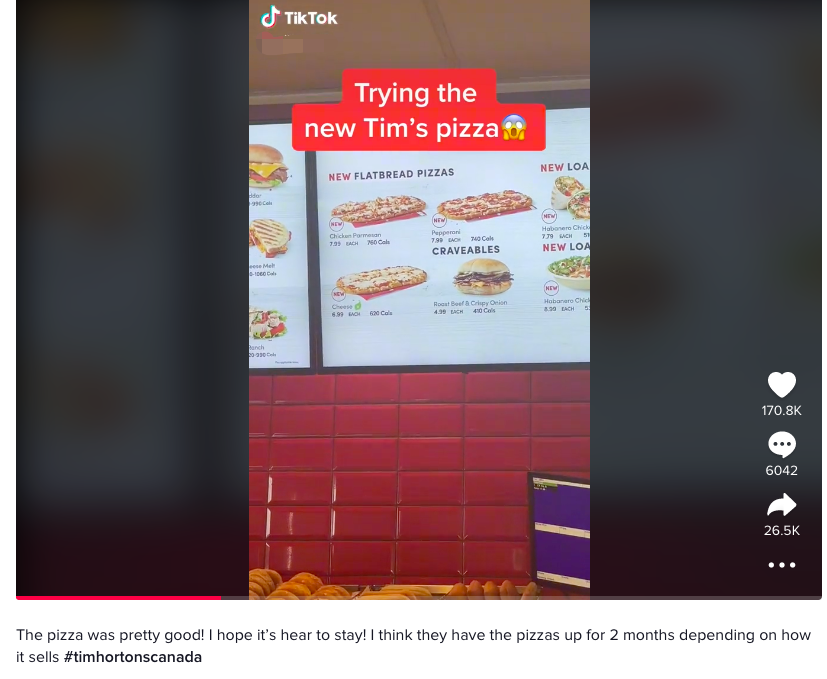
According to foreign media reports, Tim Hortons is currently conducting a limited-time trial sale of pizza products at around 20 outlets in the Toronto area of Canada. Although it has not yet been fully rolled out, this move is seen as a key step in testing new market demand, with the target clearly aimed at consumers during lunch and dinner hours.
Michael Oliveira, Director of Public Relations at Tim Hortons, said in a public statement that the brand is continuously committed to providing customers with diverse and innovative dining choices, and that this pizza is currently only in the initial testing phase. Whether it will be officially included in the permanent menu still depends on market feedback.
Online reactions have been mixed. Some consumers on short video platforms said the newly launched pizza tasted good and hoped it would remain on the menu long-term. According to the user’s sharing, the pizza is priced at $7.99 and $6.99 Canadian dollars, a price range that is considered fairly competitive for consumers in the Toronto area.

However, many netizens were surprised by Tim Hortons launching pizza, and even questioned whether the brand is losing its original identity. One comment pointed out, “Perhaps no one could have predicted flying cars in 2022 decades ago, but no one would have thought Tim Hortons would sell pizza.” Others bluntly stated that the brand seems to be facing what is called an “identity crisis.”
Some consumers believe that Tim Hortons has gradually strayed from its original mission as a specialty shop for coffee and donuts, worrying that the brand’s unique characteristics will become increasingly blurred. One netizen joked that the brand’s 2020 “back to basics” strategy—focusing on coffee, donuts, and breakfast products—now seems to have been shelved, even playfully predicting, “Will we be able to get sushi next year?”
Regarding this strategic shift, Jose Cil, CEO of Restaurant Brands International Inc., the parent company of Tim Hortons, mentioned during an earnings call that the brand’s high visibility in Canada, consumers’ emphasis on value for money, and the potential of the post-lunch dining market have shown the team significant business opportunities. He emphasized that product offerings during the afternoon hours will be one of the important drivers of future growth.
This pizza trial sale is not only an expansion of the product line, but also represents Tim Hortons’ active search for new revenue streams and customer engagement points. For the brand, how to expand food choices while maintaining the brand identity of its existing consumers will be a key challenge in future development.

The above content is compiled by CoffeeHunters, a coffee news website.


