







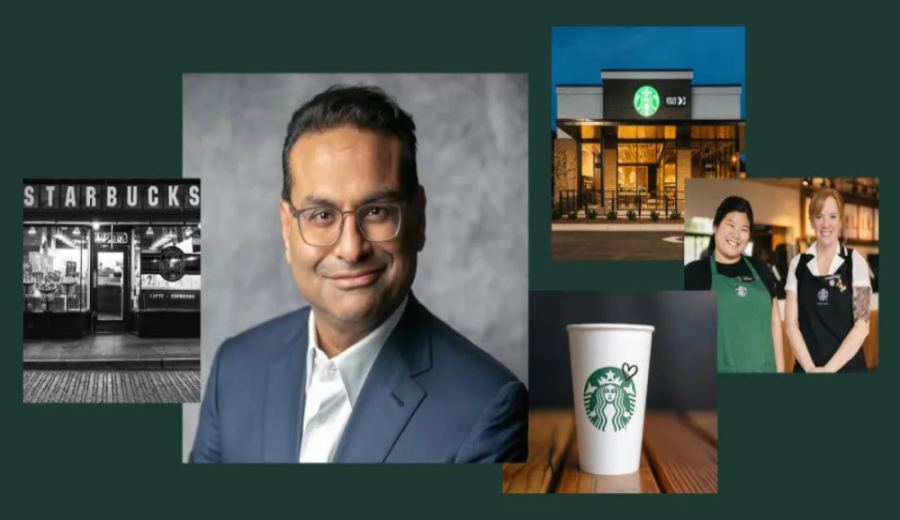
Introduction:Starbucks announced that Laxman Narasimhan will take over as Global CEO in April 2023. With 30 years of experience managing multinational brands, this leader is seen as the key figure in reversing the company’s sluggish performance in the Chinese market and resolving internal labor issues. This article provides an in-depth analysis of his career background, the challenges he faces, and how he plans to leverage his hands-on experience in the Chinese market to lead this coffee giant back to growth.
On September 1, 2022, Starbucks announced that Laxman Narasimhan (Laxman Narasimhan) would assume the role of CEO-designate starting October 1, 2022, and officially replace the founder Howard Schultz as the new CEO on April 1, 2023. Narasimhan has nearly 30 years of experience leading top global consumer brands, having worked at McKinsey, PepsiCo, and Reckitt Benckiser, where he demonstrated exceptional strategic execution and brand management capabilities.
Howard Schultz will continue to serve as interim CEO until April 2023 and act as an advisor to Narasimhan during the transition period, while remaining a member of Starbucks’ Board of Directors. In the lead-up to the official handover, Narasimhan will work closely with Howard to familiarize himself with the company’s operations, brand culture, and actively engage in Starbucks’ comprehensive transformation plan.
Narasimhan’s career spans three continents. He served at McKinsey for 19 years, specializing in strategy consulting for consumers, retail, and technology sectors in the U.S., Asia, and India. He later moved to PepsiCo, holding senior roles such as Chief Commercial Officer and CFO of the Americas Foods division. In 2019, he joined UK consumer goods giant Reckitt, and within two years successfully stabilized the company’s operations, which had been in crisis due to cyberattacks, product issues, and production incidents. He helped multiple declining brands return to mainstream markets and restored investor confidence.
Starbucks is currently facing both internal and external challenges: in the U.S. market, ongoing unionization efforts among employees have led to strained labor relations; in international markets, especially China, sales have significantly declined due to factors such as the pandemic. Although Howard has begun addressing some personnel and cultural issues after returning as interim CEO in April 2022, the company urgently needs a leader with international vision and hands-on experience to drive comprehensive reforms and stabilize operations.
Against this backdrop, Narasimhan’s appointment has drawn significant attention. During his time at Reckitt, he personally visited the Chinese market, toured local stores, interacted directly with consumers and frontline employees, and presided over Reckitt’s first global employee meeting outside the UK in China. This experience has given him unique insights into cross-cultural communication and localization strategies, as well as a deeper understanding of the dynamics of the Chinese market.
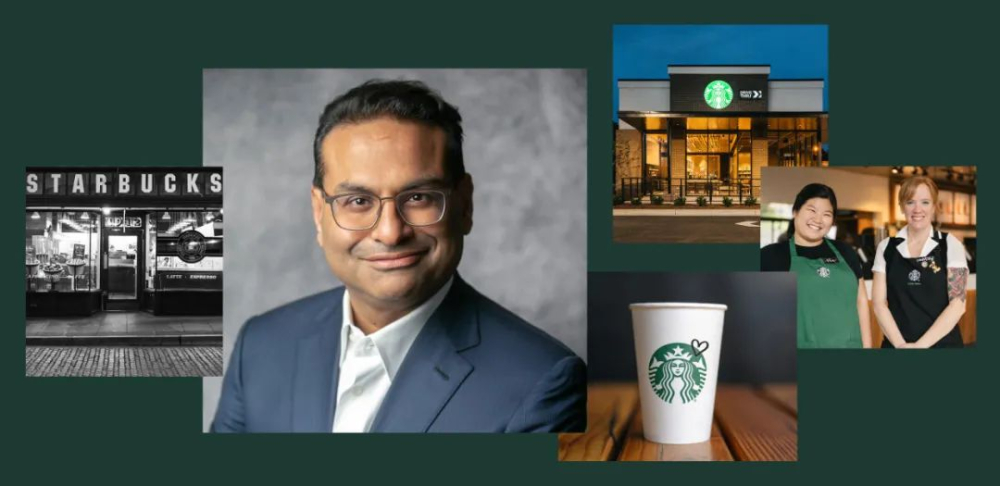
According to Starbucks’ Q3 2022 financial report, the company operated 5,671 stores in the Chinese market. However, affected by the pandemic, the net revenue from the Chinese market dropped sharply by 40% in that quarter, same-store transactions decreased by 43%, and same-store sales fell by 44%. Even so, China remains one of Starbucks’ most important overseas markets, and reviving its sales momentum in China will be one of Narasimhan’s top priorities upon taking office.
Although Howard Schultz will gradually step back from the forefront, he will still participate in the development of the company’s cultural transformation strategy and work with Narasimhan to drive its implementation. The market generally believes that even after the new CEO officially takes office in 2023, many major decisions will still be endorsed by the experienced and seasoned Howard. However, some analysts point out that Howard’s choice of Narasimhan reflects his recognition of Narasimhan’s deep understanding and execution ability in Asian markets and global consumer brands.
Looking ahead, whether Narasimhan can successfully integrate Starbucks’ global resources, stabilize internal relations in the U.S. market, and achieve breakthroughs in the Chinese market will be key indicators of his leadership. For Starbucks’ customers and investors, this leadership change is not just a personnel shift—it may also mark a crucial turning point in the brand’s direction for the next decade.
The above content is compiled by CoffeeHunters, a coffee news website.


