







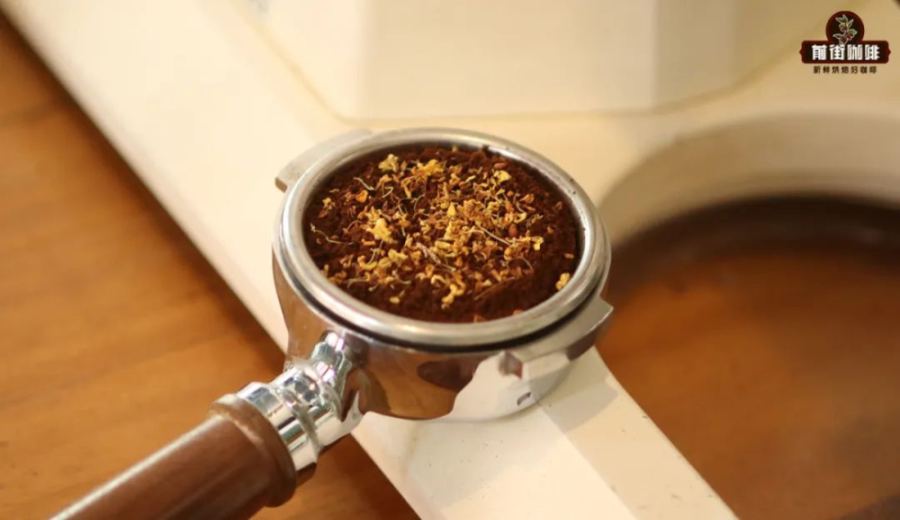
Introduction:Want to let your espresso bloom with the subtle fragrance of osmanthus? This article explores three methods—placing dried osmanthus on the surface of the coffee puck, at the bottom, or mixing it with the coffee grounds—through hands-on testing to analyze extraction stability and flavor performance. From parameter settings, brew ratio, to techniques for avoiding channeling, we guide you in finding the best way to highlight osmanthus notes in espresso, and explain why the results differ significantly between lattes and americanos.
Osmanthus boasts a rich yet approachable aroma, widely used in tea and desserts, with classics such as osmanthus cake and osmanthus oolong tea. In the specialty coffee scene, many shops offer osmanthus-flavored drinks, but many are actually created using flavoring agents. If you want the coffee itself to carry a natural osmanthus aroma, try extracting it together with dried osmanthus, and explore the wonderful fusion of floral and coffee notes.
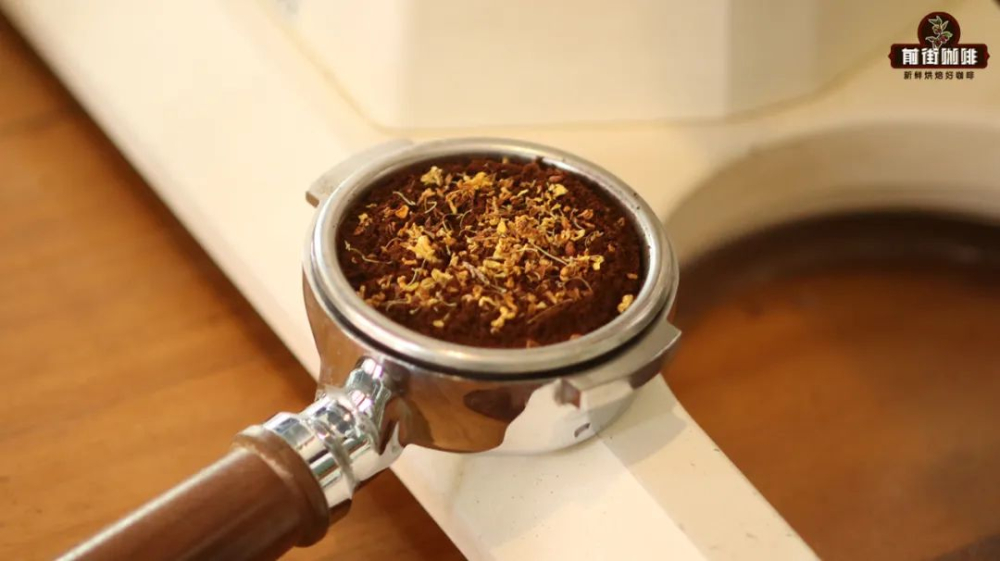
The experiment found that there is a significant difference in density between osmanthus and coffee grounds, so the amount added and placement directly affect extraction stability and final flavor. It is recommended to add0.3 to 0.5 grams of dried osmanthusto 20 grams of coffee grounds. Overuse not only may damage the puck structure but also lead to an imbalanced overall flavor. Below, we share three tested methods, analyzing everything from the extraction process to the final flavor.
Why choose osmanthus?
Osmanthus has a pleasing aroma, widely accepted by the public, and is already extensively used in food products such as pastries and teas. Moreover, many commercial osmanthus-flavored coffees are actually made with flavoring ingredients rather than being naturally extracted. Since osmanthus itself has a distinct fragrance, co-extracting it with coffee grounds might impart a natural floral note to the coffee, making it a worthwhile experiment.
How much osmanthus should be added?
If you grow your own osmanthus, remember not to use fresh blossoms directly, as they are not edible and need proper drying. Edible-grade dried osmanthus is readily available and affordable. The goal is not to make the coffee taste like flower tea, but to give it a subtle osmanthus aroma. Too faint, and it's barely noticeable; too strong, and it can become overpowering. Therefore, it’s advisable to carefully control the dosage to achieve a delicate layering of fragrance.
Test 1: Osmanthus placed on the coffee puck surface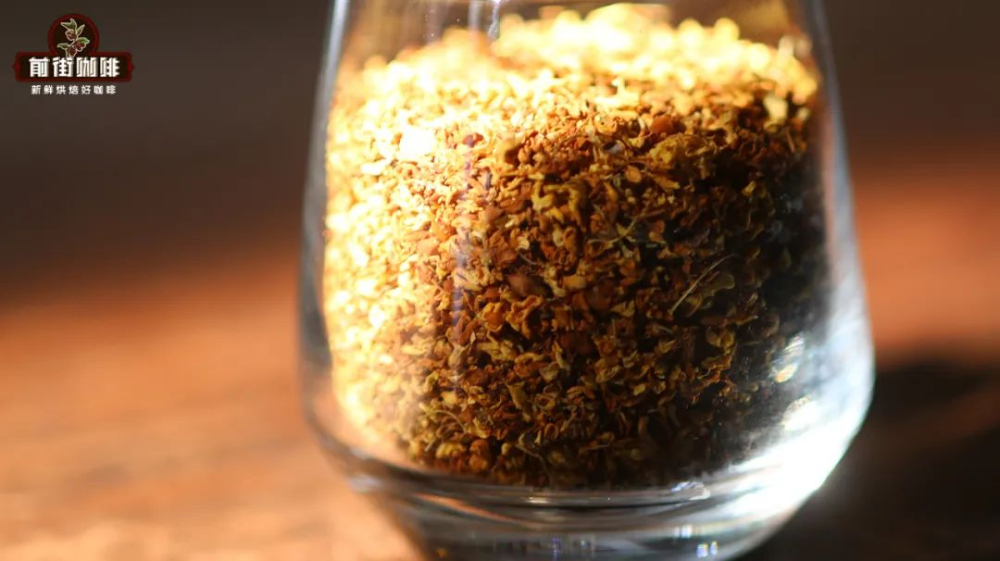
This method involves evenly pouring coffee grounds into the portafilter basket, lightly leveling the surface, then evenly sprinkling0.3 to 0.5 grams of dried osmanthuson top before tamping. The entire extraction process was stable, with no channeling observed. The resulting espresso had a clear osmanthus aroma, and examining the puck showed an intact surface structure with lingering osmanthus scent.
When this shot was used to make a hot americano, a delicate osmanthus note could be enjoyed, very pleasant; however, when used for a hot latte, the floral aroma was easily masked by the richness of the milk. It's recommended to choose the pairing method based on your drinking preference.
Test 2: Osmanthus placed at the bottom of the coffee puck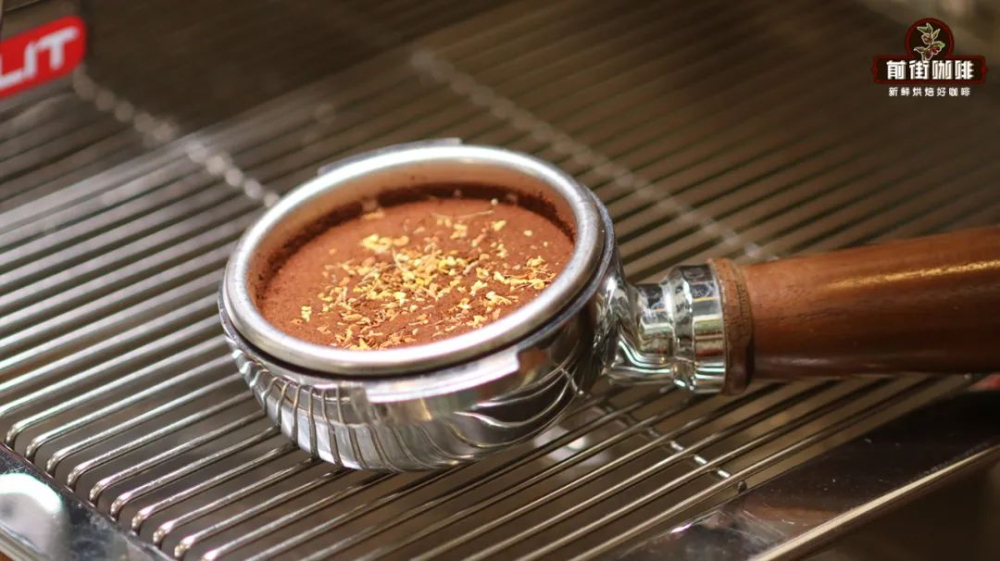
This method involves first placing dried osmanthus at the bottom of the portafilter basket, then adding coffee grounds and completing the distribution and tamping. The extraction process was mostly stable, though slight channeling (piercing) occurred in a few cases. The overall extraction time was similar to the first method, but the osmanthus aroma in the espresso was more pronounced.
Observing the puck after extraction, the bottom osmanthus blended well with the coffee grounds, with no separation. Coffee extracted this way, whether made into an americano or a latte, allowed the osmanthus aroma to come through clearly, making it suitable for those who prefer a stronger floral note.
Test 3: Osmanthus mixed with coffee grounds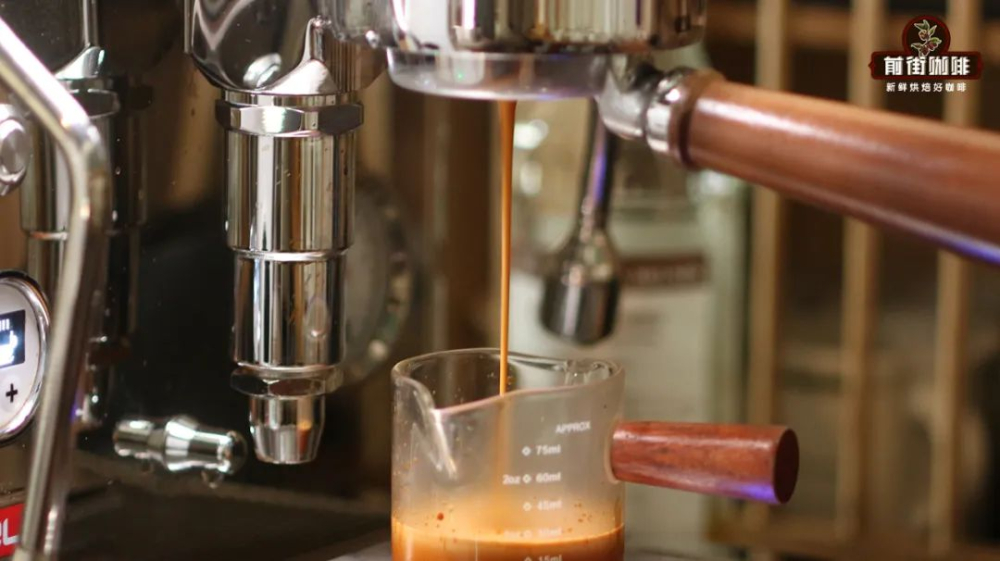
Dried osmanthus and coffee grounds were first mixed evenly, then poured into the portafilter basket and distributed and tamped using standard procedures. This method showed unstable flow rate and slight spraying during extraction, indicating a higher risk of channeling, with extraction time about 1–2 seconds faster than the standard.
Observing the puck revealed minor cracks, confirming that mixing osmanthus indeed affected the overall density and structural stability of the coffee grounds. When brewed into an americano, the coffee had a more acidic profile, likely due to uneven extraction; the latte had a slightly weaker coffee flavor but still allowed the osmanthus aroma to come through. Although this method offers unique flavors, it is less stable, and is recommended for more experienced users to try.
Summarizing the three test methods, if you prioritize stable extraction and good puck structure, it is recommended to go withosmanthus placed on the surface; if you hope for a more pronounced osmanthus aroma,osmanthus placed at the bottomperforms better. As for themixed method, while creative, it requires attention to the potential instability in flavor and extraction caused by channeling. Feel free to try it out at home and find your perfect osmanthus latte recipe!
The above content is compiled by CoffeeHunters, a coffee news website.


