







Introduction:The pandemic has accelerated the global shift toward cashless payments, and Starbucks’ push for cashless stores in multiple countries has sparked controversy. This article delves into the strategies employed in markets such as the UK, South Korea, and Japan, examines the legal differences regarding cash refusal across regions, and offers insights into the payment transformation of international coffee chains through real consumer feedback.
Since the outbreak of COVID-19, the use of cashless payments has risen significantly worldwide, and international coffee chain Starbucks has accordingly adjusted its business model by testing and promoting cashless stores in various countries. From the UK to South Korea and Japan, this transition has received praise from some customers who find digital payments more convenient and hygienic; however, other consumers have questioned the rationale behind excluding cash payments, particularly regarding legal regulations and social inclusiveness, sparking heated discussions.
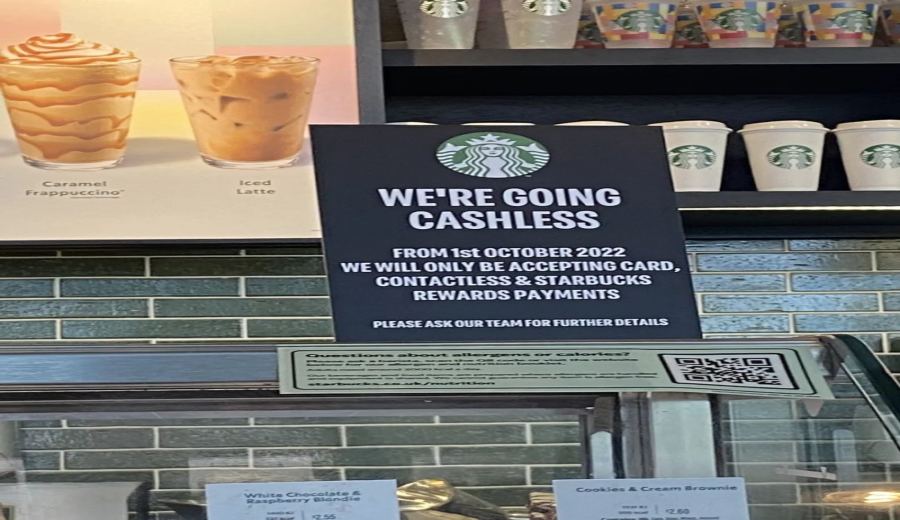
Taking the UK as an example, a local netizen shared photos on social media showing that a certain Starbucks store had, since October 1, 2022, stopped accepting cash entirely, only taking card payments, contactless payments, or Starbucks Cards. This move immediately triggered online debates, with many users commenting to express dissatisfaction and concern about their consumer rights being affected.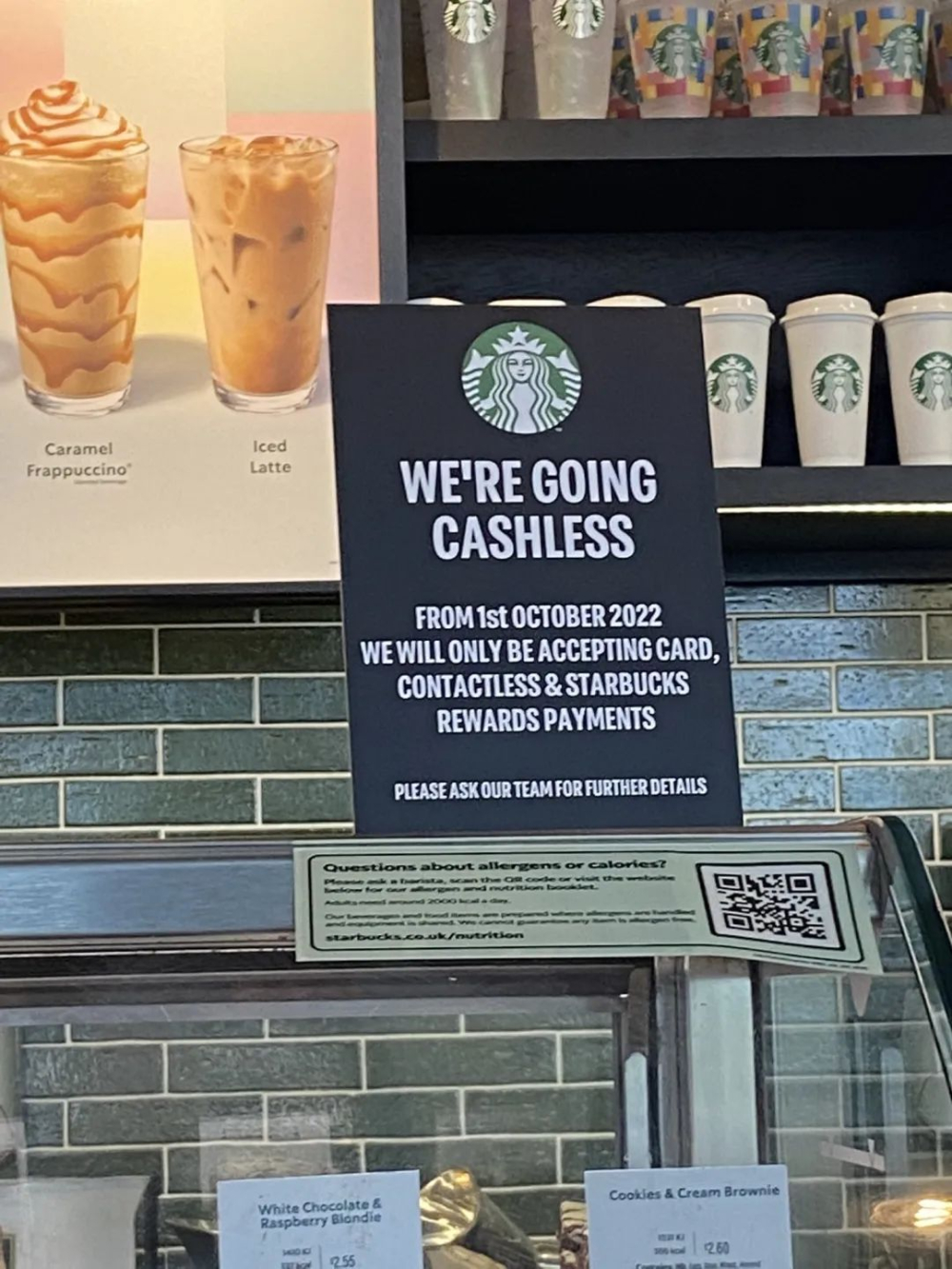
Local UK media outlet 《Telegraph&Argus》 also reported similar notices at a Starbucks branch in the Bradford area. As skepticism grew on social media, the cashless payment model seems to be becoming a trend among Starbucks outlets there. The media have reached out to the brand for clarification, but no official response has been received so far.
Some consumers stated that since they have long used electronic payment tools, they did not feel much discomfort with Starbucks’ move to eliminate cash transactions. On the contrary, they believed it improved transaction efficiency and security.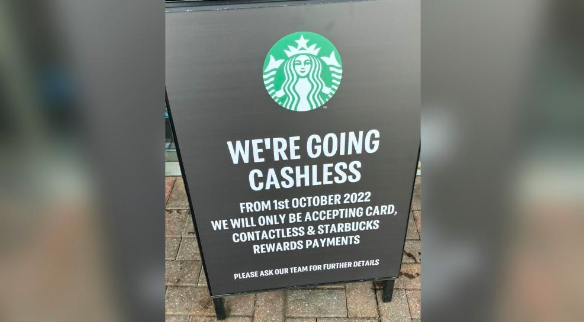 However, some loyal customers explicitly opposed the change, with some even vowing never to visit any Starbucks stores again, demonstrating the potential impact of the policy shift on customer loyalty.

In fact, Starbucks’ exploration of cashless models dates back to 2017. At that time, CEO Howard Schultz mentioned in an interview with CNBC the possibility of the brand eventually transforming into a cashless coffee chain. In April 2018, Starbucks piloted cashless operations in three stores in South Korea, and successfully expanded this model to all its South Korean outlets by July 16 of the same year.
On July 30, 2020, Starbucks Japan took a further step by opening its first “Office Café” in Tokyo, which advertised itself as a “cashless, fully digital payment” store, becoming the first of its kind in the Japanese market. In the same year, then-CEO Kevin Johnson, against the backdrop of the pandemic, announced plans to expand cashless payment options and predicted that mobile payments would become the mainstream transaction method.
It is worth noting that legal regulations regarding merchants refusing cash vary significantly across countries. In China, the 《People’s Bank of China Law》 explicitly states that the renminbi is the legal tender, and no individual or organization may refuse to accept public or private debts payable in renminbi. In 2020, a social media influencer was denied service at a Starbucks after attempting to pay with 9.9 kilograms of coins, with staff citing “inconvenience in storing coins.” The incident sparked intense online debate. The brand later clarified that there was no policy against accepting coins and apologized to the affected customer, emphasizing that all outlets are required to comply with the legal obligation to accept the national currency.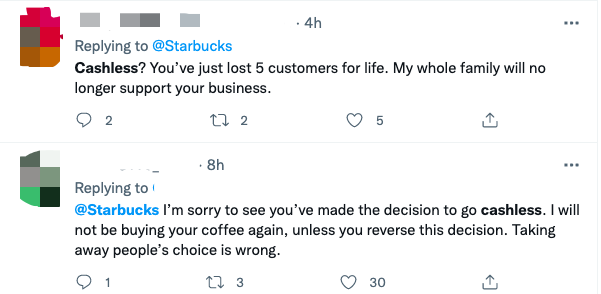

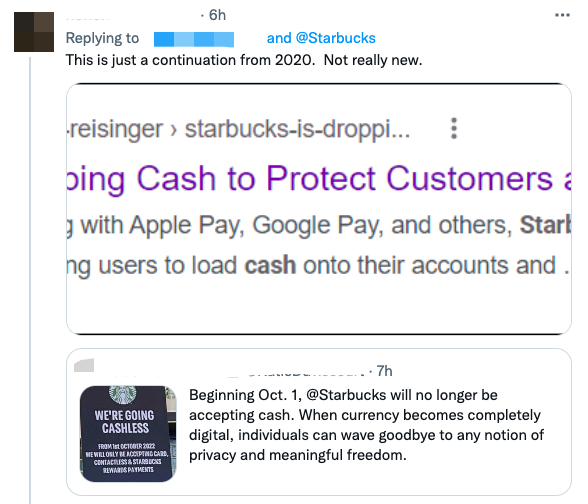
Looking back at consumer reactions, some users argued that businesses refusing cash may not necessarily be breaking the law, especially when payment methods are clearly posted. However, legal experts pointed out that definitions and enforcement standards for legal tender vary greatly between countries, and merchants must carefully assess local regulations when adjusting payment policies to avoid legal risks. These cases provide important references for international chains on how to balance innovative services with legal compliance in their global expansion.
The above content is compiled by CoffeeHunters, a coffee news website.


