







Introduction:A recent incident in which a customer allegedly found a gecko in their bubble tea at a Guangdong Chaozhou GuMing tea shop has raised concerns over hygiene in beverage production processes. How could a gecko end up inside a sealed drink? Can the store’s claim of 180°C sealing temperatures really prevent such contamination? This article delves into the incident, the official response from the shop, and examines food safety measures in tea beverage outlets to help consumers better understand the hygiene protocols behind their drinks.
Recently, a notable food safety incident occurred at a GuMing bubble tea shop in Shaxi Town, Chaozhou, Guangdong. A customer was shocked to find a gecko in their drink, and footage of the incident quickly went viral on social media, sparking widespread discussion.
According to media reports, the incident took place on July 26. While drinking a bubble tea from GuMing, the customer suddenly felt something unusual in their mouth, spat it out, and discovered it was a gecko. Startled, the customer jumped up from their seat — an event that was fully captured by nearby surveillance cameras.
The video shows the individual sitting calmly at a desk, sipping the tea through a straw. Midway through, they suddenly stop, remove something from their mouth, and their expression shifts from confusion to shock, prompting them to leap from their seat. Many netizens commented: “The reaction looks very genuine, not staged at all.”
In response to the incident, the involved GuMing tea shop in Shaxi immediately announced a temporary closure and launched an internal investigation. A staff member told the media that they had reviewed the day’s surveillance footage and found no obvious signs of any foreign objects falling into the drink. They also emphasized that all beverages are made fresh on-site with no use of overnight ingredients.
Nevertheless, online discussions continued. Some netizens questioned whether the incident was staged by the customer, while others joked half-seriously: “Geckos are even used as an ingredient in traditional Chinese medicine.”
On July 27, GuMing’s headquarters issued an official statement regarding the incident. The head of the company expressed serious concern and stated that they have been in contact with both the involved store and the customer. The store has since suspended operations and proactively retrieved the surveillance footage from the time the drink was made.
Regarding how the gecko might have entered the cup, the spokesperson further explained, “From the current surveillance footage, there is no sign of any foreign object entering during the preparation process. Especially during the sealing stage, the equipment reaches instantaneous high temperatures of180 degrees Celsius, which greatly reduces the likelihood of a gecko or other living creature getting inside.”
Despite this, the headquarters stated that it will continue to investigate the full details of the incident and has required all stores to conduct comprehensive self-inspections to prevent similar occurrences. Currently, the involved store has been removed from the Meituan delivery platform and is temporarily unable to offer delivery services.
This incident has once again drawn public attention to the transparency of beverage production processes and hygiene management in tea shops. For tea beverage brands, ensuring the safety and hygiene of each drink amid fast-paced production remains an ongoing and critical challenge.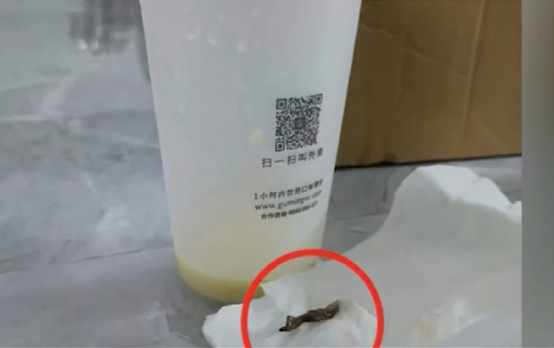
Moving forward, when choosing tea beverages, customers should not only consider flavor and brand but also pay attention to whether the shop has publicly available hygiene standards and quality control procedures — so that every sip can be enjoyed with peace of mind.
The above content is compiled by CoffeeHunters, a coffee news website.


