








Introduction:As a national coffee brand in Canada, Tims has gradually established a foothold in the Chinese coffee market since entering in 2019, thanks to its "coffee + bakery" combination, affordable pricing between 15 and 30 RMB, and rapid expansion strategy. This article takes an in-depth look at how Tims China has evolved from its initial market entry to collaborations with Metro and Sinopec EasyJoy, as well as the expansion plans behind its IPO, to understand how this brand is seeking breakthroughs in China’s highly competitive coffee battlefield.
In recent years, the Chinese coffee market has become a focal point for global brands, and among the many competitors, the Canadian national coffee brand Tims has gradually emerged with its differentiated strategy. Since entering China in 2019, Tims has not only set a goal of opening 1,500 stores within ten years but also accelerated market penetration through strategic partnerships with major retailers and convenience store chains.
Tims China’s development began in first-tier cities such as Shanghai, with locations concentrated in office buildings and bustling commercial areas, targeting high-frequency coffee consumers. The brand demonstrated clear ambition from the outset, aiming to become a national coffee brand in the eyes of Chinese consumers. By 2020, in just two years, it had nearly 50 stores and significantly accelerated its expansion pace after receiving investment from Tencent.

2021 was a crucial year for Tims China’s expansion. In February of that year, it completed its second round of financing, with funds primarily invested in store expansion, digital infrastructure, and brand building. By August, there were rumors that Tims China would go public via a merger with Silver Crest on the NASDAQ. Later, in late 2021 and early 2022, the brand received another round of funding, reflecting the capital market’s confidence in its growth potential.
Despite the delay in its IPO plans, Tims China did not slow down its expansion. Instead, it actively seized market share by opening more smaller-format stores. In November 2021, Tims reached an exclusive partnership with Metro China, entering Metro supermarkets to further increase brand visibility and reach. Compared to Starbucks, although Tims has been in the Chinese market for just over three years, its proactive approach is evident.
In July 2022, Tims China achieved another milestone by announcing a partnership with Yijie Coffee, a brand under Sinopec EasyJoy. The two parties plan to open small Tims coffee shops in select EasyJoy outlets and jointly develop co-branded ready-to-drink coffee products, further expanding their sales channels. Notably, Sinopec EasyJoy operates over 28,000 stores across gas stations nationwide, providing Tims with a vast potential customer base.
The Chinese coffee market spans multiple tiers from premium to budget-friendly, with intense competition. The premium segment is dominated by Starbucks and Costa; the mid-range market features fierce competition from brands like Luckin and Manner; and among price-sensitive consumers, Xingyuku and convenience store coffee also hold their ground. Faced with such a diverse market structure, Tims has chosen to focus on a price range of 15 to 30 RMB, emphasizing high cost-performance and successfully differentiating its market positioning.
Beyond its pricing strategy, Tims China also employs a "coffee + bakery" combo approach, similar to Nayuki’s model, offering a variety of coffee and bakery pairings on its menu to meet consumers’ demand for a comprehensive dining experience.This combination not only increases the average transaction value but also extends customer dwell time and boosts repeat purchase rates.
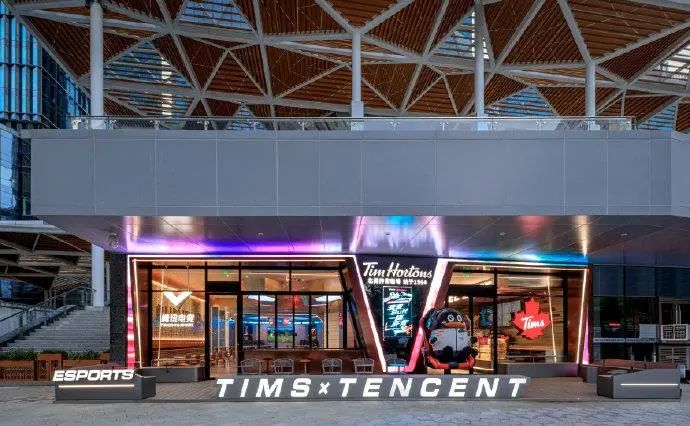
In terms of store experience, Tims China combines the "third space" atmosphere of Starbucks with the digital efficiency of Luckin. Customers can easily use the space for meetings, discussions, or relaxation, while the brand leverages Tencent’s technological support to create a seamless online ordering and service process, aligning with the habits of modern consumers.
Overall, Tims China’s development strategy not only reflects a deep understanding of market segmentation and consumer needs but also gradually achieves the goal of brand localization through flexible collaboration models and capital operations. If its planned merger and listing succeed, it is expected to secure more ample funding. As it faces the vast and dynamic Chinese coffee market, whether Tims can truly achieve a "come-from-behind victory" remains a story worth following.
The above content is compiled by CoffeeHunters, a coffee news website.


