







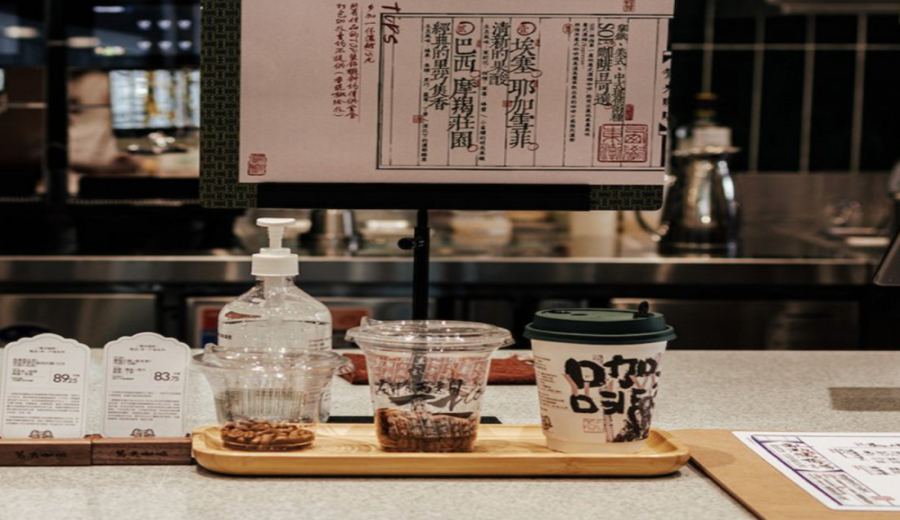
Introduction:In recent years, new-style Chinese coffee shops that integrate elements of traditional Chinese culture have sprung up like mushrooms after rain, gradually steering this imported beverage toward a more "Sinicized" direction. From the era of instant coffee to the wave of specialty coffee, and now to today’s innovative expressions that blend guochao (China-chic) design with local flavors, this article will take you through the evolution of Chinese-style coffee, explore its challenges and opportunities, and analyze how professional roasting, cultivation of native coffee varieties, and cultural depth can help Chinese coffee gain global recognition.
In recent years, an increasing number of coffee shops incorporating traditional Chinese elements have emerged in the market. This "guochao" trend is pushing this foreign beverage closer to local culture, forming an expression uniquely Chinese. From new tea beverage brands crossing over into the coffee market, to domestic brands cultivating consumer bases with affordable pricing, to the industry actively discussing a distinctive style for Chinese coffee—this path, while full of potential, also faces numerous challenges.
Looking back at the development of coffee in China, from the 1940s when instant coffee first became widely available, introducing the beverage to the masses, to the 1960s and beyond when coffee shops began emphasizing the use of Arabica beans and dark roasting techniques to highlight a rich and bold flavor—even with milk and sugar, one could still taste the essence of the coffee. However, these flavors were often associated with "bitterness," which became many people’s first impression of coffee.
Entering the new millennium, with the popularization of light roasting and drip brewing techniques, the fruit acidity and layered flavors of coffee gradually came to the fore, aligning more closely with young consumers’ pursuit of fresh and diverse tastes. After more than a decade of market maturation, specialty coffee shops have rapidly expanded globally, and China is no exception. More and more consumers are beginning to favor high-quality, freshly roasted coffee experiences.
Although specialty coffee has gradually gained popularity, China’s deep-rooted tea culture and the relatively high price of coffee have still made it difficult for coffee to become widespread quickly. It wasn’t until domestic brands like Luckin and Manner entered the market with affordable pricing that coffee consumption truly became mainstream, laying the foundation for subsequent cultural integration.
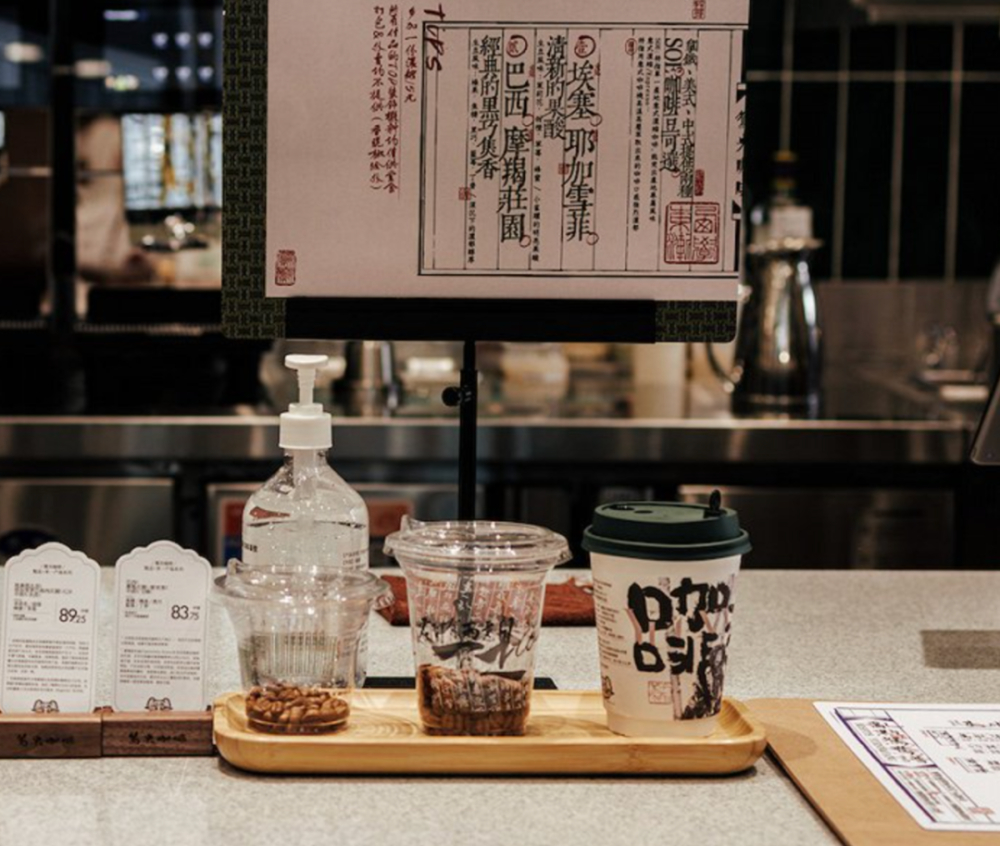
As the market matures, the industry has gradually reached a consensus: once coffee takes root in a place, it often develops localized expressions. For example, Japan’s unique roasting and brewing styles, or Australia’s insistence on the flavor profile of milk coffee. As a country with a long-standing cultural heritage, China should also be able to nurture its own school of Chinese-style coffee.
Unlike the traditional Chinese brewing methods found within Southeast Asian Chinese communities, current new-style Chinese coffee focuses more on store decor and the visual presentation of the coffee. Using traditional Chinese tableware, creative drinks inspired by regional culinary influences, paired with aesthetically pleasing guofeng (traditional Chinese style) spatial design, allows consumers to gradually embrace coffee within a familiar cultural atmosphere.
This approach of building emotional connections through appearance and packaging is subjective to some, but there’s no denying that it lowers the psychological barrier for beginners, gradually cultivating interest in coffee and guiding them to learn more about local coffee resources such as those from the Yunnan growing region. This lays the groundwork for forming a representative Chinese coffee culture in the future.
Just as chili peppers were originally an imported item, but through years of localized cultivation, culinary innovation, and cultural integration, they have now become an essential element in Chinese cuisine—sometimes even the soul of certain classic dishes. The Sinicization of coffee also requires time and deep cultivation, and cannot be achieved overnight.
Innovation is key to attracting the public to new-style Chinese coffee, but if it stops at appearance and concept without delving into the professionalism of coffee—such as roast profiles, extraction parameters, and flavor descriptions—it may be difficult for a distinct Chinese coffee school to truly take root. The industry needs to strengthen the foundation of coffee quality and technique beyond visual appeal, so that consumers not only remember the outward appearance of Chinese coffee but also experience its unique charm.
In the future, if we can continue to cultivate coffee beans that represent the flavor characteristics of the Yunnan growing region and develop roasting and brewing methods suited to their traits, Chinese coffee will have the opportunity to shine on the global stage. Just as Japanese and Australian coffee schools have gained recognition through professional techniques and cultural depth, China’s coffee story also needs to be built on solid expertise and a profound understanding of local terroir to go further.
The above content is compiled by CoffeeHunters, a coffee news website.


