







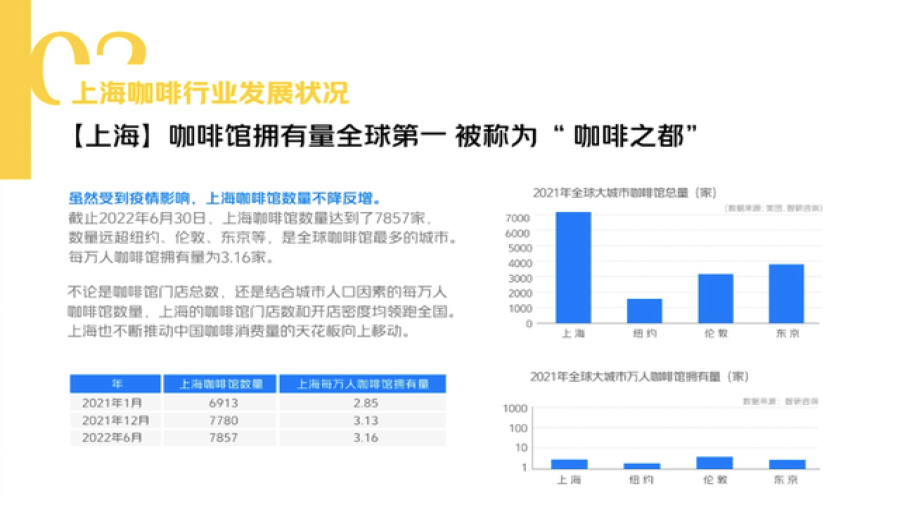
Introduction:Shanghai has become the city with the highest number of coffee shops in the world. As of June 2022, there were already 7,857 coffee shops in the city, far surpassing New York, London, and Tokyo. Behind this figure lies both brand expansion driven by capital and the tough survival of small and micro coffee shops during the pandemic. This article delves into the growth drivers, regional distribution characteristics, and survival realities within Shanghai’s highly competitive coffee market to help readers understand the true face of this "city of coffee."
Shanghai, an international metropolis enveloped in the rich aroma of coffee, is setting global records for the number of coffee shops at an astonishing pace. As of June 2022, the total number of coffee shops in the city reached 7,857, not only firmly holding the top spot nationwide but also surpassing New York, London, and Tokyo to become the city with the most coffee shops in the world. Behind this number is the rapid expansion of boutique coffee brands backed by major capital, as well as the harsh reality of many small coffee shops struggling to survive amid the impact of the pandemic.
From the addition of 867 new coffee shops in 2021, to the slowdown in store openings during the first half of 2022 due to the pandemic, and then to the market recovery in the second half, Shanghai’s coffee industry has demonstrated strong resilience and adaptability. What exactly is driving the city’s coffee craze? In such a high-density competitive environment, what factors support the survival of coffee shops, and what challenges deter others?
"Coffee culture in Shanghai is like anime in Tokyo or design in London." This statement vividly highlights the unique status of coffee in Shanghai’s urban culture. As a globally consumed beverage with centuries of history, coffee has gradually evolved into one of the most representative cultural symbols of the city. According to a Meituan report from July 2022, as of June 30, 2022, the total number of coffee shops in Shanghai had climbed to 7,857, a figure that fully demonstrates its strength as the "capital of coffee."
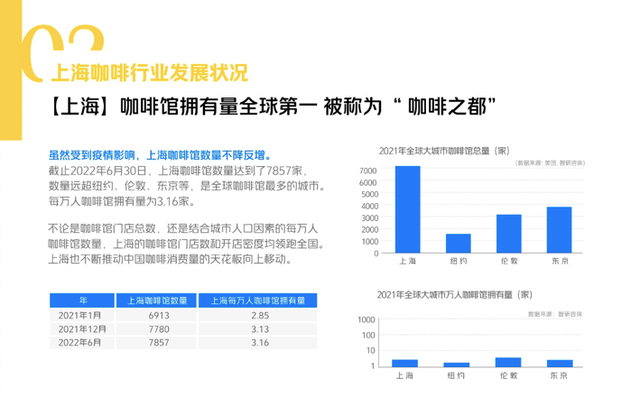
Even in the face of various challenges brought by the pandemic, the number of coffee shops in Shanghai has continued to grow against the trend. It not only holds an absolute leading position domestically, but its total also far exceeds that of internationally renowned cities such as New York, London, and Tokyo, firmly ranking first in the world. Data shows that Huangpu District has 38.5 coffee shops per square kilometer, while Jing’an District has 20.1, and this density continues to rise, reflecting extremely high market concentration and consumer vitality.
The expansion speed of coffee shops in Shanghai is astounding. At the beginning of 2021, the total number of coffee shops in the city was 6,913, rising to 7,780 by the end of the year; by June 2022, it had reached 7,857. In 2021, a total of 867 new shops were added, showing strong growth momentum. However, the first half of 2022 saw a noticeable slowdown in new store openings due to the pandemic, although the overall market still demonstrated good recovery elasticity.
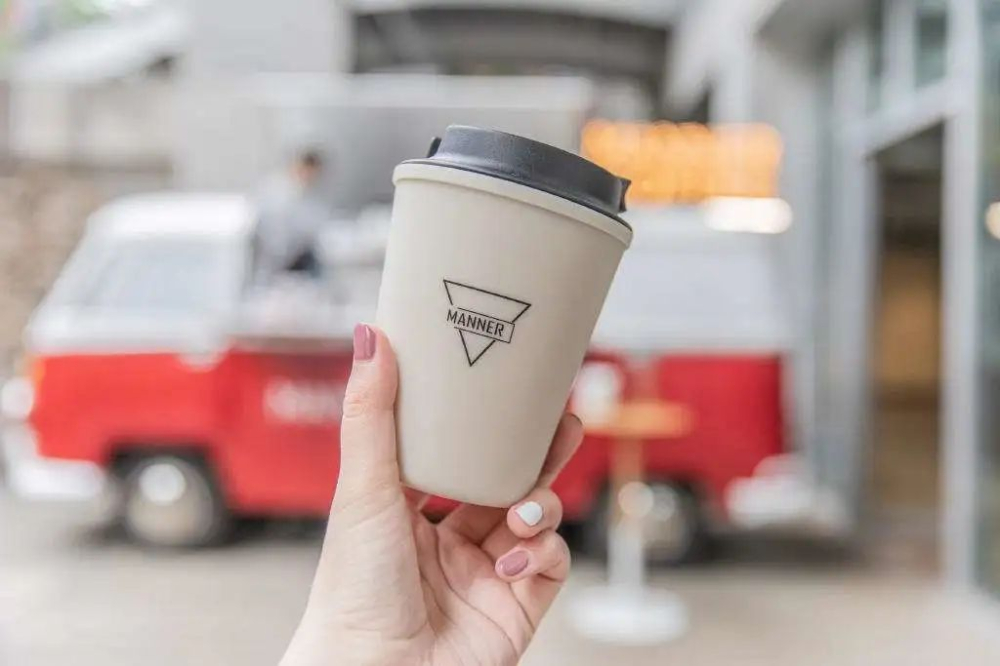
Entering the second half of 2022, with the improvement of the pandemic situation, Shanghai’s coffee industry quickly rebounded. A number of boutique coffee brands, including Nowwa Coffee, Manner, M Stand, and Seesaw, successively announced expansion plans, with a large number of new stores opening in quick succession, once again proving the vitality and potential of Shanghai’s coffee market. These brands are mostly positioned in the boutique coffee sector, not only gaining recognition locally in Shanghai but also gradually expanding their influence across the national market.
Notably, Shanghai has not only nurtured many local boutique coffee brands but has also attracted the favor of numerous internationally renowned coffee brands. In April 2020, the century-old Italian coffee brand Lavazza chose Shanghai to open its first overseas store. In 2021, the so-called "Apple of the coffee world," Blue Bottle Coffee, also began laying out in Shanghai and officially opened its first mainland store in February 2022. On its opening day, there was even a frenzy with consumers queuing for up to seven hours.
In a fiercely competitive market of nearly 8,000 coffee shops, there are both well-capitalized chain brands and highly distinctive independent coffee shops, making the competition exceptionally intense. However, this has not stopped the continuous growth in the number of coffee shops in Shanghai, with nearly a thousand new coffee shops being added each year becoming the norm.
From the perspective of consumption data, the average annual coffee consumption per capita in China is about 4 to 5 cups, while in Shanghai it exceeds 20 cups, significantly leading other cities across the country. Meanwhile, Shanghai also ranks at the forefront nationally in terms of coffee-consuming population and spending, reflecting the area's mature coffee consumption market and deep-rooted coffee culture.
Industry insiders point out that the entry barrier for opening a coffee shop is relatively low. Generally speaking, around 200,000 RMB is enough to cover initial investments such as store rent, basic equipment, coffee beans, and raw materials. This is also one of the important reasons why the number of coffee shops in Shanghai has continued to grow even during the pandemic. However, although the barrier to entry is not high, there are not many coffee shops that can achieve long-term stable operations.
Data shows that although the total number of coffee shops in Shanghai is on an upward trend, quite a few have exited the market for various reasons. Some shops failed to hold on under the impact of the pandemic, and even some well-known coffee shops needed external help to get through tough times. According to media reports, the downturn in Shanghai’s catering industry has also affected the second-hand equipment recycling market, with a large number of coffee equipment being phased out in just six months, reflecting the harsh reality of market elimination.
Overall, while Shanghai’s coffee market is growing rapidly, it also faces fierce competition and uncertain challenges. For entrepreneurs looking to enter the market, in addition to seeing the opportunities, it is even more important to deeply understand the market environment and prepare for long-term operations and risk assessments.
The above content is compiled by CoffeeHunters, a coffee news website.


