







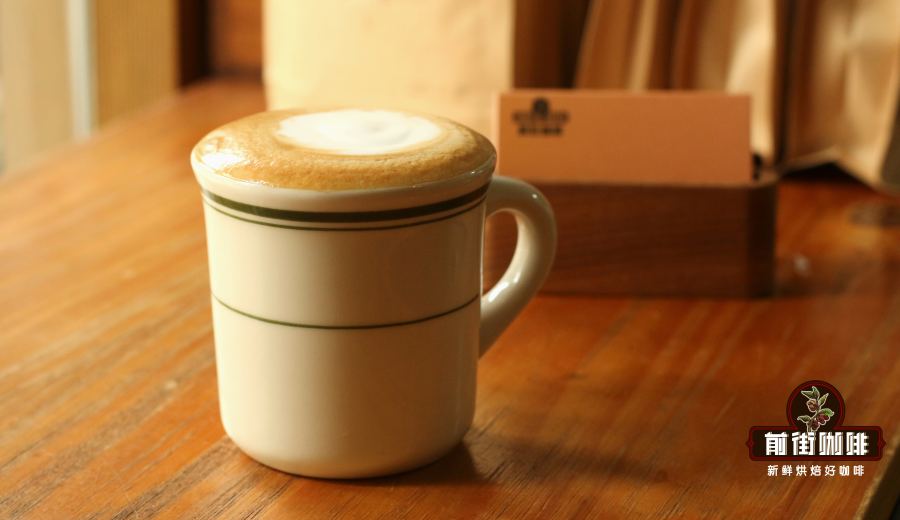
Introduction:Although both cappuccino and latte belong to the category of Italian milk coffee, each has its own unique historical background and preparation standards. Many customers often confuse the two when ordering at coffee shops, especially with the modern trend where their appearances and milk foam thickness are becoming increasingly similar. This article delves into the origins of cappuccino, the story behind its name, as well as the key differences between it and the latte. It also explains in detail the espresso dosage and milk foam techniques in traditional Italian preparation, helping you understand and make an authentic cappuccino.
Cappuccino can be considered one of the most representative milk-based coffees in Italian coffee culture. Like the latte, it combines espresso with steamed milk, but the two play distinctly different roles in Italian coffee tradition. Notably, the name "Cappuccino" is not just a term for the drink—it carries a trajectory of history and culture—whereas latte is a more universal, non-Italy-specific coffee mixed beverage. Nowadays, many coffee shops, even in take-away settings, often present cappuccino and latte in similarly sized cups, making it difficult for customers to tell them apart based only on milk foam thickness. This has led to the originally well-defined cappuccino gradually losing its distinctiveness.
So, what should a traditional Italian cappuccino actually look like? When can its history be traced back to? In fact, the prototype of cappuccino existed even before the invention of the modern Italian espresso machine, with the earliest written records dating back to around the 1930s. The cappuccino of that time differed not only in drinking method and proportions from today’s version, but its name also carried an interesting historical story. Regarding the name "Cappuccino," a widely circulated theory suggests that it originated because the layer of milk foam on the surface of this coffee, when viewed from above, resembled the brown robe and pointed hood worn by Capuchin friars of the Franciscan order—and the name of that robe was "Capuchin," hence the name.

Before diving deeper into the evolution of cappuccino, let’s first clarify its core differences with the latte. Latte, or "Caffè Latte" in Italian, literally means "coffee with milk." It is a widely popular coffee mixed beverage around the world, not unique to Italy. In contrast, "cappuccino" is an integral part of Italian dietary culture and follows stricter proportions and traditional preparation methods. If you walk into a standard Italian coffee shop and order a cappuccino, you’ll find it typically uses a single shot of espresso, paired with precisely proportioned steamed milk and a thin layer of microfoam. The total volume is generally no more than 300 milliliters and it is almost exclusively consumed in the morning as a light breakfast accompaniment.
However, with globalization and the diversification of the coffee market, many coffee shops have gradually relaxed control over milk foam thickness and overall proportions when making cappuccinos. Some even use the same cups and external designs as lattes, making it hard for many customers to distinguish between the two when ordering. In fact,a traditional Italian cappuccino usually uses about 30 milliliters of espresso (i.e., a single shot), paired with approximately 150 to 180 milliliters of steamed milk, along with a thin layer of fine microfoam, with a total height of about 1 to 1.5 centimeters. In contrast, a latte may use the same or more espresso, but has a higher proportion of milk, a thicker layer of foam, and generally a larger cup size, commonly exceeding 300 milliliters.

If you want to make an authentic Italian-style cappuccino at home or in a coffee shop, besides mastering the extraction parameters of espresso (such as grind size, water temperature, pressure, and time), the handling of steamed milk is also key. Milk needs to be frothed using an appropriate temperature (around 60 to 65°C) and pressure from the steam wand to form a fine microfoam structure, which creates a dense and layered mouthfeel. Additionally, the pouring technique also affects the final layering effect. It is recommended to pour most of the milk first, then use the foam to gently skim the surface, crafting a professional "heart" or "leaf" latte art pattern. This is also a skill-highlighting step for many baristas.
In summary, cappuccino is not just a coffee with added milk—it is an Italian classic that blends history, culture, and craftsmanship. From the origin of its name, the amusing association with the Capuchin friar robe, to its blurred positioning in the modern beverage market, all make this drink even more worthy of deeper understanding. By learning about the traditional preparation methods, including espresso proportions and the use of milk and foam, whether you’re a coffee enthusiast or industry professional, you can more accurately appreciate and craft an authentic cappuccino.

The above content is compiled by CoffeeHunters, a coffee news website.


