







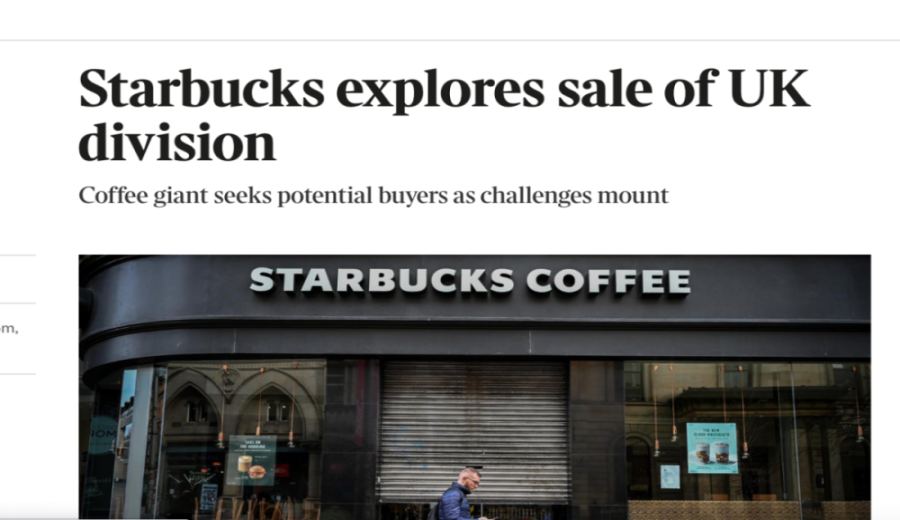
Introduction:Starbucks is reportedly considering selling its UK operations, a move that reflects not only the slow post-pandemic recovery but also broader global strategic realignments and intensifying local competition. This article delves into the current state of Starbucks’ UK business, the strategic choices it faces, and the logic behind its global restructuring—offering insights into how international coffee brands navigate complex market environments.
Starbucks is planning to sell its UK business, a key stronghold that holds its largest market share in Europe, the Middle East, and Africa (EMEA), yet is now facing unprecedented challenges. The ongoing impact of the pandemic, the normalization of remote work, and a sharp decline in tourism have made it difficult for Starbucks UK to return to pre-pandemic performance levels.
According to market sources, Starbucks has enlisted international investment bank Rothschild & Co to explore potential buyers for its UK operations. Although no formal sale process has been initiated, this step signals the company’s active evaluation of the future of its directly operated international markets and its search for the best strategic options.
Financial reports as of October 2021 show that Starbucks operates approximately 1,000 stores in the UK, of which 297 are company-owned and the remaining 703 are run under franchise agreements. Company-operated stores have always been central to Starbucks’ efforts to maintain quality and brand consistency, yet in the UK market, overall recovery remains sluggish.
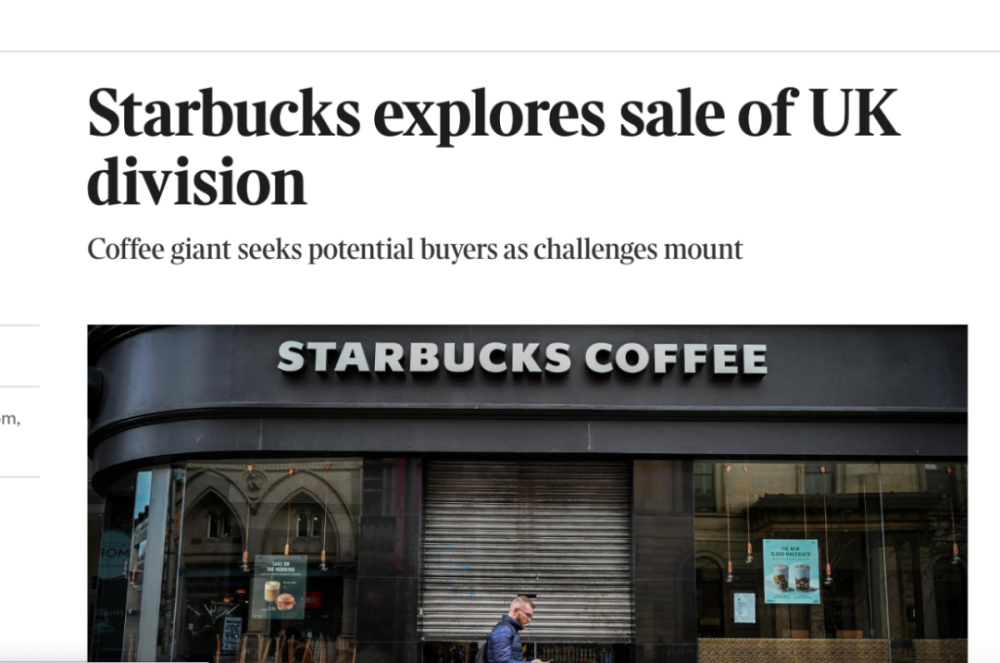
The delayed recovery in the UK market is directly linked to many office workers continuing to work from home, coupled with the lack of a full rebound in international tourism, resulting in store foot traffic that has yet to return to pre-pandemic highs. Industry analysts generally believe that it may take at least four years for the overall performance of UK chain coffee shops to fully recover from the impact of the pandemic.
Beyond the UK, Starbucks is also facing challenges in other major global markets. In China—its second-largest market worldwide—sales growth has fallen short of expectations due to pandemic-related lockdowns, prompting the company to pause its quarterly earnings guidance for the current fiscal year. In the US market, dissatisfaction among employees regarding benefits and working conditions has sparked a wave of unionization efforts, further increasing operational pressures on the brand.
Earlier this year, Starbucks brought back its founder Howard Schultz to serve as interim CEO in an attempt to stabilize the situation and refocus on corporate culture. On the 11th of this month, Schultz publicly stated that he would work to reshape the relationship between the company and its employees, enhance benefits for store partners, and improve the customer in-store experience. However, even though the US market showed some sales recovery in the latest financial report, employee dissatisfaction continues to affect the overall pace of recovery.
Notably, this is not the first time Starbucks has adjusted its regional market layout. As early as 2021, Starbucks announced the sale of its South Korea operations. The deal was taken over by South Korea’s largest retailer, E-Mart, and Starbucks Korea was subsequently renamed SCK. At the time, South Korea was Starbucks’ fifth-largest global market and held strategic importance. E-Mart later increased its stake further, becoming the major controlling shareholder in the region.
Overall, Starbucks is navigating a global market environment fraught with multiple pressures: lingering effects of the pandemic, shifting consumer habits, intensified local competition, as well as inflation and rising raw material costs. Against this backdrop, divesting underperforming or strategically less critical market operations has become a rational choice for the global reallocation of resources.
For consumers and market observers alike, Starbucks’ next move in the UK is not just about the survival of a single market—it reflects the critical thinking of an international brand on how to adjust its pace and seek sustainable growth in turbulent times.
The above content is compiled by CoffeeHunters, a coffee news website.


