







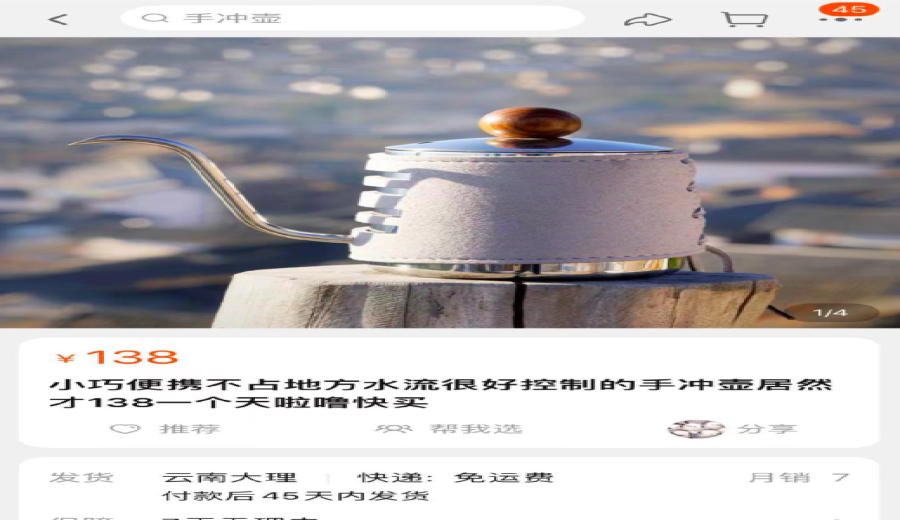
Introduction:Recently, a Taobao pour over kettle seller sparked controversy by using promotional images of women in overly revealing corsets that were unrelated to the product, prompting consumers to accuse the brand of edgy marketing that objectified women. This article delves into the full story, explores the boundaries of coffee equipment marketing, and offers practical advice for selecting a pour over kettle to help enthusiasts avoid controversial brands.
The pour over kettle is an essential tool for coffee lovers. Many people own multiple kettles suited to different brewing scenarios or bean profiles, with everything from classic B-kettles to uniquely designed niche models having their own fan bases. However, a recent incident saw a Taobao seller use large-scale images of female models in corsets on their pour over kettle product page, paired with ambiguous copy, which triggered strong backlash within the coffee community. Related screenshots spread widely on platforms like Xiaohongshu and Douban.
Most consumers evaluate the design and quality of a pour over kettle by browsing product images and copy. But the promotional images on this seller’s product detail page were completely unrelated to the product, and the caption “It really does look like it” caused further discomfort. Even though the brand had previously earned praise for playful marketing campaigns like “dogs roasting coffee beans,” this controversy led to a collapse in trust among its fan base.
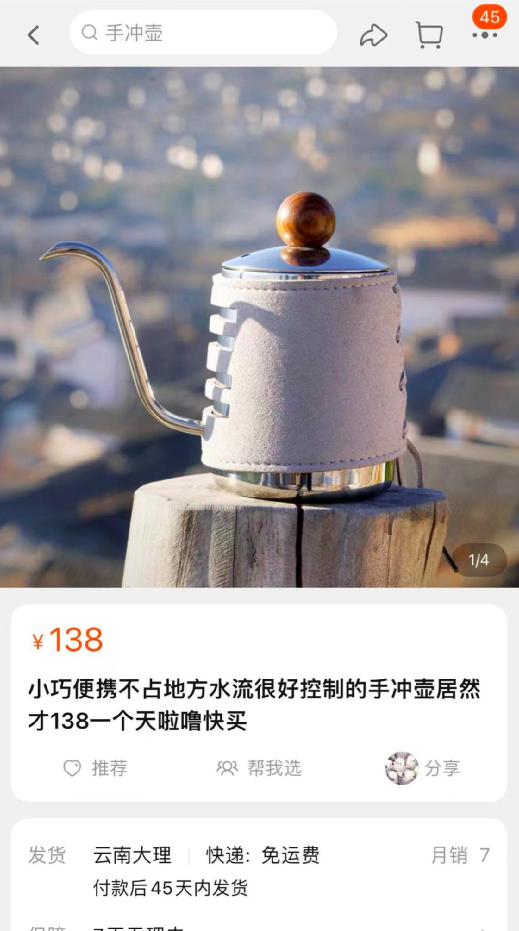
Tracing back, as early as April this year, users had already discovered similar controversial images on the product page. Some netizens pointed out that while it was difficult to draw a direct connection, there was indeed a visual similarity between the straps of the model’s corset and the kettle’s handle straps. This marketing approach, which forcibly blends adult-oriented content with everyday coffee equipment, was criticized for seeking attention through the objectification of women.
The seller’s subsequent statement published on social media failed to quell the controversy. In fact, similar edgy marketing tactics are not new—another coffee machine brand once used nude models of different skin tones to demonstrate the machine’s features, implying product design through body imagery, and also faced backlash for vulgar content and potential racial bias. Such marketing may yield short-term traffic but will ultimately damage the brand’s reputation in the long run.
For consumers, when selecting a pour over kettle, priority should be given to factors such as material (e.g., copper, stainless steel), spout design (a slender spout allows for more precise pouring), and capacity that matches one's needs. Professionals recommend that beginners start with kettles in the 120–200 ml range, while more advanced users might consider models with flow control valves. When encountering controversial marketing, consumers can rely on community feedback or opt for brands with a stable reputation to mitigate risks.
This incident reflects the ethical issues emerging in the rapidly expanding coffee equipment market—when a product lacks competitive strength, some sellers attempt to generate buzz through unconventional marketing. But truly lasting brand value is still built on product quality and respect for consumers.
The above content is compiled by CoffeeHunters, a coffee news website.


