








Introduction:Want to brew Costa Rica’s Mozart coffee with its osmanthus floral notes and raisin sweetness at home? These raisin honey-processed beans from Finca Carnet deliver bold flavors but can easily turn bitter or astringent if brewed improperly. This article dives into the unique characteristics of its honey processing method, and offers pour over recommendations on water temperature, grind size, and pouring techniques—along with summer iced pour over adjustments—to help you consistently extract its captivating dark fruit and honey-toned profile.
Mozart is one of the most eye-catching offerings in the Musician Series, hailing from the renowned Finca Carnet in Costa Rica. Its standout feature is the raisin honey processing method, which not only imparts intense osmanthus floral notes but also brings out the bright acidity and sweetness of dark fruits like grapes and sweet oranges, plus subtle layers of fermentation complexity. However, many coffee enthusiasts find that although it smells wonderfully aromatic, it often tastes overly bitter or unbalanced when brewed at home. Starting from the principles behind the processing method, this guide will help you master key extraction parameters and teach you how to brew a balanced, fruity Mozart coffee at home.

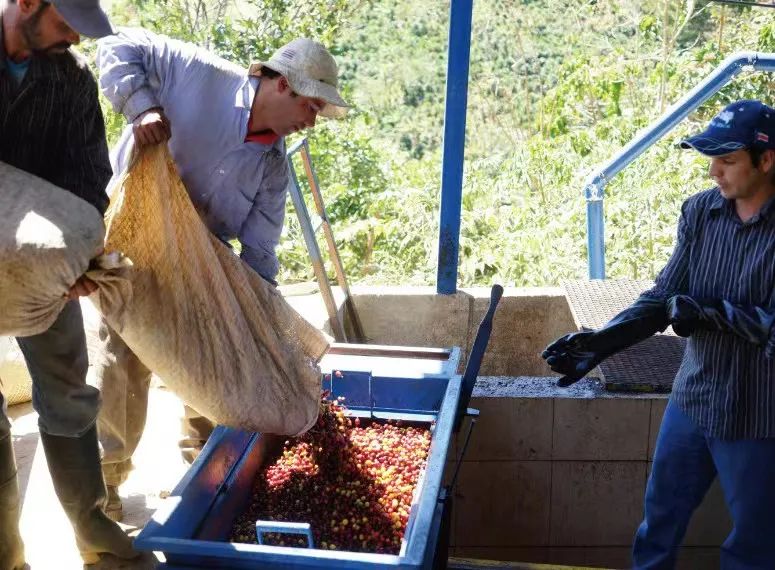
Raisin honey processing is an exceptionally distinctive honey method. After harvesting ripe coffee cherries, the farm first leaves them to rest on raised beds for about three days. During this time, the cherries gradually dehydrate, shrinking in appearance like raisins. Only after the surface of the fruit is visibly dry are the skins removed, butthe mucilage layer isfully retained for subsequent honey processing and drying. This approach not only concentrates sweetness and fruitiness but also enhances overall flavor intensity. However, it also demands strict control over drying conditions and process management, requiring constant turning to prevent over-fermentation or uneven fermentation.
Precisely because raisin honey processing preserves a high proportion of mucilage—and because sugar becomes highly concentrated during drying—the roasted beans often show signs of caramelized sugar scorching on their surface, resulting in uneven color distribution where some areas appear darker and others lighter. This also means Mozart behaves slightly differently from typical washed or natural processed beans in terms of grinding and extraction.
Take actual tests as an example: using an EK-43S grinder at setting 10, Panama washed Catuai achieves a sieve retention rate of about 80%, whereas Mozart only reaches around 75%. This indicates that Mozart beans may have a denser structure and tighter density. It is recommended toslightly adjust the grind finerto facilitate better water flow penetration and flavor release. Typically, aiming for a sieve retention rate close to 80–82% yields more ideal results.
For actual pour over brewing, a recommended initial step is to perform a pre-infusion (bloom) for about 30 seconds. A simple way to judge whether blooming is complete is to observe whether the coffee bed maintains a stable dome shape. Once blooming is done, begin the main pouring phase. Start pouring from the center of the coffee bed, using a gentle stream to slowly circle from the inside out, wetting the entire surface of the coffee bed. Therecommended pour volume for this stage is 100 milliliters—be mindful of controlling the water level to avoid premature rise that can lead to uneven extraction, negatively affecting taste and causing the cup to turn thin or bitter.
It’s worth noting that Mozart typically drains a bit faster than other beans, which is normal and doesn’t necessarily mean your grind is too coarse. If you’ve adjusted the grind as advised and maintained steady water flow, the faster drawdown may be due to the residual sugars from honey processing and the bean’s high density—no need for concern.
If you’d like to experience Mozart’s fruity character during hot summer days, try switching to iced pour over. It’s recommended to grind slightly finer—targeting asieve retention rate of 85%through a #20 sieve—and adjust the coffee-to-water ratio to 1:10, while keeping water temperature and coffee dose similar to hot brewing. This adjustment extends extraction time, ensuring the cooled coffee still retains rich aroma and complexity—perfect for those who enjoy a refreshing, sweet-and-sour profile.


The above content is compiled by CoffeeHunters, a coffee news website.


